Figuring out how to price your restaurant’s menu may seem simple at first, but when you factor in spiralling costs, inflation and consumer outlook, pricing strategy becomes a real challenge. Tenzo recently produced a report looking at how much prices have risen in the last twelve months, and while the overall price increases averaged out […]
The post The Art of Pricing in Restaurants: Unveiling the Secrets of an Effective Pricing Strategy appeared first on Tenzo.
]]>Figuring out how to price your restaurant’s menu may seem simple at first, but when you factor in spiralling costs, inflation and consumer outlook, pricing strategy becomes a real challenge.
Tenzo recently produced a report looking at how much prices have risen in the last twelve months, and while the overall price increases averaged out at 9.23%, every business has approached their strategy differently.
In a recent webinar, Maddie Pellico, Customer Success Lead at Tenzo, pointed out that ‘instead of raising the whole menu by 10%, Tenzo customers are really focusing on different aspects of that menu, like looking at wet vs dry. We work with a brewery that’s kept their food all at the same cost but has raised their beer prices by about 10%. And we’re seeing the opposite in some other businesses.’
So what are the elements you need to consider when reviewing your pricing strategy?
Menu costing
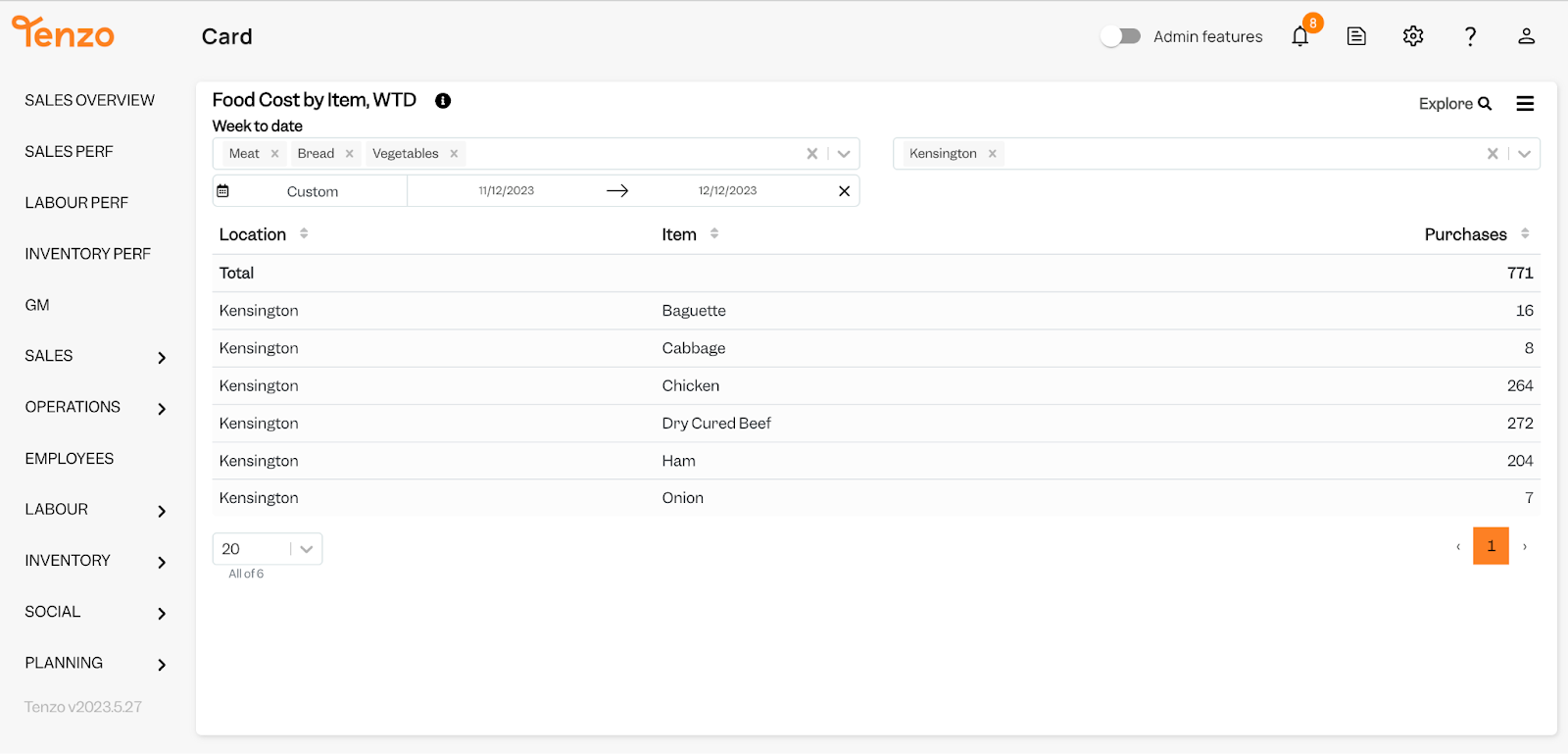
The first port of call is figuring out exactly how much it costs to produce each menu item. To measure the cost of goods for every menu item in your restaurant, you need to start by calculating the cost of the ingredients used in the dish. This can be done by keeping track of the quantity and price of each ingredient used in a recipe in your inventory management platform.
If you don’t have a platform to automate this, you’ll need to work out the cost of each amount of ingredient that goes into the dish. Eg if a portion of chips requires 200g of potatoes and you buy potatoes at £1 per kilo, then the cost of potatoes for that dish is 20p.
Ideally, your cost of goods should be around 30% to 35% of your revenue although this does depend on the type of restaurant. QSRs will have a lower cost of goods than Fine Dining establishments due to the quality and variety of ingredients needed.
Once you understand exactly how much each item costs to make, you can start looking at pricing strategies to implement.
Understanding Pricing Strategies in Restaurants
Pricing strategy is the method used by restaurants to determine the prices of their menu items. It plays a crucial role in the overall performance of a restaurant, as it directly affects revenue and profitability. By setting the right prices, restaurants can attract customers, cover costs, and generate profits.
There are several potential pricing strategies out there, including:
- Cost-plus
- Triple pricing
- Dynamic pricing
- Promotion-based
Cost-Plus Pricing Strategy
Cost-plus pricing is a straightforward strategy that involves taking your cost of goods, adding your overheads and then adding the appropriate margin for profit.
Overheads would include any other costs incurred while making a dish including fixed costs like rent and electricity as well as other variable costs like labour. The simplest way to calculate your overheads per dish is to take a week’s worth of costs and divide them by the number of dishes you served in that week.
Unfortunately, this does mean that you’re averaging out your variable costs and if this was a week with a lower labour spend then you might underestimate costs. The best way to avoid this is to use a Restaurant PerformanceOps platform to keep track of variable costs like labour so you always know where you stand.
Once you have calculated the cost of making a dish, the advantage of a cost-plus strategy is that it’s simple and you are in complete control of your margins.
The problem is that it doesn’t take any external factors into account. Competition, economic environment and popularity all affect how much customers are willing to pay for items so having a set margin on every dish can be burdensome.
Triple Pricing strategy
Another effective strategy is triple pricing. This involves offering three different price points for customers to choose from. It is also often called the ‘good, better, best’ strategy.
The idea is to have a premium item – ‘best’ – which provides the highest margin, while also having a ‘better’ and ‘good’ option that have slightly lower margins.
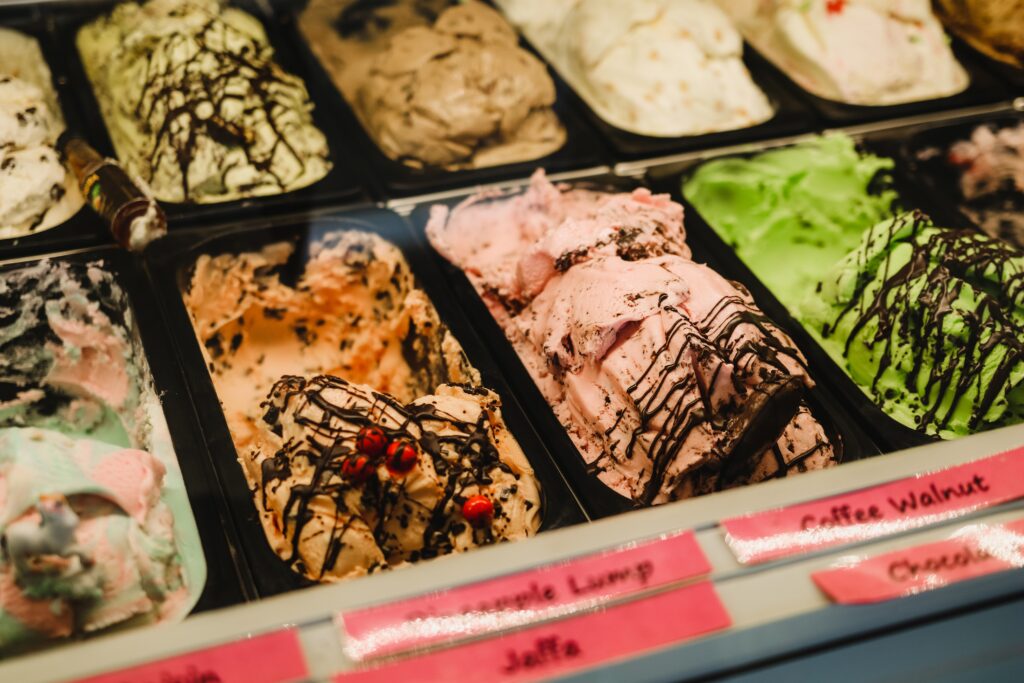
A common example is ice cream: one scoop costs £4, two scoops £5, and three scoops £6.
Psychologically, three scoops seem like the best deal because it’s only £2 more expensive than one scoop, but there are also options for more price-sensitive customers.
This strategy can work well for QSRs or Casual Dining businesses that naturally have tiers on their menu (usually sizes or combo options) but is not ideal for fine dining establishments.
Dynamic Pricing Strategy
Dynamic pricing is a hot topic in the industry right now. It’s a strategy that allows restaurants to adjust their prices in real time based on various factors such as demand, time of day, and even weather conditions.
One of the main benefits of dynamic pricing for restaurants is the ability to optimise revenue on a daily basis. By adjusting prices based on demand, restaurants can charge higher prices during peak times when there is high demand, and lower prices during off-peak times to attract more customers.
To successfully implement dynamic pricing, you need to have a real-time view of your sales data as well as accurate forecasts to make pricing decisions – both of which Tenzo can help with.
However, do consider that it can also leave a bad taste in customers’ mouths if they feel they are being overcharged for items they’re used to getting at a lower price point. Just think about how you feel when there’s a significant surge price for an Uber – it’s not always pleasant and can lead to customers finding alternatives that they deem better value.
A great example of dynamic pricing though is Wall Street Wednesdays at The 411 in London: drinks go up and down in price depending on demand – just like the stock market. It’s a fun concept that brings the customer into the action by being totally transparent.
Promotion-based Pricing Strategy
Promotion-based pricing is an approach that involves offering discounts, deals, or promotions to attract customers and increase sales, often used to drive customer traffic during slow periods or to generate buzz around a new menu item.
This type of pricing also allows restaurants to differentiate themselves from competitors and create a sense of urgency among customers. By offering exclusive promotions or discounts, restaurants can make customers feel like they are getting a special deal that they can’t find elsewhere.
This is a common strategy in the QSR game – the hype around celebrity favourite meals at McDonald’s, or the queues for vegan nuggets at KFC prove how successful they can be – but it’s important to factor the promotion into your overall margins by considering how many of your usual guests will opt for a promotion over a full-price item and whether the increase in traffic thanks to the promotion will cover these losses.
When and how to evaluate Pricing Strategies
Unfortunately, the work doesn’t end once you’ve decided on your strategy. Regularly evaluating prices is essential for restaurants to help control rising costs. Prices should be reviewed quarterly as well as when any significant cost increases occur.
According to Sam Benson, Enterprise Implementation Consultant at Tenzo, ‘I’d say prices should be reviewed as a quarterly exercise, but that being said, if there are significant changes in costs, prices need to be considered. For example, if the cost of steak goes up by 20% then it’s time to re-engineer the menu item or increase the price. Another out-of-cycle but relevant time is when the Government Budgets are announced and changes are implemented eg. alcohol duty changes, or minimum wage increases.’
It’s important to analyse your menu as a whole to identify where margins can be increased. Using menu engineering tactics, market research and tracking competitors will all help find efficiencies.
Menu Engineering
Menu engineering is incredibly important when it comes to generating the best margins while still giving customers confidence that they’re getting value.
Use menu item engineering to soften price rises. Blend price increases across the menu to ensure the real price rises actually flow through to your bottom line rather than raising prices on low-volume dishes or causing customers to trade down to cheaper items with a lower margin.
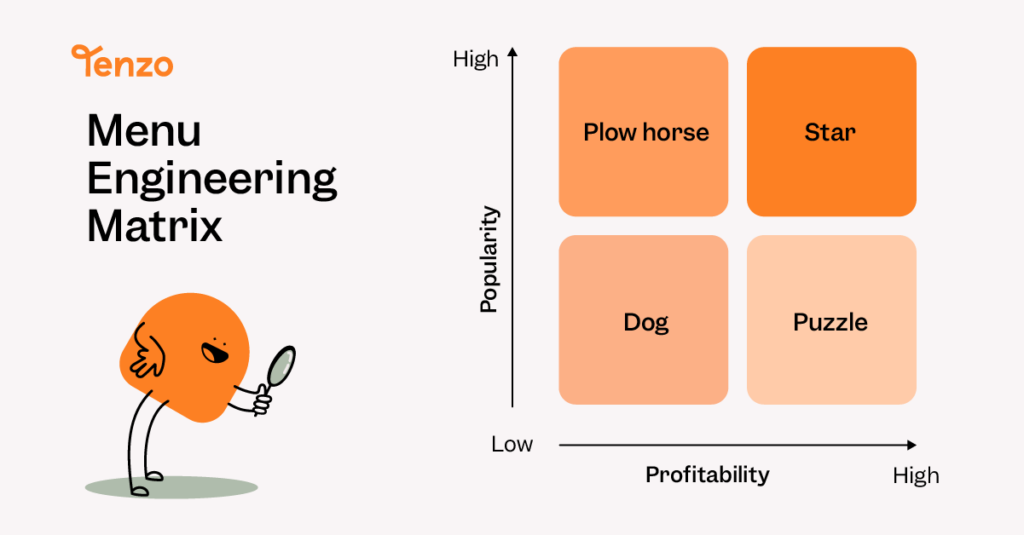
Consider the menu engineering matrix when you do this, evaluating your stars, plow horses, dogs and puzzles to establish where price changes will make the most impact.
Every business is unique, so the areas that will drive margins will differ. We’ve seen some businesses choose to increase the price of their alcoholic drinks as these drive the most revenue, but keep food prices stable. For more food-led businesses, some have increased the price of mains but kept add-on price changes to a minimum, whereas others have taken the opposite approach and only increased prices of sides, appetisers and desserts.
What this shows is that it’s important to dive into your own data to understand where price increases will be tolerated and flow through to your bottom line and where they will potentially put off customers.
Market Research
To understand where your customer sentiment stands, consider conducting market research to identify customer preferences and their willingness to pay.
For example, Tenzo research has revealed that despite the cost of living crisis in the UK, customers have been willing to engage with increased prices. We’ve seen the number of transactions remain constant year-over-year despite a nearly 10% increase in prices.
Industry reports like these will help you understand the general sentiment across the industry, but getting insights on your own customers is most valuable. Consider implementing surveys on your contactless payment or customer experience platforms or tracking mentions on social media to understand your own customers’ feelings toward the value you provide.
This type of market research helps you understand your target market’s willingness to pay by gathering information about their spending habits and price sensitivity. This allows you to set a price that is both competitive and profitable, ensuring that you are not underpricing or overpricing your offering.
Tracking Competitor Pricing
Tracking competitor pricing is key. It allows you to stay competitive and ensure that your prices are in line with what other restaurants in your category are offering. Thankfully, now that all menus are typically available online, you save yourself from making regular rounds of all your competitors like Tenzo co-founder Christian Mouysset did back when he was running Hummus Bros.
‘We always needed to be aware of what our competitors were charging. Being a go-to for lunch, we knew what the other options were charging, whether that was a sandwich from Pret or a salad from Tossed, so that we could be in line with the market, but we also knew our own value and placed a premium on that.’
Tracking competitor pricing helps you identify trends and patterns in the market. Eg if chips are increasing across all your competitors it might be worth considering raising your own prices, although having the lowest-priced chips could also be a competitive advantage for your business if your margins can handle it. This type of differentiation can help you stand out in a crowded market and attract new customers who are looking for better value.
Conclusion
In conclusion, having an effective pricing strategy and reviewing it on a regular basis is crucial for restaurant operators. It allows you to maximise profits, attract customers, and stay competitive in a market faced with rising inflation and constantly increasing costs.
By understanding different pricing strategies and identifying opportunities for price increases, restaurant owners can make informed decisions that benefit their business.
If you’re looking for a tool to help find inefficiencies and optimise the performance of your restaurant business, Tenzo can help. From labour productivity to menu item profitability, we can reveal the areas of your business that need improvement as well as where you’re thriving. Get in touch today to find out more.
The post The Art of Pricing in Restaurants: Unveiling the Secrets of an Effective Pricing Strategy appeared first on Tenzo.
]]>Labour productivity or labour cost as a percentage of sales are crucial metrics to monitor when considering restaurant performance. Understanding how effectively your employees are utilising their time means you can identify areas for improvement and make informed decisions to improve labour performance and optimise your operations. However, it can be challenging for restaurants to […]
The post A Guide to Measuring Labour Performance (with a free template) appeared first on Tenzo.
]]>Labour productivity or labour cost as a percentage of sales are crucial metrics to monitor when considering restaurant performance.
Understanding how effectively your employees are utilising their time means you can identify areas for improvement and make informed decisions to improve labour performance and optimise your operations.
However, it can be challenging for restaurants to measure this effectively. We’ve put together a guide on how to streamline labour performance, and how to measure it.
“Labour productivity is much more measurable than labour cost, as focusing on labour as a negative cost to revenue can have negative effects. Putting too much pressure on teams will have a bad impact on mental health, but the upside of an engaged team is much more important than cheaper labour”
– Scot Turner, Founder and MD at Auden Hospitality
Measuring Labour Performance
Labour productivity and labour cost as a percentage of sales are methods of measuring the efficiency of a restaurant’s workforce. In the hospitality industry, labour cost and productivity are particularly important as they directly impact the profitability and success of the business.
By measuring and optimising labour performance restaurant owners can ensure that their teams are efficient and effective, leading to improved customer service and increased revenue.
Optimising labour performance can be challenging, it involves improving employee performance, alongside careful workforce management. Calculating labour performance is an efficient method to manage this and improve your bottom line.
Calculating Labour Performance
Effective methods of measuring labour performance are calculating labour cost as a percentage of sales or labour productivity. To do this, you must have access to your restaurant’s sales and labour costs by the hour, as well as the number of labour hours deployed per hour.
Labour Cost as a percentage of Sales = (Total fully loaded labour costs ÷ total net sales) × 100
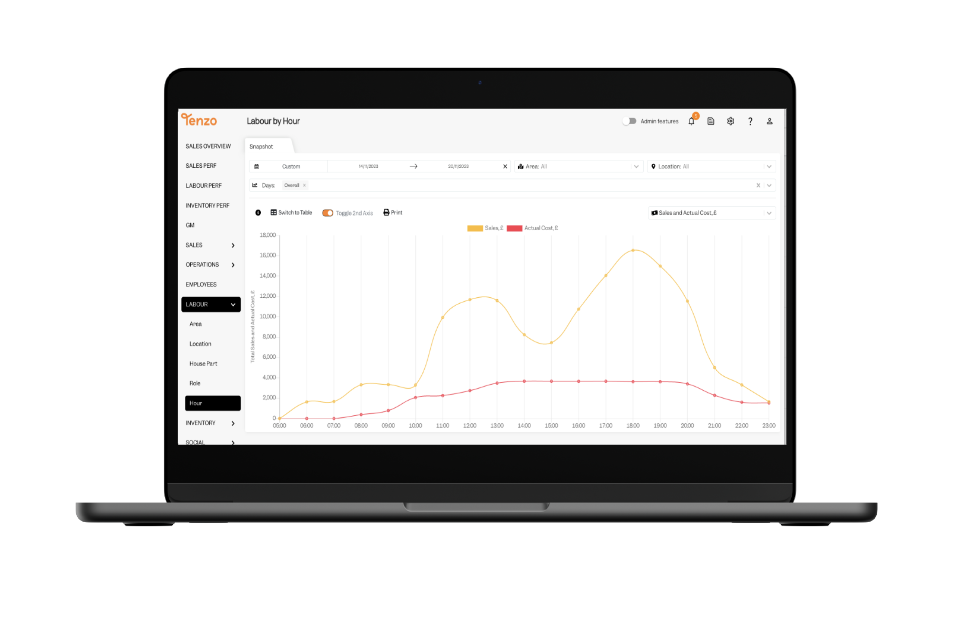
Calculating labour cost as a percentage of sales can be measured for any period, however, it is most valuable to dive into this hourly. Measuring this as an average of sales and labour data over the last 4 weeks also allows you to get more accurate and reliable data. Understanding on an hourly basis which are your most profitable, or least productive hours allows you to make adjustments to the staffing schedule and opening hours on an accurate scale.
Labour productivity = Total Sales / Total Labour Hours
Calculating labour productivity involves using labour hours as opposed to labour cost, but, it is still most accurate to get averages of the hours over the last 4 weeks. Labour productivity gives you a measure of how efficient your team is being throughout the day, and enables you to focus on the least efficient times on a granular level.
Making Changes to Optimise Labour
As we’ve mentioned, optimising labour performance can be challenging for restaurants: there are so many elements contributing to sales output – both internal and external.
When optimising labour performance, it’s important to focus on internal restaurant challenges and improving individual employees’ labour performance, alongside the management of your workforce. Optimising labour performance involves controlling costs as well as increasing sales.
Effective Labour Deployment
Effective labour deployment is key to controlling costs and optimising performance. By analysing your restaurant’s busy and slow periods, you can make adjustments to your workforce to ensure you have the right number of employees at all times. This helps you avoid overstaffing during slow periods and understaffing during busy periods.
Identifying when these slow periods are is vital to making actionable changes. When looking at sales by labour hour, or labour cost by hour, if there are certain hours and days where labour performance is down, focus on why.
Maybe there were not enough staff to deal with demand? Or, were there too many and as a result the labour costs were too high?
During busy periods, having the right number of employees ensures that you can meet customer demand efficiently and effectively. This prevents long wait times, reduces customer frustration, and improves overall customer satisfaction. By deploying your workforce to meet the demand, you can maximise performance and minimise costs.
However, during slow periods, having too many employees can lead to unnecessary labour costs. By streamlining your workforce and reducing the number of employees during these periods, you can control costs and avoid wasting resources. This allows you to allocate your budget more effectively and invest in areas that will generate higher returns.
Reducing Operating Hours
Although this is something no restaurant would take lightly, sometimes reducing operating hours is the best answer to reducing labour costs. Doing this during especially slow times can actually increase your profitability.
By analysing your data and identifying the periods of low customer demand, you can adjust your operating hours accordingly. When looking at your data, this may only be a case of opening a few hours later, however, if Mondays are consistently slow and a drain on revenue – it makes sense to close!
This not only improves employee morale and job satisfaction as your staff don’t have to work during slow periods, but it gives them more time off and flexibility. This, in turn, improves sales through improved customer interactions.
This can also benefit inventory management. Preparing in advance for slow days, or removing slow days altogether, reduces wastage and the costs that are associated with it, improving overall profitability.
Improving Sales During Slow Periods
Combating slow periods can also come from improving sales during these periods to boost performance.
If lunchtimes are consistently slow, use marketing strategies to boost sales. Offering special promotions, such as introducing lunch-time deals can entice customers to your restaurant and maximise sales opportunities, whilst keeping staff busy.
Another strategy to test out is altering opening hours to lend your business to your current customer’s spending habits. If labour performance is particularly high at the very beginning, or end, of the day consider opening earlier or later to test the overall impact. Then, monitor labour cost by hour, or sales by labour hour again after a few weeks to check the results.
Using the Free Templates
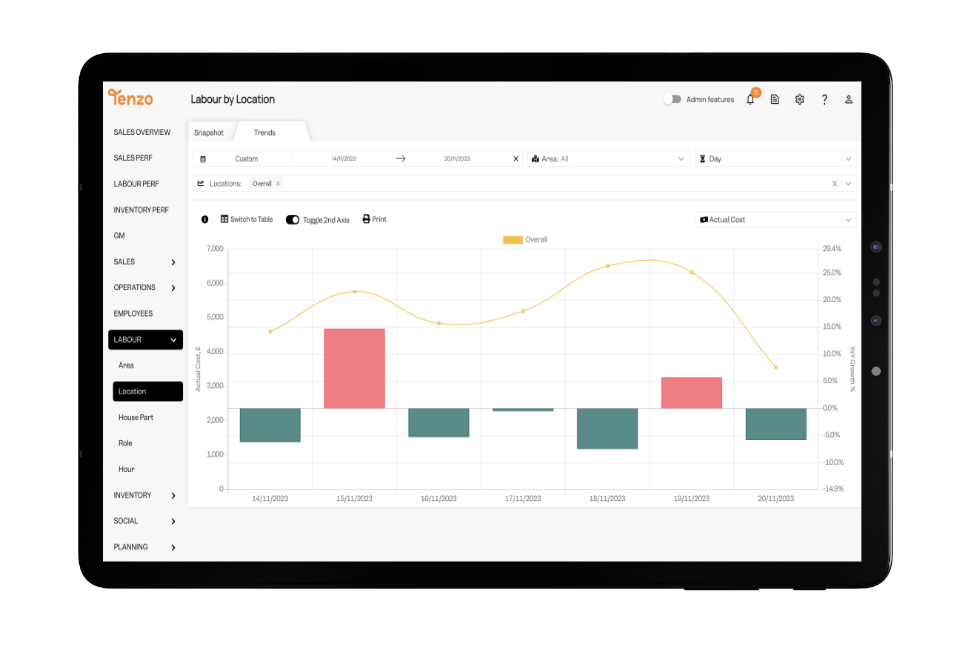
To help restaurant owners measure and track their labour productivity, or labour cost percentage by hour, we have created a couple of free templates that you can use. These templates include areas to input your own sales and labour data, allowing you to track changes in performance throughout the day and week easily.
To use the templates, simply download one below and input your data into the designated sections. The template will automatically calculate the labour cost percentage per hour, or labour productivity by hour, based on the data you provide. You can then use this information to identify trends, make informed decisions, and take steps to optimise your restaurant’s labour performance.
Implementing Automated Reporting
Although this template is completely functional in identifying trends of labour performance in your restaurant during days and weeks, automated reporting tools can provide a lot more accuracy.
When calculating labour performance during the hours of the day using this template this should be done regularly, to ensure that results are up to date with the current trends in your restaurant. Tenzo automatically does all the steps in this sheet, aggregating data from your POS and labour tools providing you with a real-time, accurate view of your labour performance throughout the day.
Implementing automated reporting tools, such as Tenzo, can greatly simplify the process of measuring and tracking labour performance. These tools can integrate with your restaurant’s existing systems, such as POS (point-of-sale) and labour scheduling software, to automatically aggregate and analyse data, giving you the insights to act on.
Cost of Labour as a Percentage of Sales Template
Labour Productivity Template
The post A Guide to Measuring Labour Performance (with a free template) appeared first on Tenzo.
]]>Running a restaurant is no easy task, especially with the current market and tightening margins. However, in this article, we will explore mastering the recipe for success to create a thriving and profitable restaurant. Built for longevity and strength against the challenges the industry is facing. At Hummus Bros we were really focused on adding […]
The post Mastering the Recipe for Success: How to Run a High-Performing Restaurant appeared first on Tenzo.
]]>Running a restaurant is no easy task, especially with the current market and tightening margins.
However, in this article, we will explore mastering the recipe for success to create a thriving and profitable restaurant. Built for longevity and strength against the challenges the industry is facing.
At Hummus Bros we were really focused on adding extra drinks and adding what the customers’ favourite drinks were, and with 80-90% margins it has a huge impact on revenue. – Christian Mouysset, CEO and Co-Founder of Tenzo

Build a Loyal Customer Base
Building a loyal customer base is crucial for the success of a restaurant. By providing exceptional service and memorable dining experiences, you can create a strong bond with your customers that continues over many years.
Personalise the Guest Experience
To personalise the guest experience, restaurants should harness customer data to understand their preferences and dining habits. By collecting information on CRM systems such as their favourite dishes, and dietary restrictions restaurants can tailor their offerings to meet individual needs. This can include suggesting personalised menu recommendations and offering special promotions on their favourite items.
Tailoring deals and offers for customers can also encourage them to return to the restaurant. By analysing customer data, restaurants can identify patterns and trends in their dining habits. This allows you to create targeted promotions and discounts that are relevant to each customer’s preferences. For example, if a customer frequently orders a certain dish, the restaurant can offer a special discount on that item to entice them to return.
In addition to personalised deals and offers, restaurants can also provide a unique dining experience by personalising service. This can include greeting customers by name and offering personalised recommendations based on their previous orders. By going the extra mile to make each guest feel special and valued, restaurants can create a memorable experience that will keep customers coming back for more.
Provide Value for Money
When it comes to running a high-performing restaurant, it is essential to provide value for money to your customers. Dining out has become more expensive, but as a result customers now expect more when they go out to eat.
Going the extra mile for your customers can make all the difference in their dining experience. By providing quality meals and exceptional service, you can ensure that your customers feel like they are getting their money’s worth.
Customers are more likely to leave positive feedback and return to your restaurant if they feel that they received value for the price they paid. On the other hand, if they feel that they did not get their money’s worth, they may leave negative reviews and choose to dine elsewhere in the future.
Implement Effective Sales Strategies
Effective sales strategies are essential for driving growth in a restaurant. These can include upselling, implementing loyalty programmes, and providing customers with discounts. Incentivising customers to return and become regular repeat business is the best way to promote profitability.
Upselling
Effective upselling can significantly boost restaurant performance. By upselling, you can increase the average transaction value per customer, leading to higher revenue. It also helps to maximise the value of each customer interaction and increase overall profitability.
To successfully upsell, it is important to train your staff to make recommendations based on the customer’s preferences and needs. By providing personalised suggestions and highlighting the benefits of the additional items, you can enhance the dining experience and increase customer satisfaction.
Menu Optimisation
Menu optimisation is a crucial aspect of restaurant performance. By analysing menu data, you can identify the popular dishes and make strategic changes to maximise profitability.
To optimise your menu, start by analysing menu data to identify the dishes that are selling well and those that are not. This can help you make informed decisions about which dishes to keep, tweak, or remove from the menu. By regularly reviewing and updating your menu, you can keep it fresh and appealing to customers, ultimately improving restaurant performance and increasing profitability.
Menu Size
Having a smaller menu size can greatly optimise the customer experience at your restaurant. When customers are presented with a smaller menu, they can make decisions more quickly and easily; reducing the time they spend deciding on what to order and allowing them to enjoy their meal sooner.
Reducing the menu size also has benefits for back-end operations. You can streamline your inventory management and labour processes with a smaller menu.
You will need to stock fewer ingredients, which means less time and effort spent on ordering and receiving supplies. This can also help to reduce food waste, as you will have a better idea of how much of each ingredient you need to order.
Reduced labour costs also come from having a smaller menu. There will be fewer people required to be in the kitchen at any one time, reducing overhead costs and boosting profitability. More focus on fewer dishes is also likely to improve the quality and care for customers.
Ingredients Sourcing
Outsourcing the production of some ingredients can be a smart move for your restaurant. By doing so, you can make the most out of your labour and save costs.
For example, instead of making your bread in-house, you can source it from a local bakery. This not only saves you time and effort but also ensures that you are serving high-quality bread to your customers.
Another benefit of outsourcing ingredients is that it allows you to focus on your core competencies. Instead of spending time and resources on making every single ingredient from scratch, you can concentrate on perfecting your signature dishes and providing excellent customer service. By outsourcing certain ingredients, you can streamline your operations and improve overall efficiency.
Managing Outgoing Costs
Managing outgoing costs is crucial for the success of a restaurant. As we’ve already mentioned, the tight margin nature of a restaurant requires operators to be on top of their outgoing costs in real-time. Small changes in revenue can have a huge impact on the profitability of the business.
Energy
To maximise the current market, restaurants need to pay attention to changing energy prices. One way to do this is by investing in energy-efficient equipment and appliances. By using energy-efficient lighting, HVAC systems, and kitchen equipment, restaurants can significantly reduce their energy consumption and lower their energy bills.
Restaurants should consider implementing energy management systems that allow them to monitor and control their energy usage in real-time. This can help identify areas of energy waste and implement energy-saving measures.
Inventory
Consolidating your suppliers can lead to better deals and higher-quality ingredients. By working with fewer suppliers, you can negotiate better prices and discounts, as well as establish stronger relationships. This can result in cost savings for your restaurant and allow you to invest in higher-quality ingredients that will enhance the taste and presentation of your dishes.
When you consolidate your suppliers, you can also ensure consistency in the quality of your ingredients. By working with trusted suppliers who understand your needs and preferences, you can rely on them to consistently deliver high-quality products. This can help you maintain the standards and reputation of your restaurant, as customers will appreciate the consistency in the taste and presentation of your dishes.
This also helps to streamline your inventory management process. With fewer suppliers to coordinate with, you can simplify your ordering and delivery processes, reducing the chances of errors or delays. This can help you optimise your inventory levels, minimise waste, and ensure that you always have the necessary ingredients on hand to meet customer demand.

Restaurant PerformanceOps
A high performing restaurant is the key to long-term success. But, data is the key to a high-perfoming restaurant.
Restaurant PerformanceOps is about having all of your restaurant data in real-time, in one place, in the palm of your hand. It’s crucial for all restaurant operators to be empowered to use their data in order to supercharge restaurant performance.
It’s equally important for General Managers to use their data, as it is for head office roles. The head office needs to be using data for strategic decisions and ensuring that the restaurant is in strong financial health. Whereas, front-line restaurant employees can use their data to make daily improvements to the running of their restaurants.
Reporting is essential for this. It’s vital that the data is given to the specific roles in the appropriate way. Dashboards for each business role can help to optimise how each team member can use their data.
Conclusion
In conclusion, mastering the recipe for success in running a high-performing restaurant requires building a loyal customer base, implementing effective sales strategies, optimising the menu, and managing outgoing costs.
To achieve this;
- Focus on personalising the guest experience and providing value for money.
- Implement sales strategies like upselling and
- Use menu optimisation to increase revenue.
- Manage outgoing costs in real-time to stay on top of your margins
- Empower restaurant operators to use their data to maximise performance
By following these key points, you can create a thriving restaurant that attracts loyal customers, maximises revenue, and minimises costs.
The post Mastering the Recipe for Success: How to Run a High-Performing Restaurant appeared first on Tenzo.
]]>Are you looking for ways to boost labour productivity in your hospitality business? To ensure the financial success of your restaurant, it is crucial to maximise labour productivity. In this article, we will discuss the changing landscape of labour in the industry, the impact of staff turnover and labour costs, methods to measure labour productivity, […]
The post How to Boost Labour Productivity by Tracking Team Performance appeared first on Tenzo.
]]>Are you looking for ways to boost labour productivity in your hospitality business?
To ensure the financial success of your restaurant, it is crucial to maximise labour productivity.
In this article, we will discuss the changing landscape of labour in the industry, the impact of staff turnover and labour costs, methods to measure labour productivity, and how tracking employee performance can lead to overall restaurant success.
Look strategically at who you’re rostering and when. You need the best people in places at the busiest times, it’s much easier than training people. Focus on rostering people who can make you the most money. – Scot Turner, MD and Founder at Auden Hospitality

How Labour in the Hospitality Industry Has Changed
The hospitality industry has seen significant changes in labour since the pandemic and the rising use of technology.
The transient nature of the industry has become more apparent, and the industry is increasingly less experienced with younger people viewing it as an in-between job. Especially as many small businesses can’t keep up with the increasing salary demands for experienced employees.
The introduction of technology has also changed the processes involved with operating restaurants: the expectations and goals for many restaurants are now more concrete. Technology has also become a key aspect of monitoring labour productivity.
Staff Turnover
Staff turnover is a major challenge for restaurants in the hospitality industry. It can be difficult to retain employees, especially in positions that require long hours and high levels of customer service. It can be difficult to find and retain staff members, which can lead to increased costs (for recruitment and training).
External factors can also impact the employment pool and how people view jobs in the hospitality industry. For example, the current job market may offer more opportunities for individuals outside of the hospitality industry, making it easier for them to find alternative employment. The impact of this is increased with some people viewing jobs in the hospitality industry as temporary or low-skilled, leading to higher turnover rates. Hospitality Rising and UK Hospitality are working together to change this perception and encourage more young people into the industry, but this will take time.
Businesses need to take charge of improving this by offering developmental opportunities for younger people joining the hospitality industry and allowing them to envision long-term careers. Good examples of this are the Pizza Pilgrims Training Academy or Otolo with their mentorship programme.
Labour Costs
Labour costs can have a significant impact on a company’s profitability. Generally, labour costs should be around 30% of a restaurant’s revenue, but this can change depending on the type of restaurant.
As inflation rises, the cost of wages and benefits expectation for employees also increases. This puts pressure on profit margins, as restaurants need to allocate more resources to cover these rising costs.
How to Track Labour Performance
To boost labour productivity, it is crucial to track labour performance. By monitoring and evaluating each employee’s performance, you can identify improvement areas and provide targeted training. This allows you to address specific weaknesses and help employees develop the necessary skills to excel in their roles.
The methods used to track employee performance may vary depending on where employees’ work is focused and their seniority within the organisation. For example, front-of-house may have their performance measured based on their sales targets, while managers may be evaluated on their ability to lead and motivate their teams. By tailoring the tracking methods to each employee’s specific role and responsibilities, you can gain a more accurate understanding of their performance and provide relevant feedback and support.
Qualitative Tracking
For senior stakeholders, observing junior staff members can be a valuable method for tracking their performance. By directly witnessing their actions and interactions with customers, you can gain a better understanding of their capabilities. This qualitative tracking allows you to see firsthand how they handle different situations and whether they meet the expectations of their role.
Customer feedback can also provide valuable insights into the performance of your employees. By listening to what customers have to say about their interactions with your staff, you can gain a better understanding of their strengths and weaknesses. This feedback can help you identify areas where your employees excel and areas where they may need further training or support.
In addition to observing and gathering feedback, engaging in regular conversations with your junior staff members can also provide valuable qualitative insights. By discussing their experiences, challenges, and goals, you can gain a deeper understanding of their performance and provide guidance and support where needed. These conversations can also help you identify any potential issues or areas for improvement before they become larger problems.

Quantitive Tracking
Quantitative tracking is a more data-driven approach to monitoring labour performance. By analysing specific metrics and numbers, you can gain a clearer understanding of how each employee is contributing to the overall productivity of your restaurant. This type of tracking can be especially useful in measuring sales abilities, as you can track the average transaction value (ATV) for each employee and identify areas for improvement.
By setting specific goals or key performance indicators (KPIs) for employees, you can use quantitative tracking to see how well they are meeting these targets. This provides a way to reward and recognise employees who consistently meet or exceed their goals.
Quantitative tracking provides a more objective and data-driven way to monitor employee performance. By analysing specific metrics and numbers, you can gain valuable insights into how each employee is contributing to the success of your restaurant and identify areas for improvement.
It is, however, important to note that data can only get you so far. Not all productivity can be measured with numbers as it’s not all quantifiable. Interactions between team members, and the customers, can have a huge impact on morale and productivity.
How Boosting Labour Performance Boosts Overall Restaurant Success
Improving labour performance directly contributes to the overall success of a restaurant. When employees perform at their best, customer satisfaction increases, leading to repeat business and positive word-of-mouth recommendations. This, in turn, can drive higher revenue for the restaurant.
Staff Experience
Boosting the staff experience is essential for creating a positive work environment. By tracking labour performance, you can identify areas where individuals excel and provide them with opportunities to further develop their skills. This not only boosts morale but also drives overall team development.
Tracking employee performance also allows you to recognise and reward high performers, which can help boost morale and motivation within the workforce. By acknowledging and celebrating the achievements of your team, you create a culture of excellence and encourage others to strive for similar success.
Tracking labour performance also allows you to identify areas where additional training or support may be needed. By providing targeted coaching and development opportunities, you can help employees grow and reach their full potential. This investment in staff experience not only benefits employees but also contributes to the overall success of the team and the business.
Controlling Costs and Boosting Performance
Tracking labour performance allows businesses to identify their top performers in real time and provide staff with incentives to upsell and increase sales. This can result in higher revenue and profitability for the company.
Improving labour productivity also means reducing the overall labour costs as a percentage of sales. By analysing employee performance data, businesses can identify areas where productivity can be improved and make necessary adjustments. This can lead to more efficient use of resources and employees’ time, ultimately improving the bottom line.
By tracking labour performance and improving labour productivity, businesses are getting more out of their data. This means they can make better-informed decisions and optimise their operations. This can result in increased efficiency, reduced costs, and ultimately, improved overall performance for the business.
Conclusion
In conclusion, tracking labour performance is crucial in boosting labour productivity in the hospitality industry.
Labour costs only allow restaurants to focus on one aspect of staff management, and can negatively impact the performance of the business. Focusing on productivity means restaurants can manage the performance of their staff, to boost overall restaurant performance whilst controlling costs.
By monitoring and evaluating labour performance, businesses can identify areas for improvement and implement strategies to enhance productivity. This not only improves overall restaurant success but also provides a better staff experience.

The post How to Boost Labour Productivity by Tracking Team Performance appeared first on Tenzo.
]]>We’ve been tracking industry numbers in London and the South-East since Covid began. At first, we wanted to keep an eye on how lockdowns were affecting the restaurant industry. Yet, here we are 3 and a half years later still tracking how external factors like the cost of living crisis, energy cost hikes, train strikes, […]
The post A look back on Q3: hospitality industry numbers appeared first on Tenzo.
]]>We’ve been tracking industry numbers in London and the South-East since Covid began. At first, we wanted to keep an eye on how lockdowns were affecting the restaurant industry. Yet, here we are 3 and a half years later still tracking how external factors like the cost of living crisis, energy cost hikes, train strikes, and more are still affecting the industry.
There’s been no shortage of challenges thrown at hospitality, but we continue to see just how resilient this industry is.
Looking at the latest numbers, former operator and Tenzo co-founder Christian Mouysset commented, ‘In January, I don’t think anyone would have believed that we would still be seeing higher sales numbers than last year in Q3. With the cost of living crisis in full swing, we would have expected demand to fall, and yet it has continued to grow. However, the rate of growth is slowing and that could mean we’re in for a difficult Q1 once the festive season subsides.’
Making the most of current demand, closely monitoring costs and eliminating inefficiencies now will make the months to come as successful as possible setting operators up for a better Q1 next year.
To hear more from two former operators, Christian Mouysset and Scot Turner, MD of Auden Hospitality, about the state of the industry and what operators can do to shift from surviving to thriving, join us on October 10th at Hospitality Tech Expo at 1:15 pm.
Like-for-like restaurant sales
We have aggregated sales numbers from several hundred businesses in London and the South-East to see how the third quarter of 2023 compared to 2022.

Across the quarter as a whole, we saw like-for-like sales increase by 7.3%. This was led by August’s 10.4% increase. September was lowest with only a 6.4% rise. Latest inflation numbers are 6.7%, meaning that sales growth was lower than inflation for the first time this year.

Number of transactions grow very slightly
The actual number of transactions rose ever so slightly compared to last year across the quarter with a 2% increase.

Monthly trends remain low with a 3% rise in transactions in July and September and an ever so slightly higher increase in August: 3.7%.

Average transaction value rises
The average transaction value (ATV) has increased 5.7% across the quarter. This is largely due to prices of individual items increasing over the past 12 months to combat increased costs in labour and goods.

While July and August saw a 6.7% and 7% increase respectively, September’s ATV only increased by 3.5%. We saw inflation start to increase by double-digit percentages in September 2022 and so item prices had been increased by this point last year already. Current inflation is 6.7%, so a 3.5% increase does not necessarily keep up, however we may be seeing the price ceiling being hit.

In light of this, operators are going to have to focus on costs in Q4 to keep healthy margins.
Conclusion: what do these numbers mean?
While the numbers continue to grow, compared to Q2 and Q1, growth is slowing. That means that operators will need to focus on costs even more than before, making sure that every restaurant is running as efficiently as possible.
Drilling into your data and understanding where inefficiencies lie is going to be imperative over the coming months.
Hear more from the experts at the Hospitality Tech Expo on October 10th at 1:15 pm, when Christian Mouysset and Scot Turner come together to discuss these numbers and what operators can do.
The post A look back on Q3: hospitality industry numbers appeared first on Tenzo.
]]>The restaurant world is always changing, none more so than the post-COVID hangover. It’s been a tough period, and because of this, operators are always looking for the marginal gains that will help them to reduce the overwhelm of their teams, as well as continually improve their business performance. See how the team at NONA […]
The post The Secret Sauce of a Multi-Site Operator: Unveiling the Power of Data-Driven ‘Leadership. appeared first on Tenzo.
]]>The restaurant world is always changing, none more so than the post-COVID hangover.
It’s been a tough period, and because of this, operators are always looking for the marginal gains that will help them to reduce the overwhelm of their teams, as well as continually improve their business performance.
See how the team at NONA use Tenzo to improve their operations across multiple locations.
The ability to harness data effectively has become a key component in the success of any operator. It unlocks a superpower that we haven’t had in such abundance before. For the first time, we are really seeing restaurateurs utilise the power of data to optimise their productivity.
So, let’s break down how the top 5% of operators are using data to enhance their performance.
Unlock the Power of Data
Before we talk about the transformative capabilities of how data-driven platforms can make such a difference, let’s take a moment to remind ourselves of the importance of data in the restaurant industry.
Every plate served, every table turned, every purchase, every roster, and every customer review generate a treasure trove of information. This data isn’t just numbers though.
This data is the key to understanding your business, your customers, and your team.
It’s the secret sauce that, when harnessed correctly, can elevate your operations, and help your people thrive.
The Challenge of Multi-Site Management
Until 2022 I was a COO for a global investment company, managing 16 brands, across 4 countries in 3 continents.
The process of keeping up-to-date on the performance of these locations wasn’t easy. Local nuance, regional market fluctuations, labour modelling variations and supply chain pricing were all reasons why we needed to have a strong understanding of the business. Through utilising data, and, making it easy to read, we were able to focus our efforts on the right locations, in the right outlets, and at the right time.
In fact, by optimising our processes and using Tenzo to optimise our historical data, we were able to start reacting in advance by implementing trend reporting in the business.
You can see how we managed to save 15% on labour by using Tenzo in our UK operations.
How to Optimise Your Data
Imagine having an assistant by your side, one solely focused on helping you conduct this complex collation of data effortlessly. It’s unlikely that you will have the resources for this, especially in the early phase of growth.
That’s exactly what Tenzo brings to the table with its PerformanceOps platform. Tenzo empowers operators to lead with precision and insight, breaking the information down into easily digestible and customisable dashboards.
It was this flexibility to tailor the data to my needs that helped me use the platform to oversee operations across such a vast estate.
Even now, when we engage with clients at Auden Hospitality, we always look to implement effective ways to consolidate and analyse data to create easily measurable action plans that are backed up by data.
So how can all this lead the way to being your secret sauce?
It’s simple; it allows you to focus your time and energy where you need to the most. It increases your productivity, allows you to manage more effectively and gives you back the power of time, something I always refer to as being the most valuable tool a leader can have.
Below, I have shared some points on how to optimise this to be your kryptonite.
Identify Trends to Help Teams in Need:
Analytics isn’t just about crunching numbers; it’s about spotting trends and patterns that you may miss if you are looking at reactive data and results.
For example, are some of your locations consistently underperforming? Are there specific days or times when you need additional staff because covers peak? Analysing trends can answer these questions and more, enabling you to proactively address issues before they become major problems.
See my post on LinkedIn where I show you how using trends can generate different results with a simple click of a mouse.
Celebrate Success:
Acknowledging and celebrating your team’s successes is just as important as identifying areas that need improvement.
Daily reports and live dashboards allow you to track and celebrate achievements, boosting team morale and fostering healthy competition among your locations. After all, a motivated team is your most valuable ingredient.
Throughout my career, the locations that had the longest-serving team always had the best results. It’s especially important in the current flipped economy, meaning that any way to foster a stronger culture is going to reap rewards.
Optimise Your Insights:
As you become more confident with the data you are seeing, you will be able to refine and optimise the output. Constantly evolving and looking for more insights will help you to deeper dive into your business and fine-tune performance.
Remember how I mentioned that at Auden Hospitality, we use data and insights to back up everything we do? It’s this process that helps us find new opportunities in the business and create measurable plans for the success of new initiatives.
In summary, think big, start small, review, measure and refine.
Prioritising Time and Resources:
In the fast-paced world that operators live in, time is of the essence. Tenzo doesn’t just provide data – it helps you prioritise where you should focus your time and resources, again helping you to prioritise your time where it will be the most effective. Here’s how:
Daily Insights:
Seeing daily insights and trends means you can address issues promptly, whether it’s a sudden drop in week-on-week sales or kitchen wastage growing in value.
Efficiency Enhancements:
By optimising your supply chain, labour scheduling, and inventory management, you can ensure that your operations run smoothly. This frees up your time to focus on strategic initiatives rather than day-to-day firefighting.
So, there it is, the secret sauce is no longer a mystical concoction locked away in a chef’s kitchen. It’s data – the insights, trends, and patterns that data helps you uncover and leverage.
By harnessing the power of data-driven leadership, you can lead your teams more effectively, support those in need, and celebrate those who excel.
And with Tenzo by your side, you’re not just managing restaurants; you’re conducting a symphony of success, optimising the audience, and elevating your results.
If you want to hear more about how I use trends to analyse businesses, I am delighted to be joining Christian Mouysset at the Hospitality Tech Expo, on the 10th of October, 2023 where Christian will be leading a discussion about, ‘How Hospitality sales looked in 2023 and why proactive strategy can foster stronger results?’
The post The Secret Sauce of a Multi-Site Operator: Unveiling the Power of Data-Driven ‘Leadership. appeared first on Tenzo.
]]>Restaurants performance is threatened by several challenges. With lower customer numbers and increased costs due to inflation and supply chain issues, going from surviving to thriving relies on understanding data and good operational strategies. The restaurateurs and operators that are most likely to outperform their competitors are those that are looking into their data regularly […]
The post Restaurant Performance | Top 6 metrics to boost sales and grow your business appeared first on Tenzo.
]]>Restaurants performance is threatened by several challenges. With lower customer numbers and increased costs due to inflation and supply chain issues, going from surviving to thriving relies on understanding data and good operational strategies.
The restaurateurs and operators that are most likely to outperform their competitors are those that are looking into their data regularly and identifying where improvements can be made within their business and using real-time data to boost performance.
For enterprise businesses, the three most important metrics to monitor to boost performance are; Guest Experience Rating, Sales Growth, and Labour as a Percentage of Sales” – Sam Benson, Enterprise Implementation Consultant at Tenzo
Top KPIs to improve restaurant performance and why
Metric 1: Gross Profit
Profit margins are incredibly tight for restaurants at about 2-6%; ensuring this is consistent is vital in improving restaurant performance.
Gross profit can be defined as the difference between revenue and the cost of goods sold (COGS). Or put another way, it’s the difference between the revenue of a menu item and the cost of the ingredients used to produce it.

Gross profit is an indication of how efficiently a restaurant is being run. In order to boost gross profit, you can drive revenue or reduce COGS.
There are several methods to reduce COGS, but implementing good inventory management strategies and standardising recipes is a good place to start.
Flash profit is a similar performance metric, but it incorporates labour costs too.

Flash profits can help multi-location businesses get good visibility of how different sites are performing against each other; helping teams gain insights on how to improve their performance by learning from others.
Metric 2: Average Transaction Value
Average Transaction Value (ATV) is the average transaction spent by individuals or groups at a restaurant or other hospitality business.
It can be calculated by dividing the total sales by the number of transactions, or by using POS tools that will report this metric.

Monitoring ATV in real-time is crucial to supercharge restaurant performance – increasing this number will have a meaningful impact on the bottom line. Knowing your position week-on-week (WoW) or year-on-year (YoY) helps to build an understanding of how business decisions have altered overall performance.
Upselling is the easiest way to increase ATV, and encouraging staff to upsell and monitor this in real-time is a better return on investment than acquiring new customers.

Metric 3: Spend per Item
Tracking spend per customer can be challenging for hospitality businesses where covers, or the number of customers, aren’t tracked – such as bars or QSRs (Quick Service Restaurants)!
The ATV is being skewed by the number of customers per order, so for these businesses, tracking spend per item is the easiest way to benchmark performance. It can be calculated by dividing total sales by the number of items sold.

This includes all variants of menu items and it gives a benchmark to be able to upsell against – the same way as ATV. This allows for employees to be incentivised to upsell in the same way too; helping improve performance.
It can also help to gauge the success of marketing strategies by helping operators understand whether the best items are being pushed for upselling. To maximise the spend per item, they must support the speed of service too. For example, a cocktail uses more labour hours than drinks with double metrics, so the latter should be upsold more.
Metric 4: Actual vs Theoretical Usage
This metric is so important for restaurant performance: wastage can result in huge costs that massively reduce profit margins – as well as being unsustainable. It can be tracked at a business level and an individual item level, but regular stock takes are required for it to be accurate.
It can be calculated by looking at the difference between the theoretical usage, and what was actually used. The theoretical usage is the amount of inventory that should have been used, based on recipes, for the amount of sales made.

Measuring the variance of this is vital in controlling costs and reducing wastage. Looking at a restaurant’s position on this WoW and YoY is a great way to track changes in processes.
Tracking items at an individual item level helps to pinpoint the issues with the processes relating to them and make effective changes to boost performance. It’s crucial to identify whether the problems lie with spoilage or over-portioning.
Metric 5: Labour Productivity
Cost of labour (COL) is a huge outgoing cost for restaurants, so managing it efficiently is pivotal for a high-performing restaurant. At the current minimum wage (£10.42) saving one hour every day can save businesses £3,800 annually.
There are multiple ways this could be measured based on how the restaurant is run, and whether productivity is tracked on an individual employee basis, or company-wide.
Company-wide is best tracked by sales or covers per labour hour or as a labour cost percentage. Tracking these on a shift basis can help identify the best and worst-performing teams.

SPLH (Spend per Labour Hour) is one of the best ways to track productivity for individual employees. Company-led incentives can create healthy competition between the team to drive the overall revenue of the business.
Effective labour deployment can also impact labour productivity, but looking at it from all angles helps to control costs.
All stakeholders using the same data and working from one source of truth helps to encourage accountability and exposes struggles and internal challenges to work on. Correct communications following this can enhance performance by improving training.

Metric 6: Best-selling Menu Item
Getting deep menu knowledge can be really challenging. Often, restaurateurs’ or operators’ sense of the best-performing dishes is warped by their opinions and conversations with customers.
Monitoring the menu items for best selling (and worst) is essential to do consistently, with monthly or quarterly appraisals to reflect seasonal changes or varying marketing promotions.
Tracking this at a location level and the whole business is useful to gain a better understanding of customers. It’s likely some locations will have different customer personas due to external factors.
Knowing the best-selling menu items helps to menu plan effectively and optimise menus based on consumer preferences, and therefore, capitalising on popularity.
Strategically planning promotional items, and marketing strategies, by highlighting popular items will further drive revenue and business performance.
Conclusion
Improving restaurant performance is not something that happens overnight. It takes time to analyse and understand restaurant data to make data-led intelligent business decisions to drive growth and development.
The ease of aggregating and monitoring metrics, for operators and GMs to use, depends on the tech stack restaurants use. Different tech stacks will allow for different reporting, and therefore likely to have slightly different results.
The most important metrics can vary based on the type of restaurant. Ensuring that GMs understand their data, and how to use it, is imperative to making changes that supercharge restaurant performance.
The post Restaurant Performance | Top 6 metrics to boost sales and grow your business appeared first on Tenzo.
]]>At Tenzo, we’re in the business of data – we live and breathe it. We make sure that our customers have the data they need to make the best possible decisions to supercharge their performance. Because of this, we have access to a huge amount of industry data that shows how hospitality as a whole […]
The post What did hospitality sales look like in Q2? appeared first on Tenzo.
]]>At Tenzo, we’re in the business of data – we live and breathe it. We make sure that our customers have the data they need to make the best possible decisions to supercharge their performance. Because of this, we have access to a huge amount of industry data that shows how hospitality as a whole has been performing.
As Q2 comes to a close, we have pulled sales data from hundreds of restaurants in the South-East of the UK to see how the last 3 months have been for hospitality compared to last year.
It’s particularly interesting to look at these quarters because of the multitude of Bank holidays, national celebrations and train strikes that occurred throughout and how these outside forces meaningfully impact sales. The graph below shows the quarter at a glance.
(We’re looking at like-for-like days so Monday, June 26th 2023 vs Monday, June 27th 2022 to get the most accurate view of trends. The dates below correspond to 2023’s calendar.)

So here’s a breakdown of the trends we’ve seen in Q2 2023 and how they compare to last year.
Overall sales
At first glance, it does appear that sales are increasing year-on-year – this year’s trend line is consistently above last year’s. However, due to rising inflation and energy price hikes, most businesses have increased their prices. In fact, on average prices have risen by 11% so it would be very surprising if we didn’t see an increase year-over-year in sales numbers.
However, the average increase in sales appears to be 16% so, accounting for the price rises, it looks like sales have increased by 5% since last year. Some good news!
Easter
The first of the many Bank holidays we get in Q2 (at least in 2022 and 2023) is Easter. The shape of the graph remains consistent year-on-year when you consider Easter fell on April 17th in 2022 and April 9th in 2023. We see that sales are slightly increased on Good Friday (vs a non-holiday) as people take advantage of the long weekend. However, the Saturday spike in sales is much lower than average as people go home to visit family or take advantage of the time off to travel.

Bank holidays
We had 3 Bank holidays in May 2023 much to everyone’s delight. But, what did this mean for restaurant sales?

If we look at the first of the three, May Day (May 1st 2023 and May 2nd 2022) we can see what a typical bank holiday looks like – the same pattern repeated in 2022 and 2023. Sales are pulled up not only across the weekend but also on the previous Thursday, showing people like to get the party started early. The Saturday’s peak sales stay in line with other Saturdays, but sales on Sunday and Monday are significantly higher than on non-bank holiday weekends.
We see the same trend in the final bank holiday in May 2023: the spring bank holiday (May 29th 2023) Sales across the end of the week and weekend are higher than they would be in a non-bank holiday week.

Where things start to get interesting is during the other bank holidays that occurred in 2022 and 2023…
National celebrations
By coincidence, we had two national celebrations in May 2022 and 2023: the Queen’s Platinum Jubilee and the King’s Coronation.

These are occasions when the whole country celebrates, so you might have expected hospitality sales to increase during these times. However, this is not the case.
The humble street party replaces a lot of hospitality activities. We saw average sales drop significantly during both the Jubilee and the Coronation so that Saturday spike never occurred. In 2022, there was the added confusion of having a Thursday and Friday (the 2nd and 3rd of June 2022) as holidays rather than the Monday, so by the time Monday rolled around, people were tired of celebrating and the Monday sales were the lowest we saw all quarter.
Charles’s coronation (Saturday, May 6th through Monday, May 8th) giving us the Monday off at least meant that restaurants were able to benefit from higher-than-average Monday sales.
Train strikes
Believe it or not, the first set of train strikes took place during Q2 2022. Unsurprisingly, when both the tubes and the trains were out of action sales took quite a hit. On the first day of strikes in 2022 (Tuesday, June 21st), sales were down 36% compared to what they had been on the previous Tuesday.

We have continued to see that same pattern with the latest strikes, although the effects have lightened over the past year. On Friday, May 12th 2023, sales were down 11% compared to the previous Friday. Where we see the most impact is on weekdays. On Wednesday, May 31st 2023, a strike day, sales were down 26% compared to the previous Wednesday.

Conclusion
Despite the never-ending rises in costs for everyone, the second quarter of 2023 still saw an upward trend in sales. The real issue is lack of consistency: with so many external factors affecting sales (bank holidays, strikes, etc) it was difficult to understand what to expect. What we can see here though is that patterns emerge and if you keep track of these trends year-on-year, you can have a good idea of what’s to come.
The post What did hospitality sales look like in Q2? appeared first on Tenzo.
]]>Food waste is an enormous problem in the hospitality industry, globally it contributes 530 M tonnes of CO2 emissions and more than $100B in lost revenue. It can be hard for restaurants to see a return on investment from implementing sustainable strategies, but reducing waste brings immediate benefits. Reducing waste within your restaurant helps to […]
The post Reduce Food Waste | Drive restaurant performance and control costs appeared first on Tenzo.
]]>Food waste is an enormous problem in the hospitality industry, globally it contributes 530 M tonnes of CO2 emissions and more than $100B in lost revenue. It can be hard for restaurants to see a return on investment from implementing sustainable strategies, but reducing waste brings immediate benefits.
Reducing waste within your restaurant helps to improve company branding, increasing long-term sales by attracting more customers. Also for immediate ROI, it reduces costs by making the most out of the stock you have.
Controlling food costs is extremely important in the restaurant industry. There are a huge amount of fluctuations in prices due to inflation and supply chain issues, but to be profitable food costs should be between 25 – 40% of revenue.
Use tech to analyse how many of each type of dishes sell per hour, per day of week. If dishes need extensive prep, having an idea of how many will sell reduces waste and reduces time spent by chef’s creating dishes that won’t be sold. – Maddie Pellico, Customer Success Team Lead at Tenzo
Tips to help reduce food waste;

Reducing food waste
The UK wastes about 30% of its food.
Reducing food waste isn’t an easy task, but making small steps towards reducing waste within your business and restaurant will help make a difference financially and environmentally.
Effective Inventory Management
Effective inventory management is essential for the quality and safety of the food stored at restaurants. It is crucial in ensuring food lasts as long as possible, controlling costs within your business and boosting profitability.
A popular method is the FIFO (First In First Out) storage system; this simple method for organising stock maximises freshness and quality whilst reducing the likelihood of spoilage, and therefore waste, by ensuring that the oldest stock is used up first.
Ensuring that routine maintenance on fridges and freezers is carried out is imperative in reducing waste from premature stock expiry. Temperature checks should be taken regularly to monitor this, and if it’s noticed that one is not functioning all food should be removed to a chilled storage area that is working.
Zero Waste
Aiming to have a zero-waste kitchen is a great way to alter your restaurant’s outlook on reducing waste. Use entire products where you can and incorporate unused products into daily prep, or add new menu items that use up excess stock – for example, making stock from leftover carcasses or vegetables.
Repurposing food that is below expected quality is also a good way to reduce wastage, e.g. turning stale bread into breadcrumbs is a great way of using slightly spoiled food safely.
Controlling Food costs
Food cost can also vary significantly between weeks if the price of ingredients increases or the yield after prepping decreases, but the price on the menu stays the same. This inevitably results in your food cost increasing.
Calculating your food costs is important, ineffective management could affect the profitability of your business. It also helps you to gain more of an understanding of operations and menu profitability.
Supplier Relationships
The pandemic made it clear how much restaurants and suppliers relied on each other for the success of their businesses, having a mutual understanding of this and maintaining good relationships helps everyone succeed.
Using few suppliers increases this dependence; with either business benefiting from the success of the other. This works as an advantage as you’re likely to get the best deals and produce, saving you money on your inventory costs.
Delivery costs can also add up, so using fewer suppliers means fewer delivery costs; and less requirement to be ordering more to meet the minimum delivery amount.
Seasonal Produce
The use of seasonal produce is another sustainable method to control your food costs; using food where it’s locally available and at the peak time of the year.
In-season produce is not only much better quality and taste compared with out-of-season, but it is also significantly cheaper. This can allow for bigger profit margins, or even encourage ATV by making a cheaper menu.
Global seasonality is different to local seasonality, it involves focusing on where the produce is grown and not about being consumed where it’s harvested; so buying goods from where they are naturally grown and shipping them to your restaurant. Due to the high energy that normally goes into producing out-of-season goods, this is almost as sustainable and cheap as local seasonality.

Monitoring Portion Size
Portion size can be a huge factor in the profitability of menu items, and can also affect customer satisfaction though. Ensuring consistent portion sizes helps with managing budgets and customer expectations.
Keep on top of your portion size. Account for plate waste to see where portion sizes can be reduced, along with costs. Standardise your portion sizes with small wares that make it easy for employees to know how much to give, even when they’re in a rush.
Another way to maximise profits is to have varying portion sizes on the menu, one menu item that has regular and small options. The decrease in portion size is not relative to the decrease in the cost of food, but most customers will choose smaller portions to save money. Customers feel like they’re getting their money’s worth and being cost-effective, but the profit margins are much better.

Importance of Accurate Forecasting
To run your restaurant as efficiently as possible you need to prepare accurately. Using technology and forecasting tools helps to ensure that this is always the case. Improve the accuracy of your forecasting by combining AI with human knowledge; let the technology provide the best number and then the GM edit it based on factors that the AI could never know about.
Forecasting reduces waste by predicting the number of covers you will have in the coming hours, weeks, and days. Never over-ordering or under-ordering is crucial in reducing waste and controlling costs, as is preparing effectively for the coming shifts.
Dynamic PAR (periodic automatic replenishment) ordering is a good system to reduce the likelihood of waste. It involves finding the optimum (and minimum) level of stock for any given inventory, so you never run out or have excess. Being dynamic, it changes relative to forecasted events, further increasing the accuracy of ordering as optimum levels change in line with demand.
Conclusion
Food waste in restaurants is not only a challenge that affects business performance, but it also affects society and the environment. It’s within global and business interest to work towards reducing waste from your restaurant.
There are many challenges involved with reducing food waste, but following our tips can help to minimise it and in turn; save your business money and boost performance.
The post Reduce Food Waste | Drive restaurant performance and control costs appeared first on Tenzo.
]]>Truffle Hunting is a UK-based consultancy firm led by James McLean and Nigel Sutcliffe. They work with restaurants to produce a road map and direct the changes to build the businesses’ successful evolution. TISSL and Tenzo work with both Truffle Hunting and James’ restaurant – The Oarsman. We spoke with James recently, at The Oarsman, […]
The post How TISSL and Tenzo have boosted performance at Truffle Hunting appeared first on Tenzo.
]]>Truffle Hunting is a UK-based consultancy firm led by James McLean and Nigel Sutcliffe. They work with restaurants to produce a road map and direct the changes to build the businesses’ successful evolution. TISSL and Tenzo work with both Truffle Hunting and James’ restaurant – The Oarsman. We spoke with James recently, at The Oarsman, about how our partnership has helped him improve performance within both businesses.
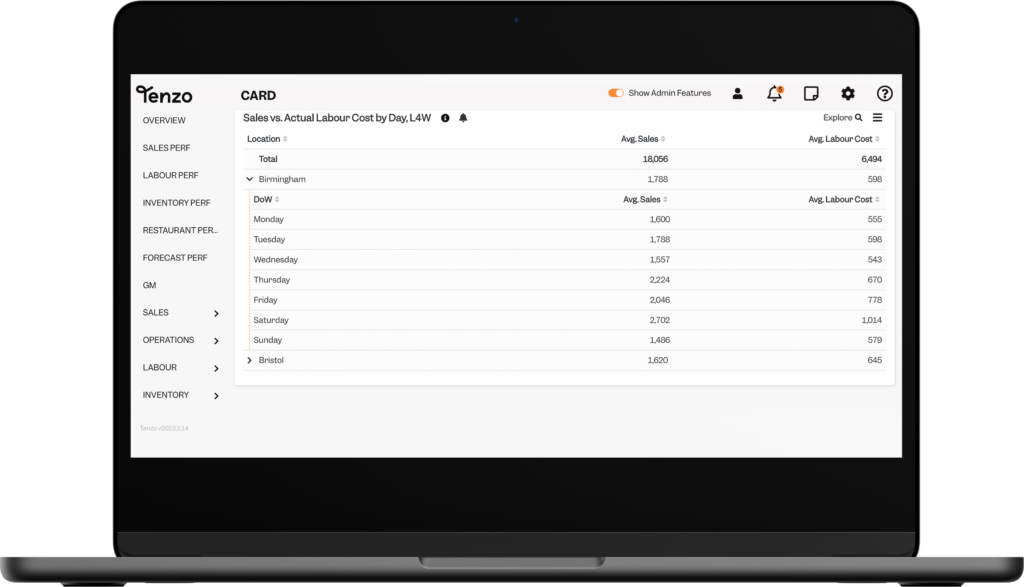
“My favourite report in Tenzo is the sales vs labour over the past 4 weeks by day of the week as it helps me see on mobile in real-time the days we are over and understaffed and take corrective action” – James McLean, Partner at Truffle Hunting
How TISSL and Tenzo have improved operations at Truffle Hunting
Tell us about Truffle Hunting
My colleague Nigel started truffle hunting back in 2003 having spent many years working with Heston at The Fat Duck. Truffle Hunting is about helping our customers create concepts, deliver on those concepts and then manage ongoing projects with them.
When did you start using TISSL and Tenzo? What made you choose them?
Nigel first worked with TISSL at the Fat Duck and Tenzo we started working with in 2018. We were starting to look at how we could build integrated ecosystems of support systems for our clients.
It was very clear that both platforms matched our ambitions to have a cloud-based system that would give us information much more simply. One of the main things we want from any platform we work with is that it keeps the team on the floor looking after the customers and reduces the amount of office time. We’d much rather keep everyone focussed on the customer’ it was a huge help in ensuring that keeps happening.
What specifically do TISSL and Tenzo do that help Truffle Hunting? How does it help day-to-day?
Most importantly, the information they have can make decisions happen immediately. We can look forward more easily; rather than looking back a month or waiting for a PNL to be produced. There would be too much of a lag.
The adaptability of being able to use TISSL and the Horizon platform; being able to use the cloud and start using the iPad for ordering; breaking down the departments of the business so they work very simply. Coupled with Tenzo’s ability to give us an intuitive platform to read the sales analysis. As well as being able to overlay revenue with staff costs, it all becomes very simple. The very close integration between the two works seamlessly.
How does it differ using TISSL and Tenzo as an operator, compared to a restaurateur?
I don’t think there is any difference between how we use the tools being an operator and being a consultant – it’s the same information and we apply the same disciplines everywhere we go.
However, what is really valuable is that it also gives a very transparent view of the business to a client. We are all looking at the same information at the same time; it’s clear to the client that we’re not hiding anything.
We work on everything in a very clear transparent way, so everybody understands what the challenges are, and we get a collective view of their ambitions and how we’re to achieve those ambitions
How has the integration between TISSL and Tenzo improved your operation, rather than using them separately?
One of the ways in which the two platforms working together so well has worked so well for us is that not only can we overlay information, we are able to sit centrally and generate reports that cover individual sites. It gives us an overall view when we dig in on a Monday morning to be able to find the questions that we need to ask that day.
As far as the collaboration between TISSL and Tenzo goes I could only say to anybody it’s a really really good partnership to have. It strengthens your business and I think it really simplifies the process of getting information quickly.
I think it’s about the support systems that are involved with both companies. Very much so from the teams on the ground floor calling support and getting quick answers, to us, as operators, being able to talk to the development teams and understanding what opportunities there are to develop in the ecosystems that we’ve put together.
The post How TISSL and Tenzo have boosted performance at Truffle Hunting appeared first on Tenzo.
]]>