Guest blog from James Sandrini. Director at 48.1 – a creative agency for food and drinks brands. Marketing is misunderstood. Here’s one crack at it And another Third time lucky There’s 72 more of these Are they right? It doesn’t matter. The point is, you don’t know. And if you’re an operator, chances are you […]
The post Marketing Ops – the least recruited, most essential job appeared first on Tenzo.
]]>Guest blog from James Sandrini. Director at 48.1 – a creative agency for food and drinks brands.
Marketing is misunderstood.
Are they right? It doesn’t matter. The point is, you don’t know. And if you’re an operator, chances are you don’t know how to lead that department either.
It’s cool. You’re probably wildly talented and brilliant at a thousand other things. And you’re almost certainly getting paid more than your Marketing Manager anyway, so there’s that.
As a restaurant group scales, so does the operation. Over time, this process becomes more and more efficient (in theory, at least).
Unfortunately, this isn’t the case with other departments. HR & Recruitment rarely scale; sometimes due to a lack of investment, and always because each site brings with it a new team and, therefore, new challenges.
Even more sensitive to scale, is marketing.
Marketing positions are rare in single venues. New sites are better set investing their time and energy into providing a fantastic guest experience, driving advocacy and converting loyalty from early adopters into word of mouth.
Fast forward a year or two and you’re now rolling out your concept at a daring pace and across a range of new locations.
And then you go and hire a Marketing Manager.
There are a lot of hard working, capable Marketing Managers out there. And yet, no senior role seems subject to such great churn.
Marketing is not misunderstood due to a glut of definitions. Marketing is misunderstood because it can’t be measured by hours spent, or conversations had, or spreadsheets completed.
Operations will and should always take precedence in restaurants and bars. The ‘all-hands-on deck’ mentality defines the industry, but it also defies the efforts of many marketers, intent on bringing creativity and strategy to an environment that, on occasion, outright scorns it.
I don’t know a restaurant that expects its Sous Chef to cook, cocktail and host. I know many restaurant groups that expect their marketer – their only marketer in many cases – to do all or most of the following:
- Research
- Strategise
- Build campaigns
- Design
- Distribute
- Report
- Fill in for sales when they’re not about
If the focus in your business is on operations, recruit people whose default is operational. And outsource everything else.
Marketing. Takes. Time. And, if you’re an operator, I bet even reading that sentence was painful.
Let’s dispel a couple of myths here:
“Marketers don’t want to do the hard work.”
- No, marketers don’t need to run to the kitchen to make a GANT chart. Nor do they have to mop the floor after a 12-hour shift full of competitor reviews and design briefs. This doesn’t mean that the job is easy, that you could do it, or that cognitive and physical exhaustion are the same thing. Grow up.
“It’s just posting on social media.”
- I mean it’s not, but at least you helped me make my point about not knowing WTF marketing is. Thanks. Point is, there are not many operators that are versatile enough to manage strategic roles. There are even fewer organisational structures in food & drink that support functions best suited to long-term review.
Marketing, irrespective of the definition, has changed rapidly in the last 20 years. Here are a few words that didn’t exist in 1998: Blog, Facebook, Twitter, omnichannel, Google, PPC, VR, Instagram.
Today, a marketer only needs a mobile phone to launch a campaign, monitor reviews and interact with an audience. More importantly, a consumer only needs a mobile phone to communicate directly with a business.
No longer do restaurants and bars need to solely rely on marketers to create content; they can amplify the stories their guests create.
Customers can and will take pictures of your food. Now, share that content. Customers will say nice things about you to their friends. Go on, share that content. Occasionally, customers might question or challenge you. Answer those questions. And share that content!
You might not need someone to strategise and plan quite as much as you think; a more operational, reactive mindset, focused on promoting user generated content, can cover a bulk of your daily content.
Marketing Ops isn’t entirely new. Born from tech, housed in analytics, and related to process far more than creative, the ‘MO’ is tasked with aligning Marketing with Operations, Sales, IT and Finance.
Why? Because tech businesses rely on data for insight and feed that information straight back into product design. Reporting is transparent and shared across the business, enabling team members to react in real time.
The food & drink industry has started to smarten up to the role of data. Even small restaurant groups now maintain a pretty hefty tech stack, with integrations passing information from one hub to another.
But – and this is a helluva but – what are businesses doing with that data?
Who’s in charge of recording it? How is it being reported?
And what is being drawn each month from the interpretation of operational data, reputational data, social data, website data and analogue information gathered by GMs?
How is data being used in your business to aid customer acquisition and retention on a day-to-day basis?
I work for an agency. There are portions of our work that our clients could not complete themselves, irrespective of the time they contributed to it (web development isn’t easy. Yes, 3D motion is as hard as it sounds).
But there are plenty of roles we fill that our clients could. And this has everything to do with time, just not in the way you’re imagining it.
Don’t work with an agency so that they can carry out jobs you don’t have time for. Work with an agency because they structure their time differently.
Here’s a sample of a Marketing Managers day: Emails > Photography > Social > Ops Meeting > Sales Meeting > Emails > Site Visit > Social > Emails > Social > Lunch…
If you expect this person to undertake broad, strategic, slow work, you’re crazy.
This is not – I repeat, not – a reason to remove the Marketing Manager and work solely with an agency. You shouldn’t. That potent pre-lunch list still needs doing and paying an agency to fill those gaps is neither cost-effective nor sustainable.
Here’s what a Marketing Ops team member could be doing:
- Aggregating and reporting on all forms of data (if you don’t already, use Tenzo, trust me)
- Preparing briefs for and maintaining communication with third party agencies
- Project managing the execution of marketing activations
- Share user generated content and reply to queries on social channels
- And yes, they can fill in for sales on their day off
Keep the marketer; change the role.
James Sandrini is a director at 48.1 – a creative agency for food and drinks brands. For more, read the blog at www.fortyeight.one/words/.
The post Marketing Ops – the least recruited, most essential job appeared first on Tenzo.
]]>Website design is a 21st-century art form that is difficult to master. It’s not easy to balance aesthetics and function. These fifteen websites, however, have nailed that elusive balance to create the perfect tool to promote their restaurant brand. In other words, feast your eyes on these jaw-dropping masterpieces and be inspired! 1) Koox Koox, […]
The post Restaurant Websites | The 15 best to get inspired by in 2020 appeared first on Tenzo.
]]>Website design is a 21st-century art form that is difficult to master. It’s not easy to balance aesthetics and function. These fifteen websites, however, have nailed that elusive balance to create the perfect tool to promote their restaurant brand.
In other words, feast your eyes on these jaw-dropping masterpieces and be inspired!
1) Koox
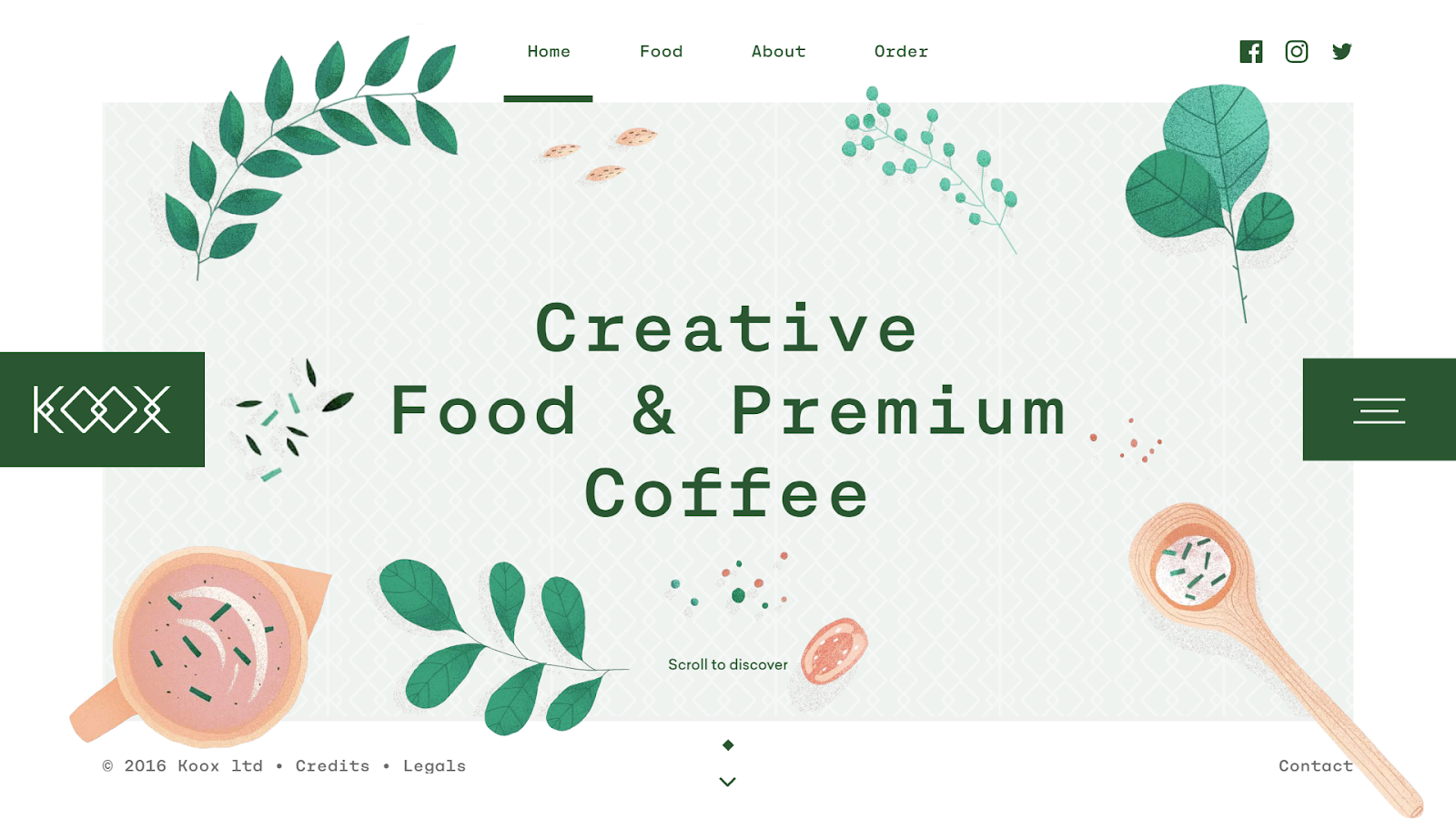
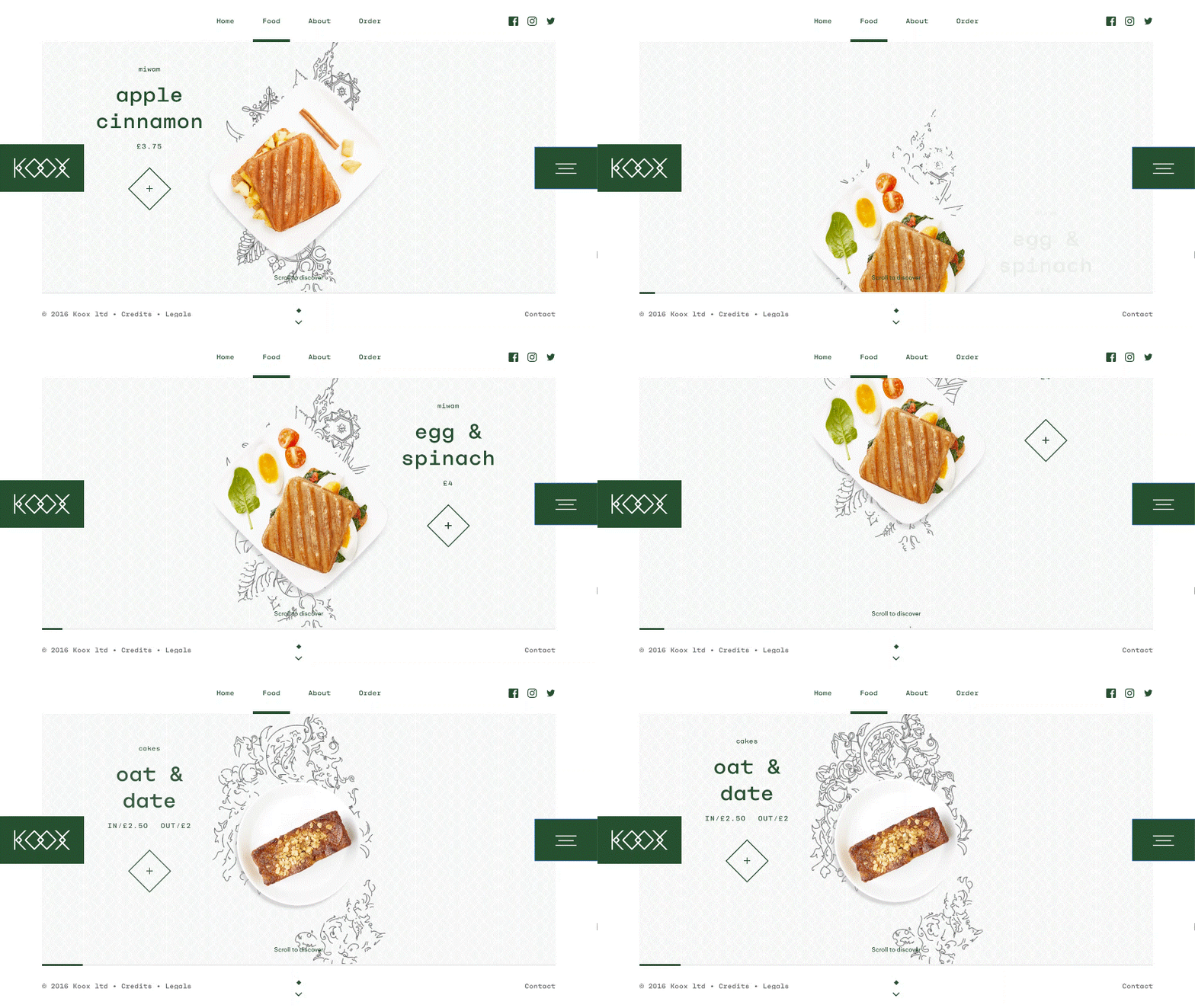
Koox, located in central London, creates an exquisitely clean-yet-warm aesthetic by using a combination of plenty of white space with soft-toned green and orange drawings of food. It’s a great example of using colour to create a consistent design throughout a website. Even the images of the food on their menu match the colour palette.
Check it out here Koox
2) The Fat Duck
Heston Blumenthal, head chef at the Fat Duck, is world-famous for his innovative food – his dishes often hide delightful surprises – for example, a chicken liver and foie grass parfait which looks exactly like a mandarin orange. The Fat Duck’s website has been brilliantly designed to match this expectation.
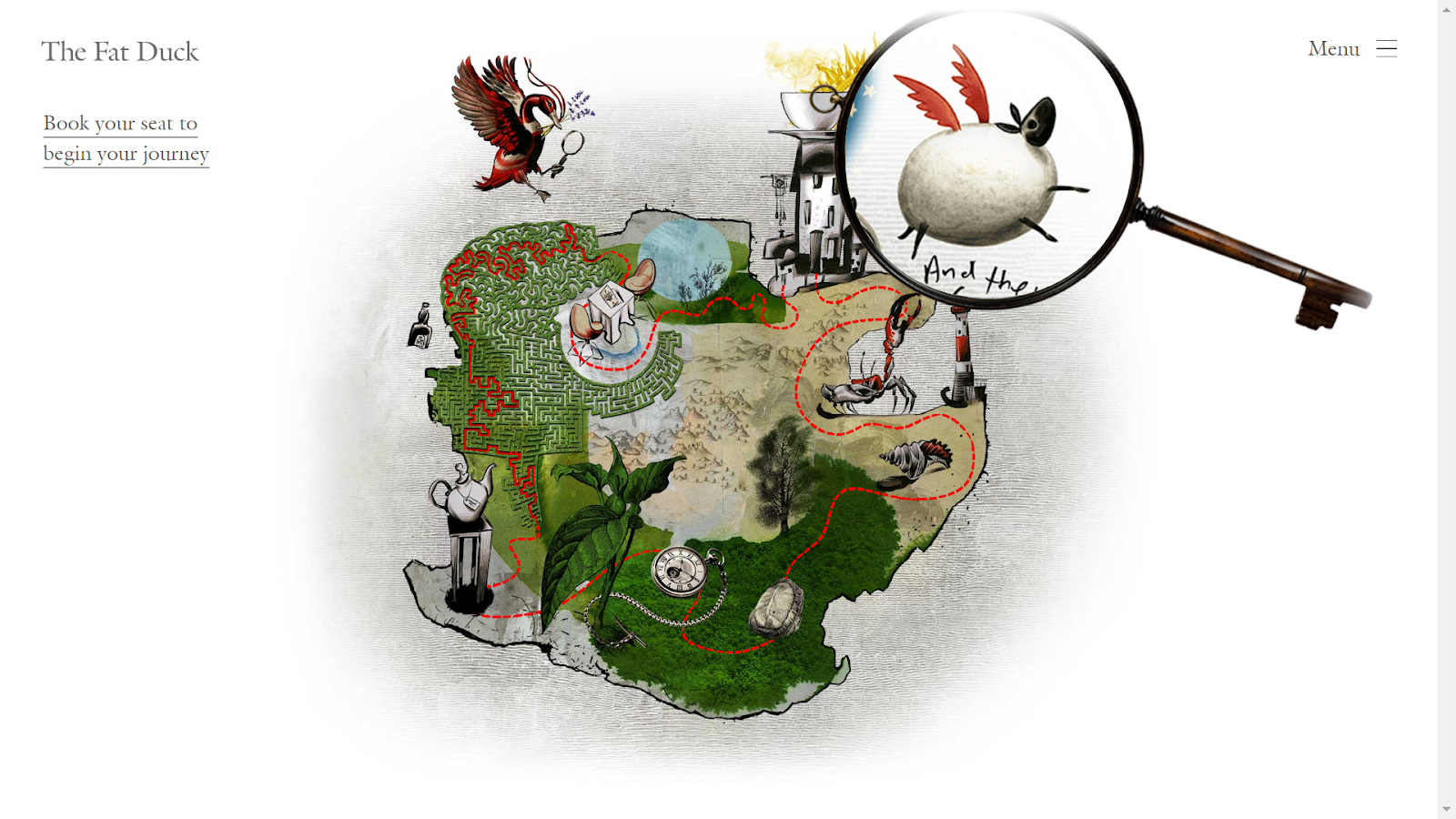
At first glance, this website seems a bit too plain – just a map with an Alice in Wonderland theme – but upon closer inspection (with the giant magnifying glass), you find oodles of small details hidden in the map on the home page. It’s easy to spend several minutes watching the map change through the magnifying glass, adding to the restaurant’s reputation for delivering surprises.
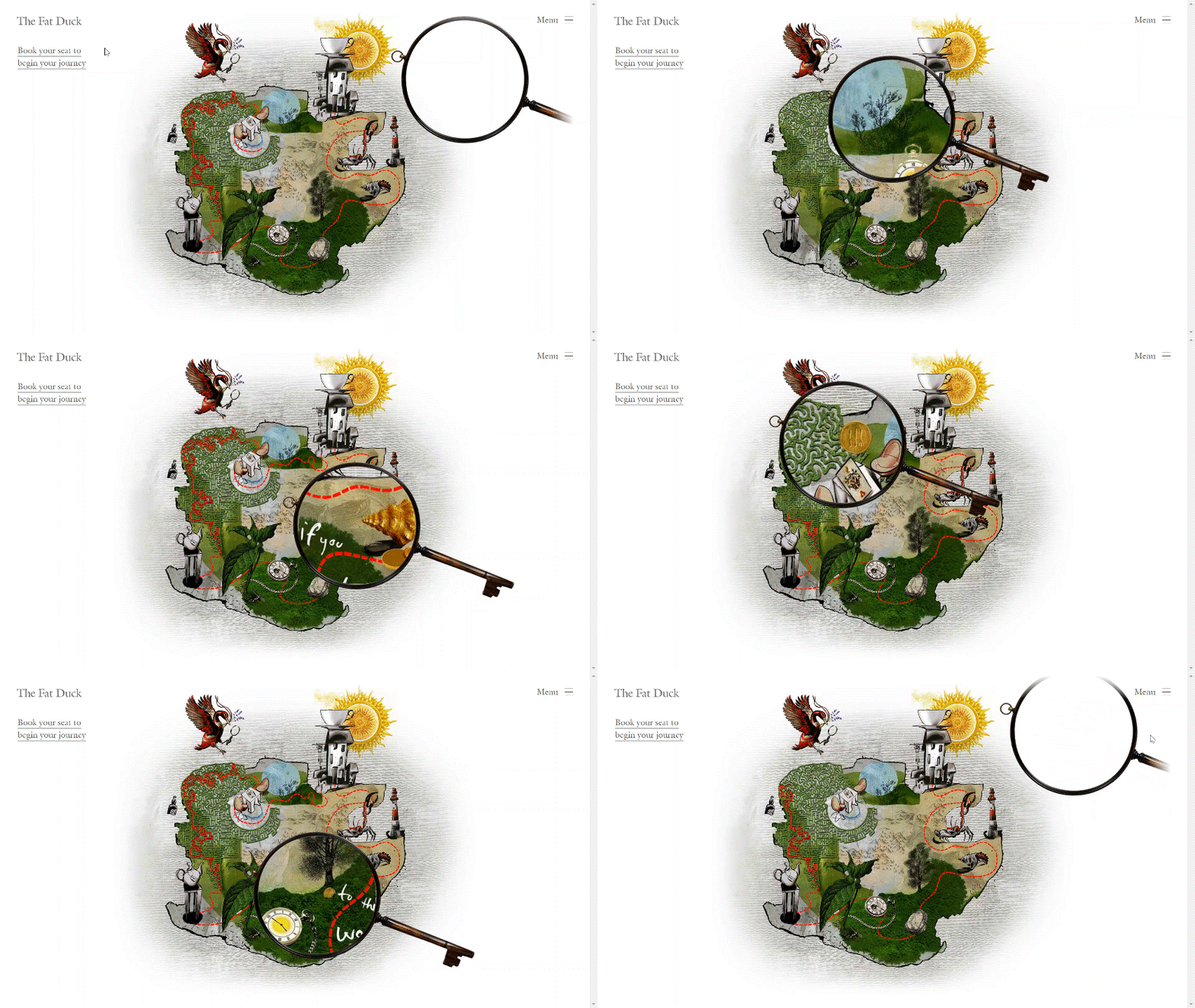
The takeaway: using an interactive element is a great way to make your website more memorable.
Check it out here The Fat Duck
3) JB Restavracija
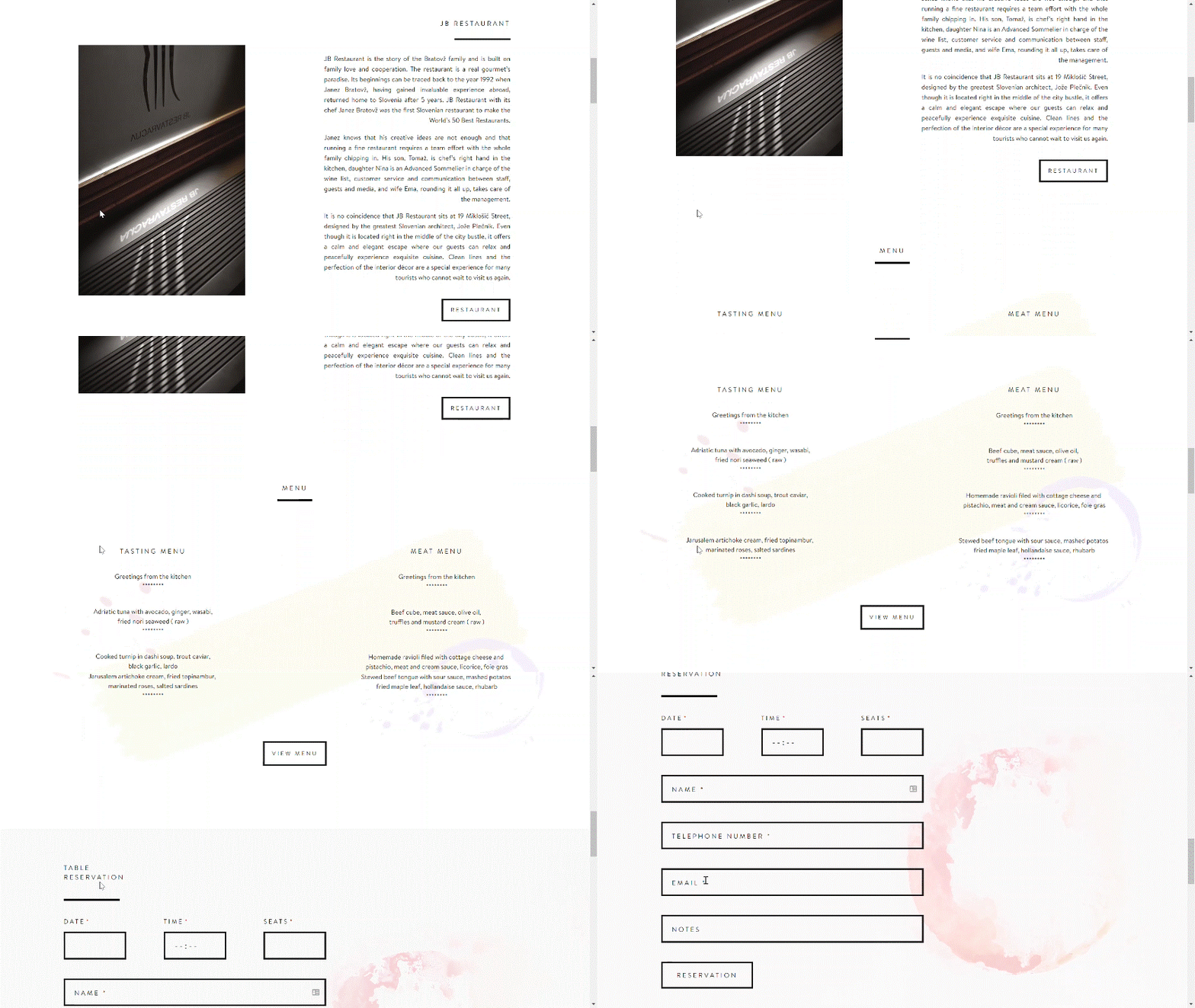
Janez Bratovž, master chef and author, runs JB Restaurant with his family in Slovenia. With a clean and simple design, his website draws all its viewers’ attention to the food. The backgrounds are white with light, watercolour designs and plain black text. This makes the images of their food the sharpest and brightest colours on the page, naturally making them stand out.
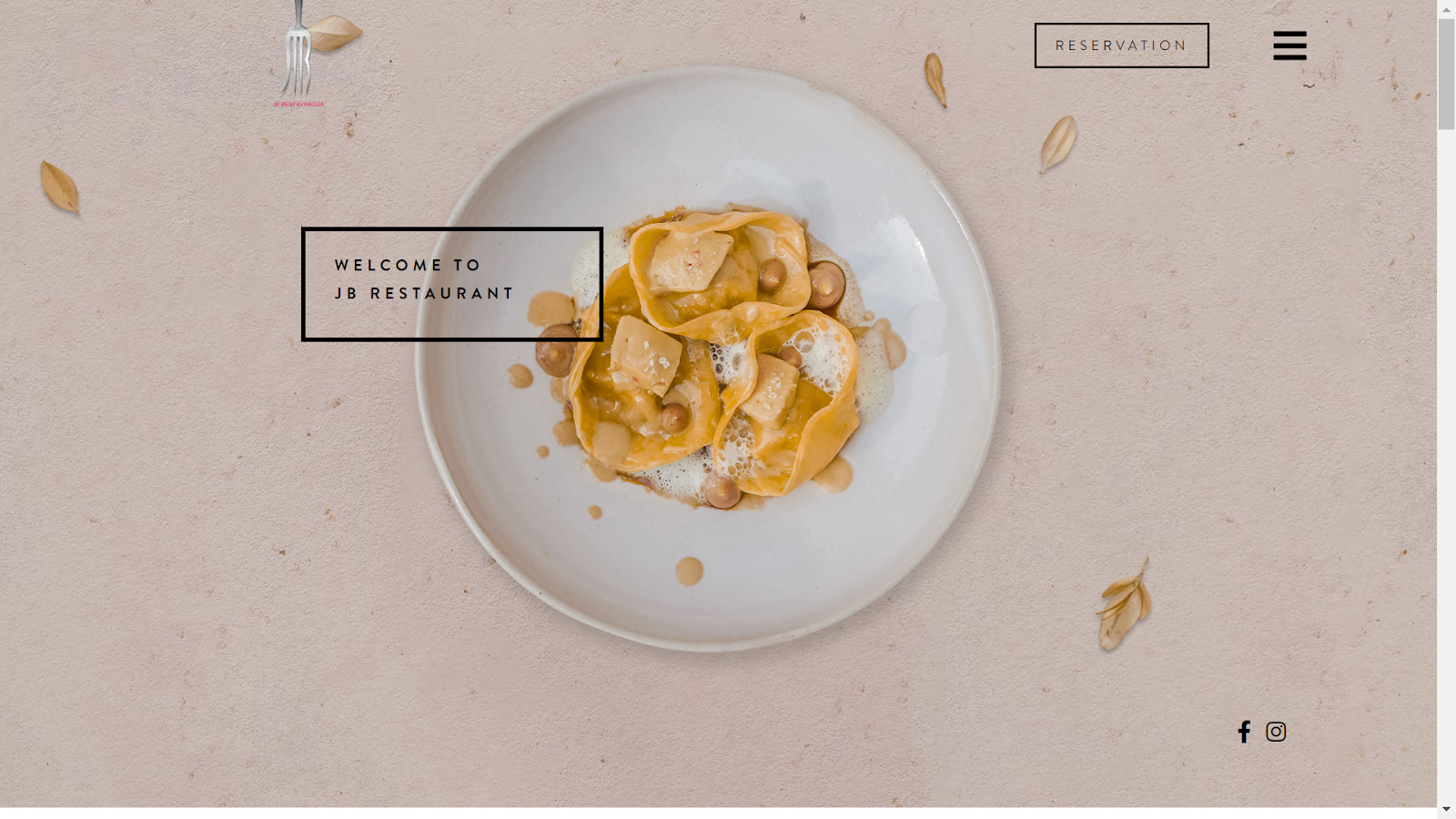
If your food is visually striking and you have (or are willing to pay for), some stunning photographs of your dishes, matching this design could be a great option.
Check it out here JB Restavracija
4) Darwin & Wallace
Darwin & Wallace make great use of their Instagram. All their bars are unique, so, instead of trying to force their website to match all the different aesthetics of their many locations, they have emphasized their bars’ individuality and focused on incorporating their ravishing Instagram feed instead.
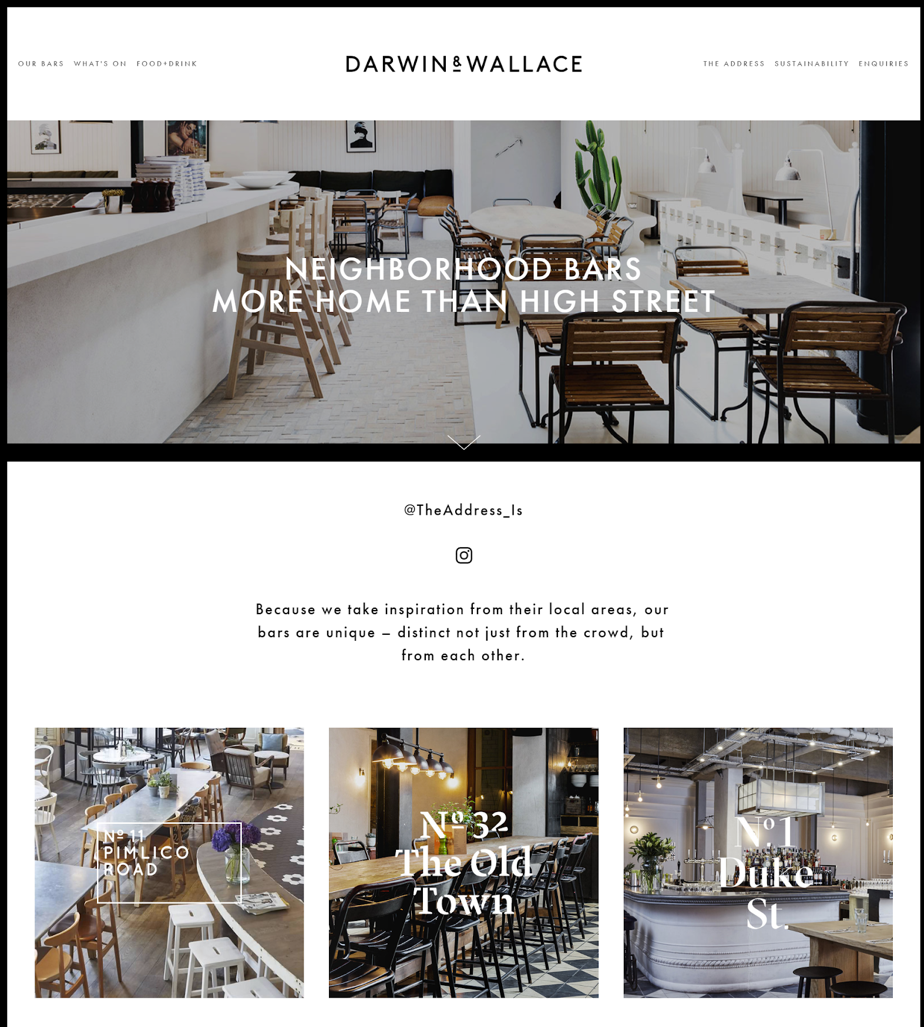
If your business is similarly diverse, this is a great way to still have a central website while allowing each individual location to shine.
Check it out here Darwin And Wallace
5) Bresca
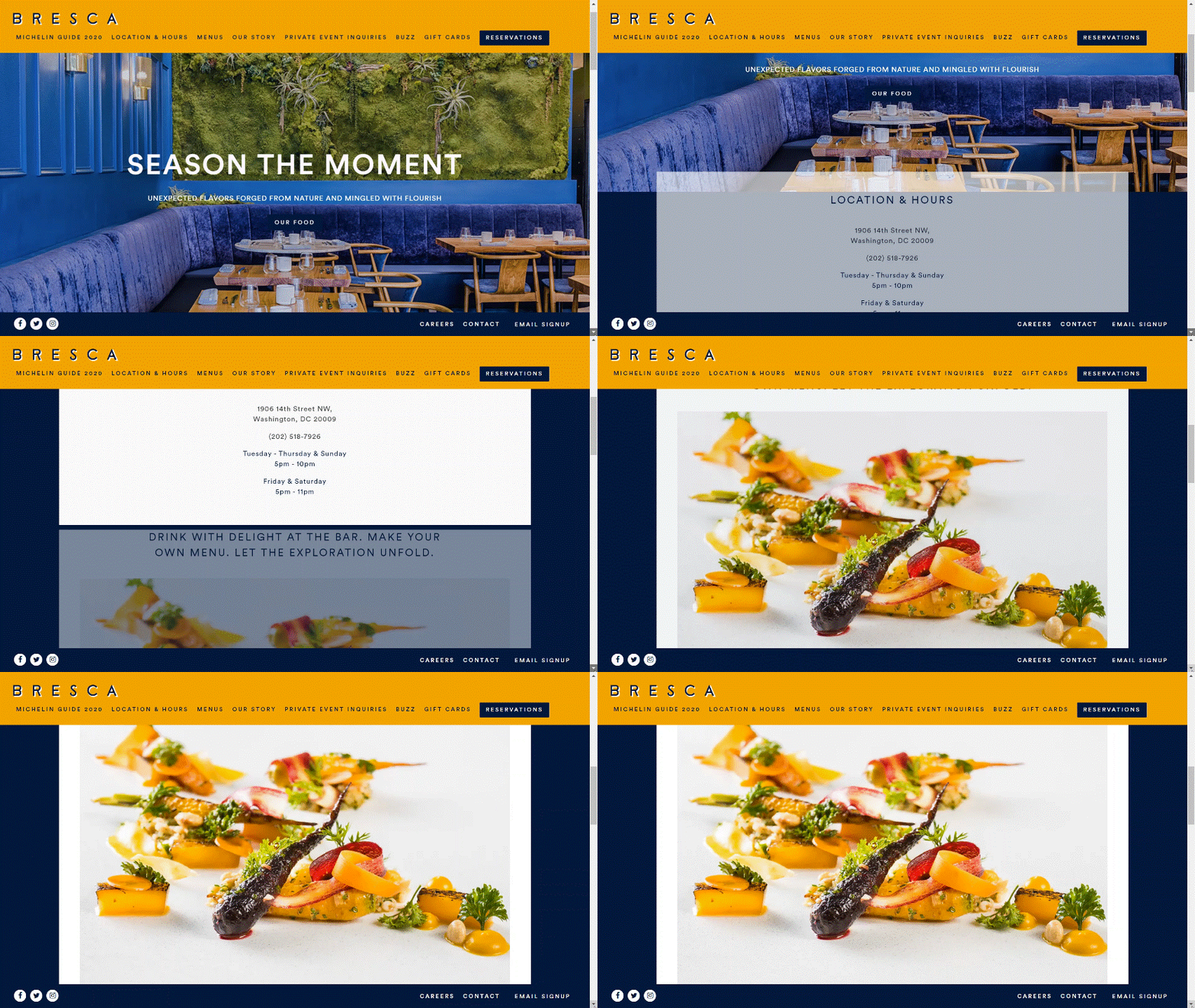
Bresca makes awesome use of subtle animation. As you scroll down the page, the boxes of information fade into view to meet you. This is a nice technique to grab the attention of the viewer without overwhelming them.
If you want to add a special touch to your webpage, use subtle animations to make your site stand out.
Check it out here Bresca
6) Restaurant Colibri – Cuisine Verte et Transparante
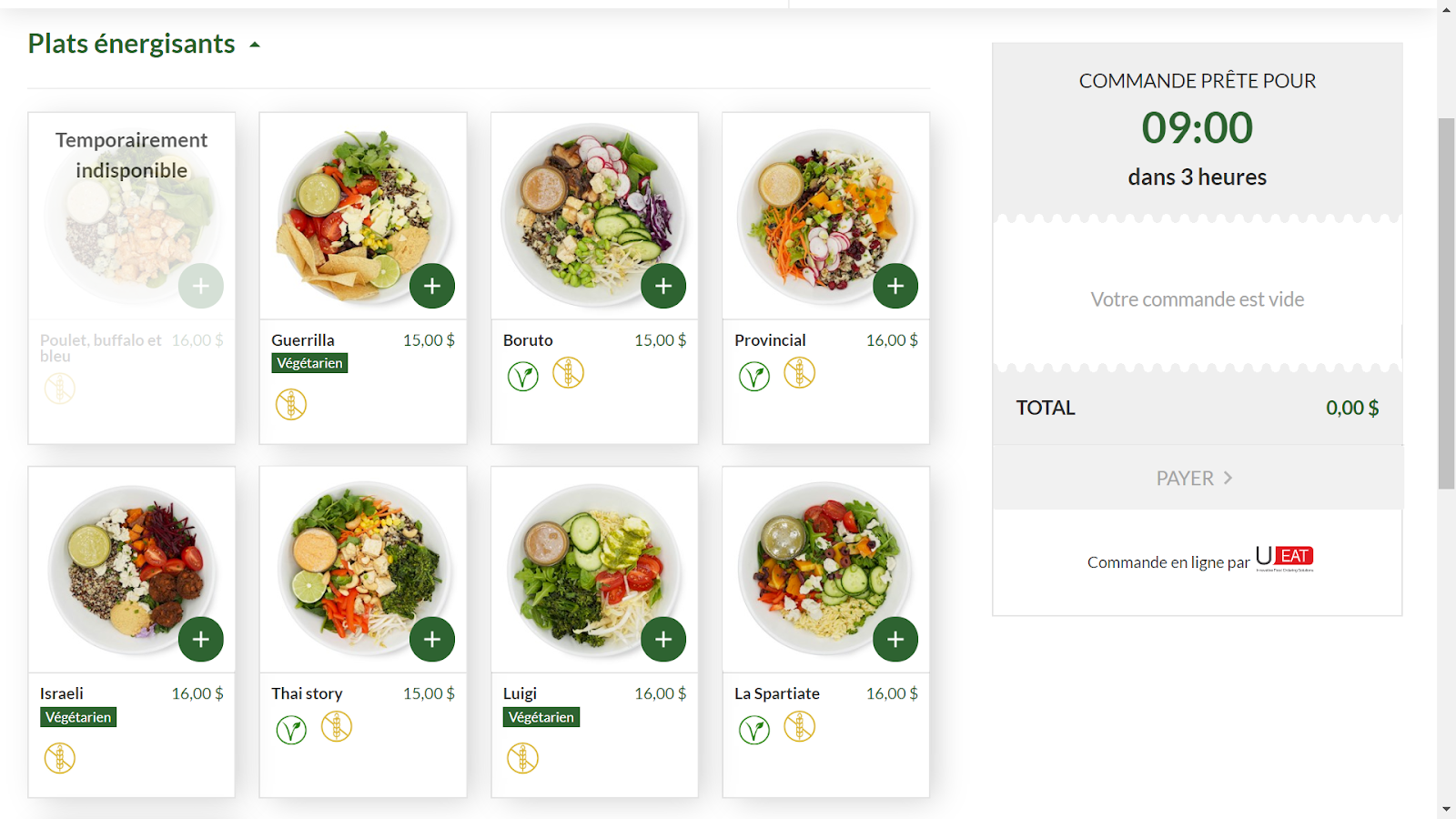
Another site that incorporates a lot of subtle animation is that of Restaurant Colibri who also use their website as an online marketplace. Clearly displaying pictures of food and prices, the site allows you to browse the menu and order what you want for takeaway or delivery. It also has a book now button that allows customers to book reservations online. All of this makes it super easy for customers to engage with their brand
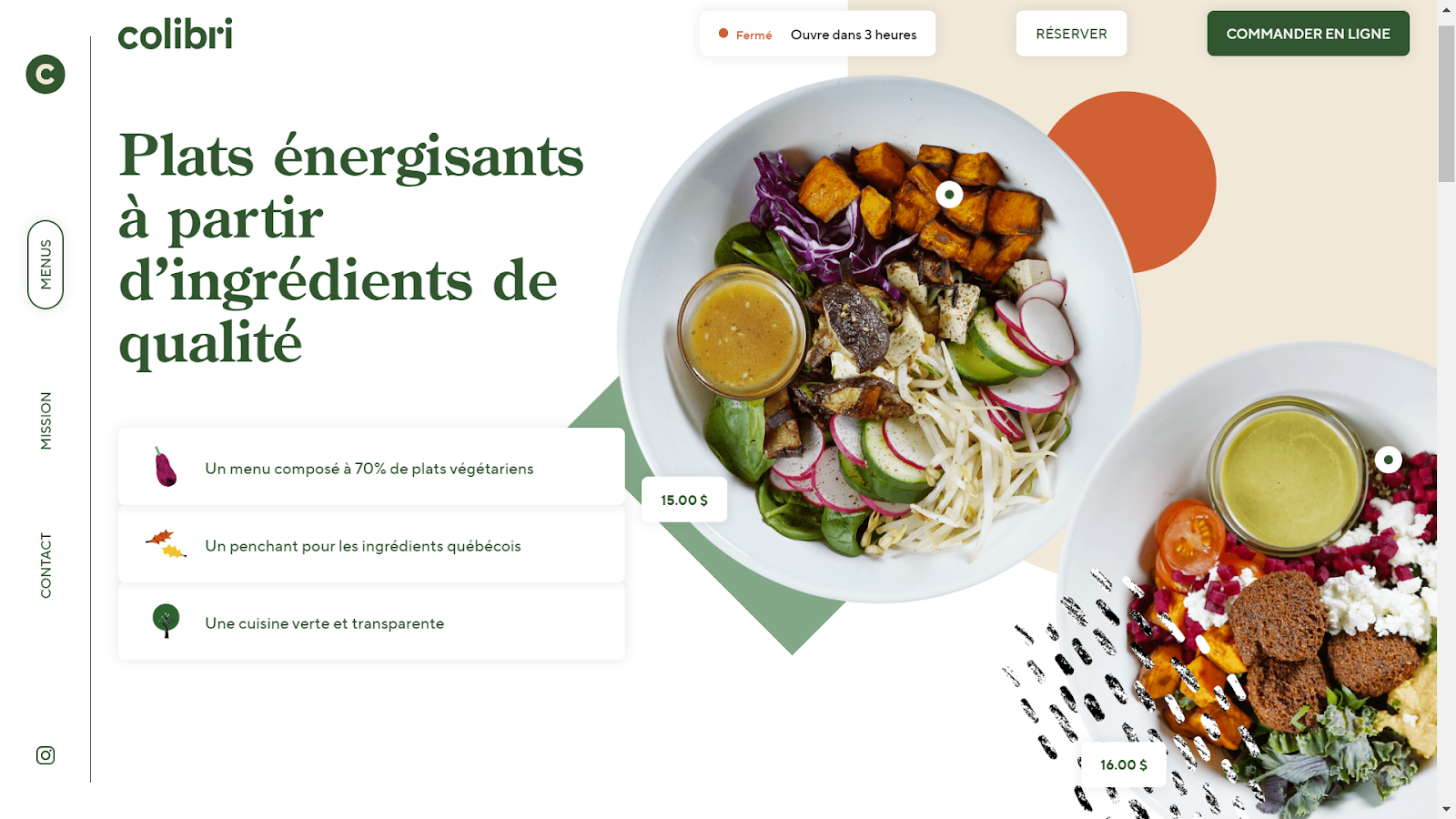
All the tech, combined with the prominent “mission” page, gives the brand a modern, forward-thinking feel, and this is a great investment for a business aiming at future rapid growth. However, this website probably cost a fair chunk to build – so this route certainly isn’t for everyone.
Check it out here Restaurant Colibri
7) Craft and Kitchen
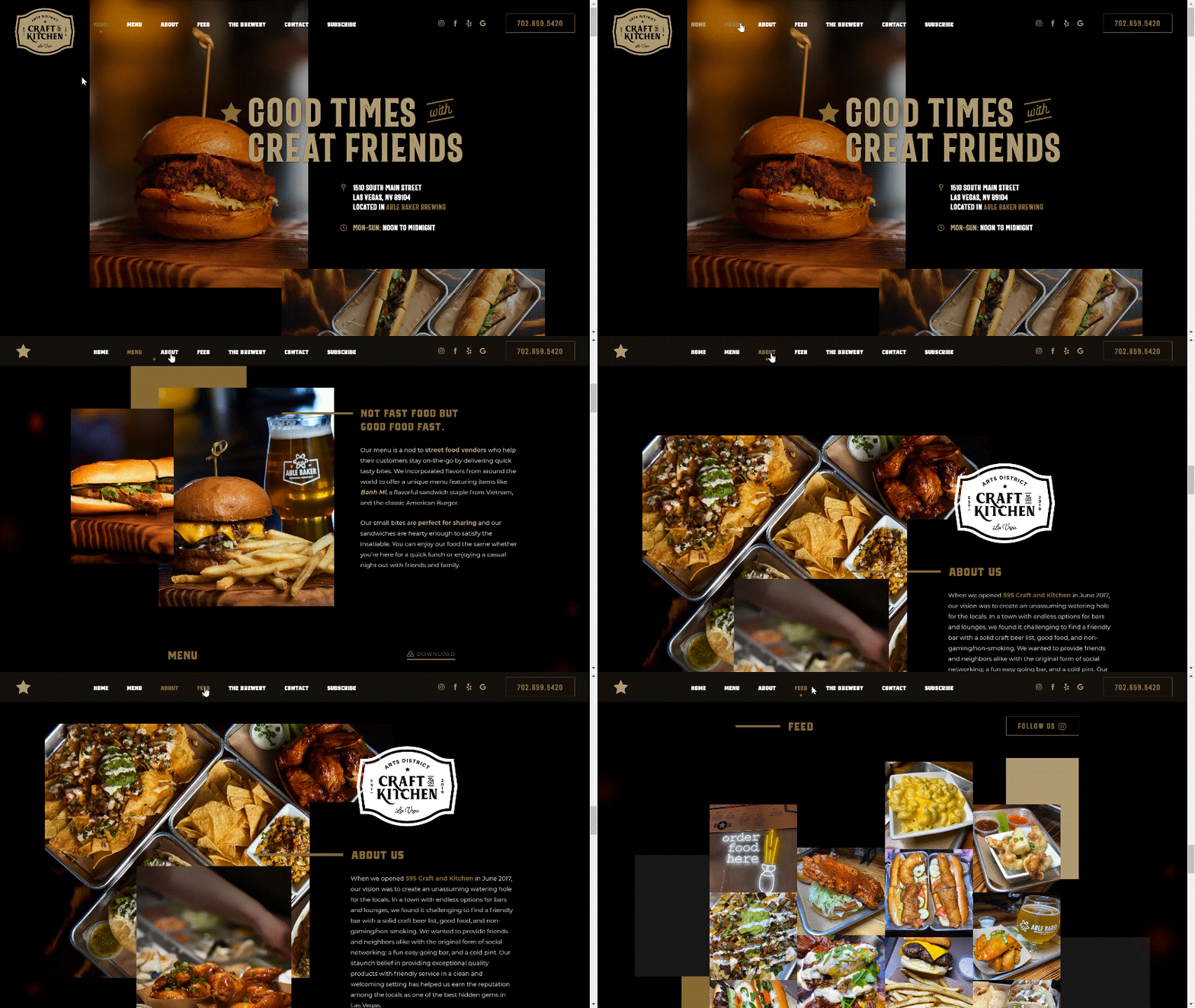
With an elegant and straightforward design, Art District Craft and Kitchen in Las Vegas places all the important links on the home page in a simple scrolling fashion. It makes the site very simple to navigate. The use of a darker background with white and gold lettering also makes the text easier to read. The menu at the top of the page also changes colour from white to gold once you reach that section of the page, that way you can’t get lost.
Placing everything on the home page and creating simple anchor points from the menu is a great way to make your website more user-friendly.
Check it out here Craft and Kitchen
8) El Burro
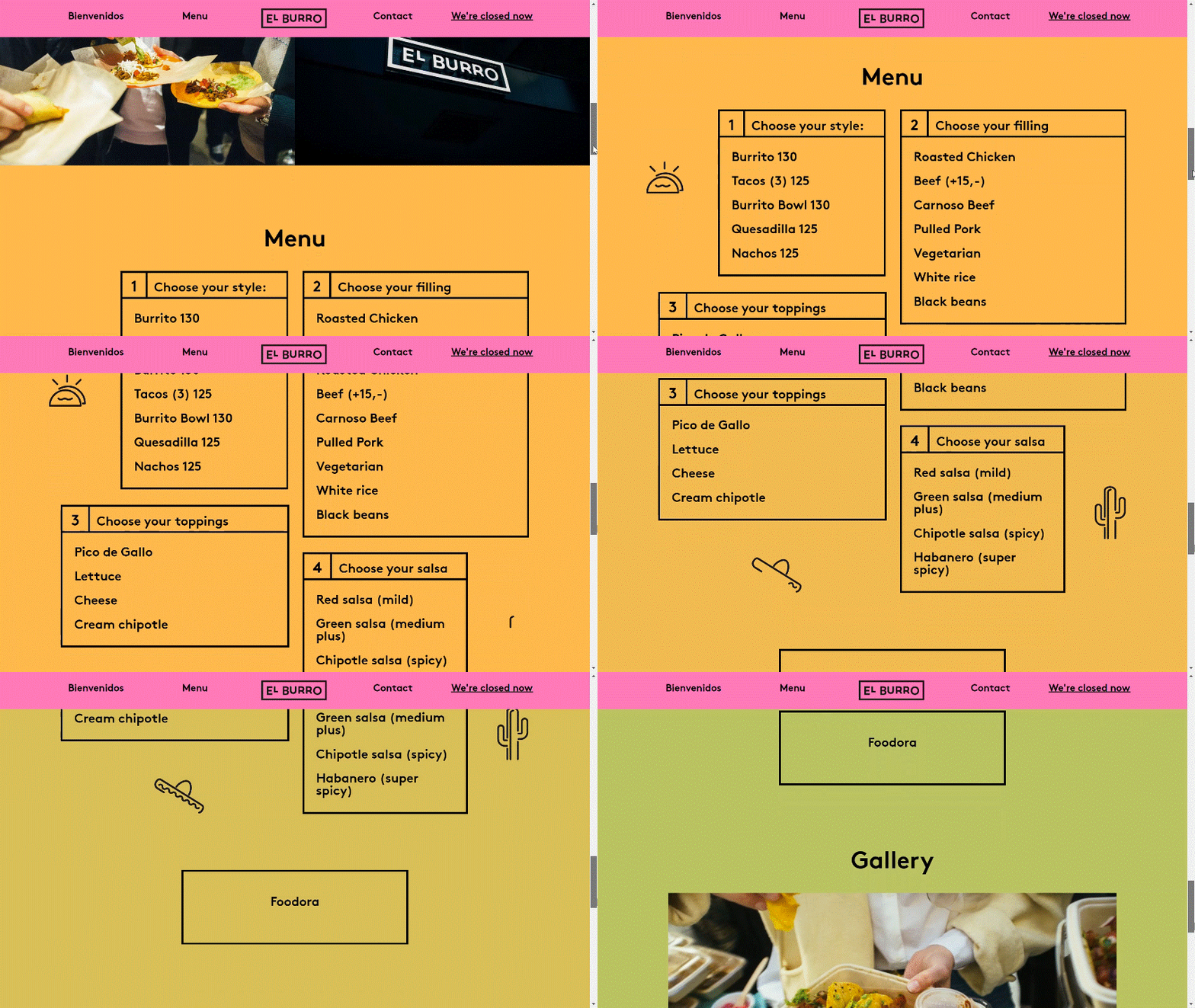
This Mexican street food restaurant in Oslo has one of the brightest and boldest websites I’ve ever seen. It uses the same simple formatting as Craft and Kitchen (above) with simple scrolling navigation, but in bright pinks, oranges and greens. The colours perfectly complement the pictures of their food and make them stand out from the pack.
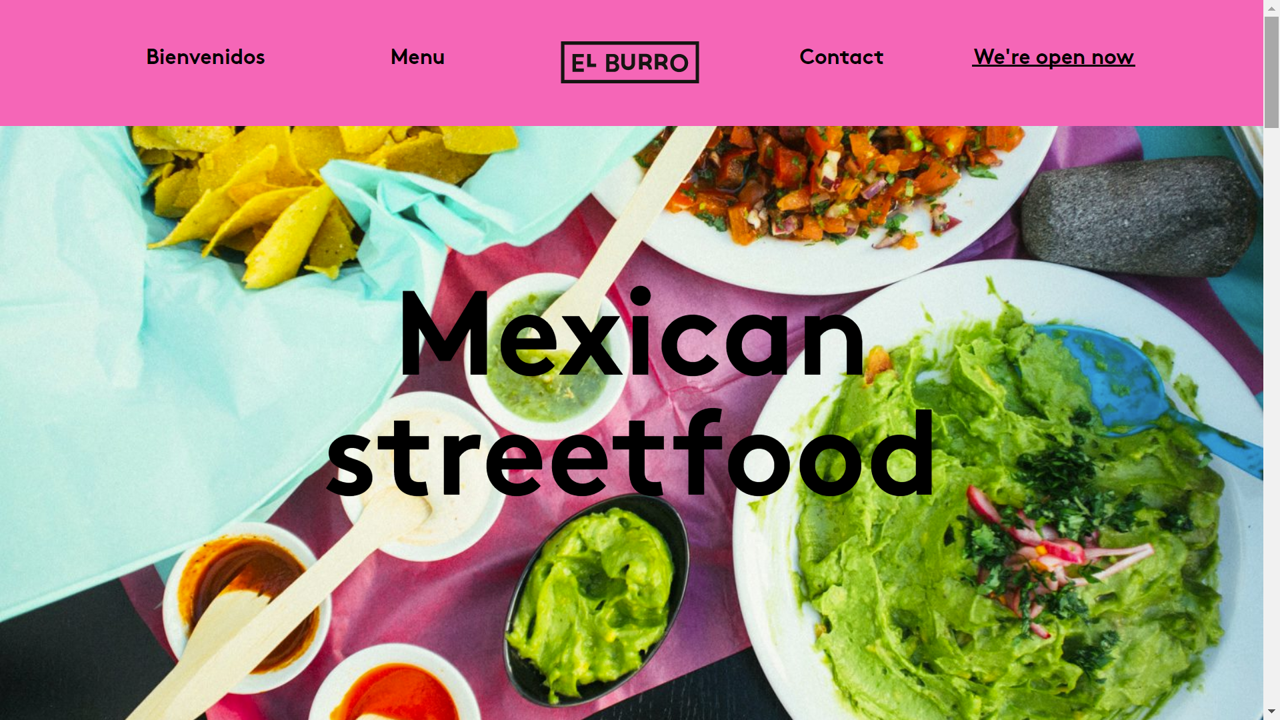
Choosing the right colour palette for your site is important, but don’t limit yourself to what is classically appealing if it doesn’t match your vibe.
Check it out here El Burro
9) Quince Restaurant
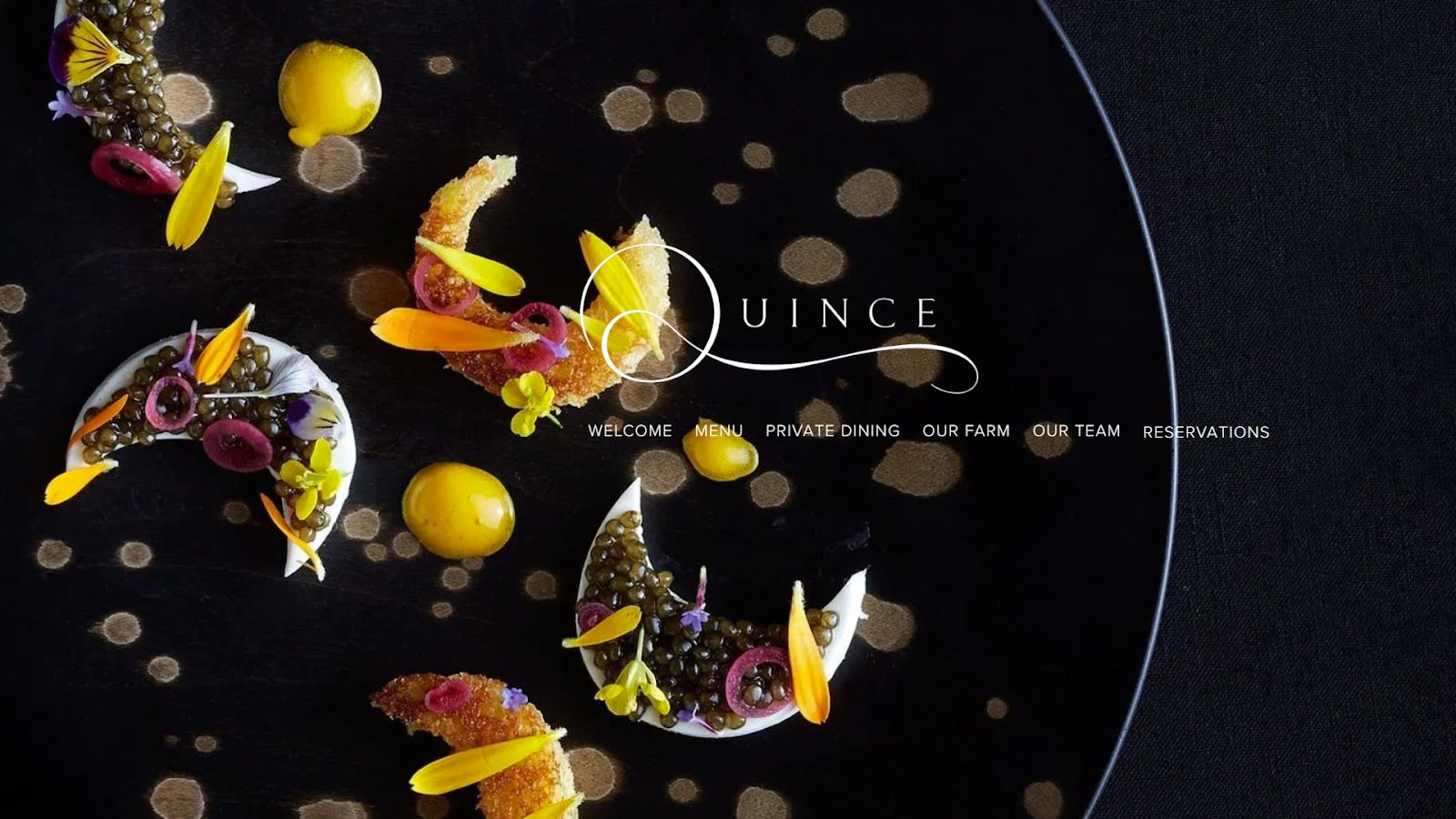
Quince Restaurant has a very minimalistic home page. It’s simply a beautiful image of a dish and links to their other pages. The setup alone reflects the elegance of the restaurant. It’s a great reminder that websites don’t always have to be overly complicated.
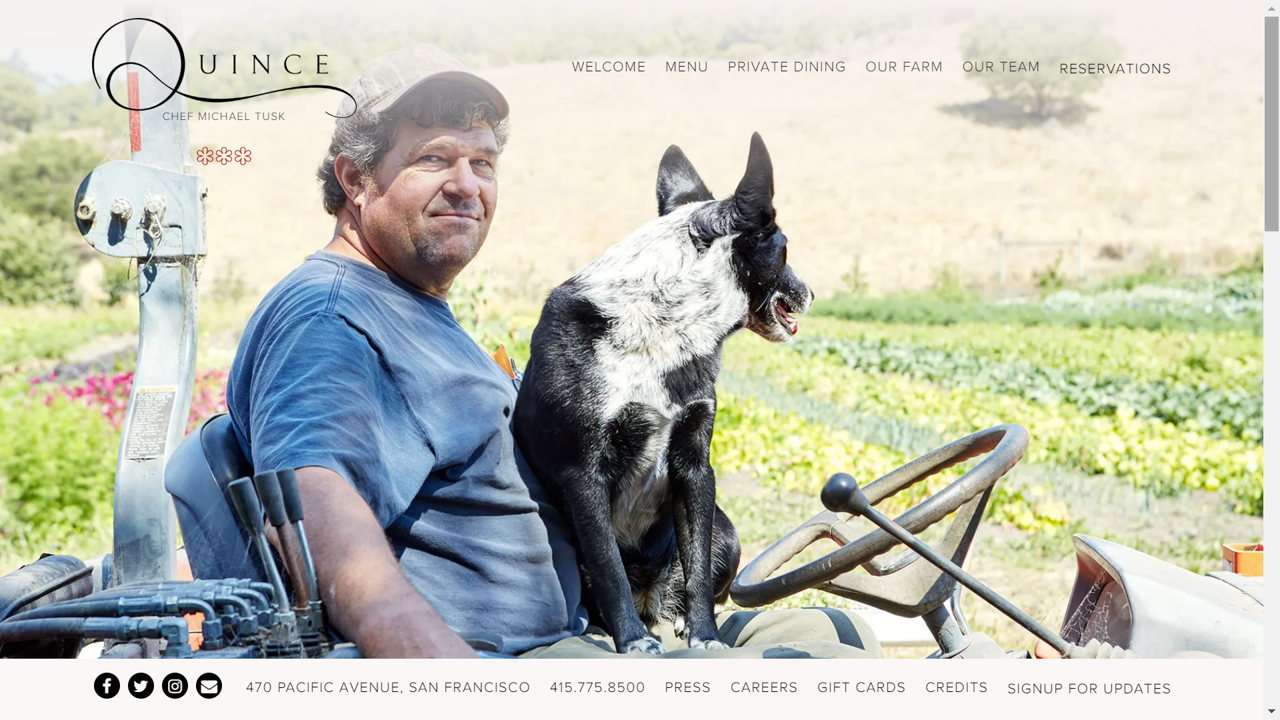
Their “our farm” page also does a great job of emphasizing their “farm-to-table” ethos with some beautiful rustic images. This a great example of how to give a solid nod to your values without overdoing it.
Check it out here Quince Restaurant
10) Pastaria
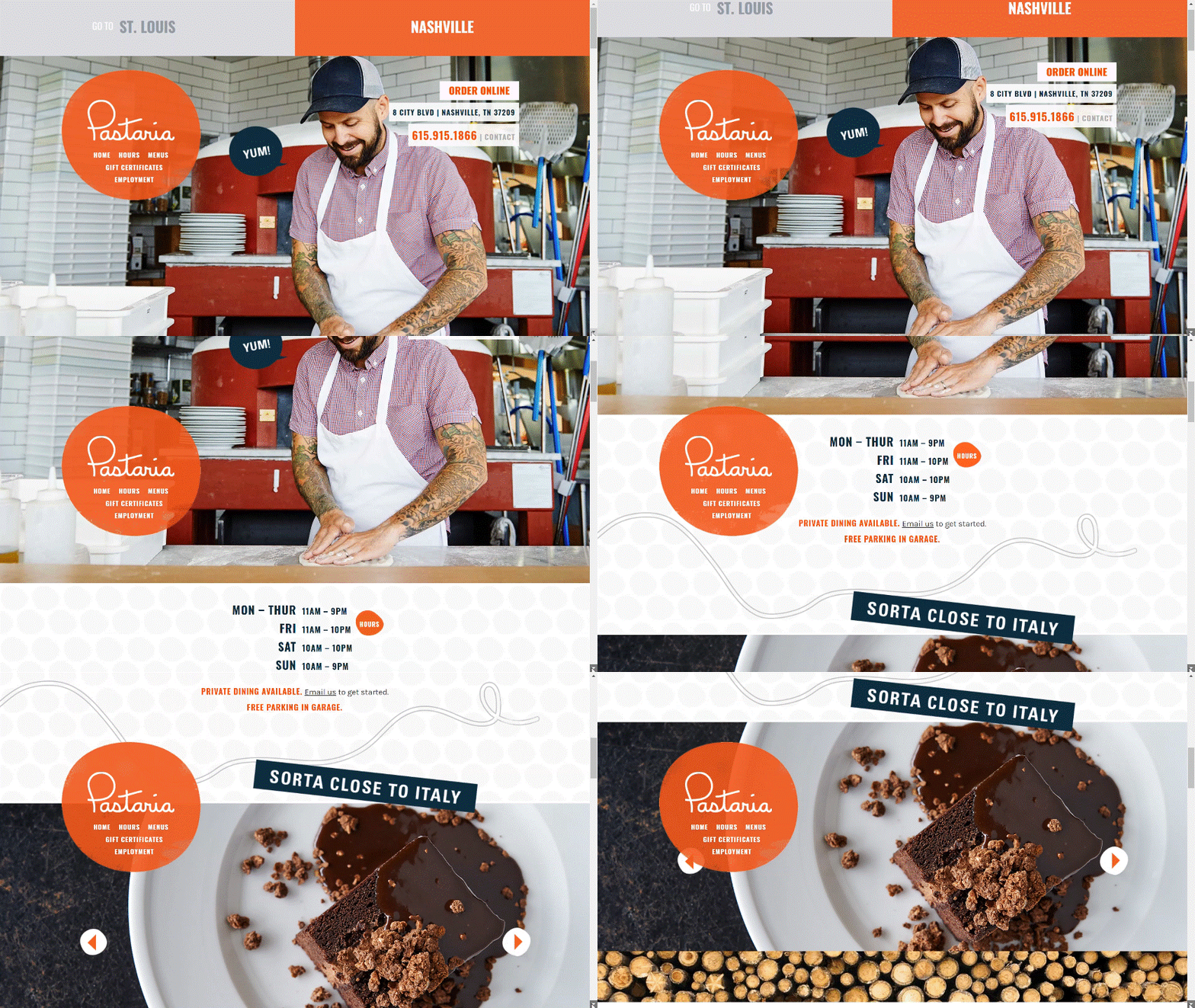
With a simple one-page design, Pastaria’s website is easy to navigate. To add to this ease, they included a permanent bubble navigation bar that stays on the screen as you scroll. Having your navigation bar readily available in the form of a bubble, topbar, or sidebar is a great idea. 65% of people look at the restaurant menu online before visiting, so if people can’t find your food, they won’t bother trying to find your restaurant. Make sure that doesn’t happen by making your navigation bar user-friendly.
They’ve also done a great job of getting across their cheeky, fun brand by popping in some humour here and there. Visitors to the site instantly get the impression that this will be a relaxed place to eat, drink, and have fun.
Check it out here Pastaria Nashville – A fresh approach to Italian dining
11) Sliders
Sliders in Copenhagen is a burger restaurant that aims to combine Tapas and great burgers. Their site sports a gorgeous white-on-black theme with gold accents and is relatively easy to use. But, what really makes it stand out is the menu.
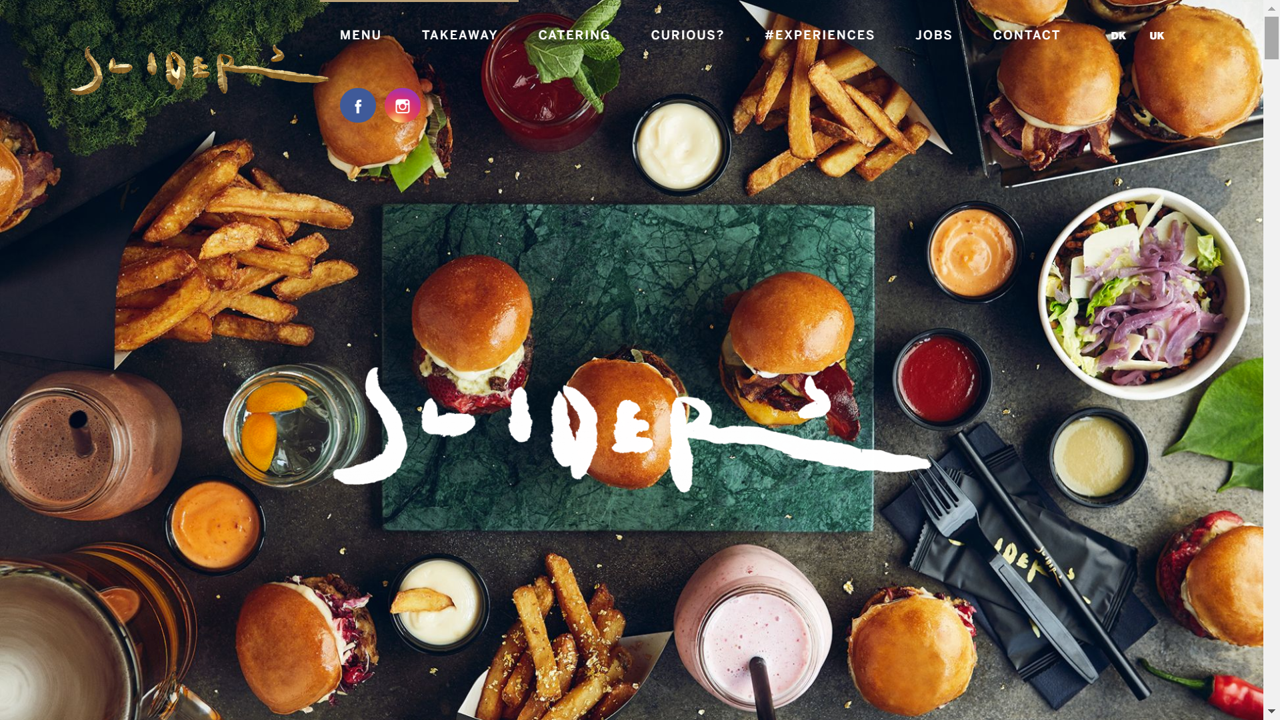
The menu is both a classic written menu and completely made up of pictures. As you scroll over the different menu items, the written description fades away to reveal a picture of the item. This is a great way to add both pictures and full descriptions of the food onto the menu without making the menu page too crowded.
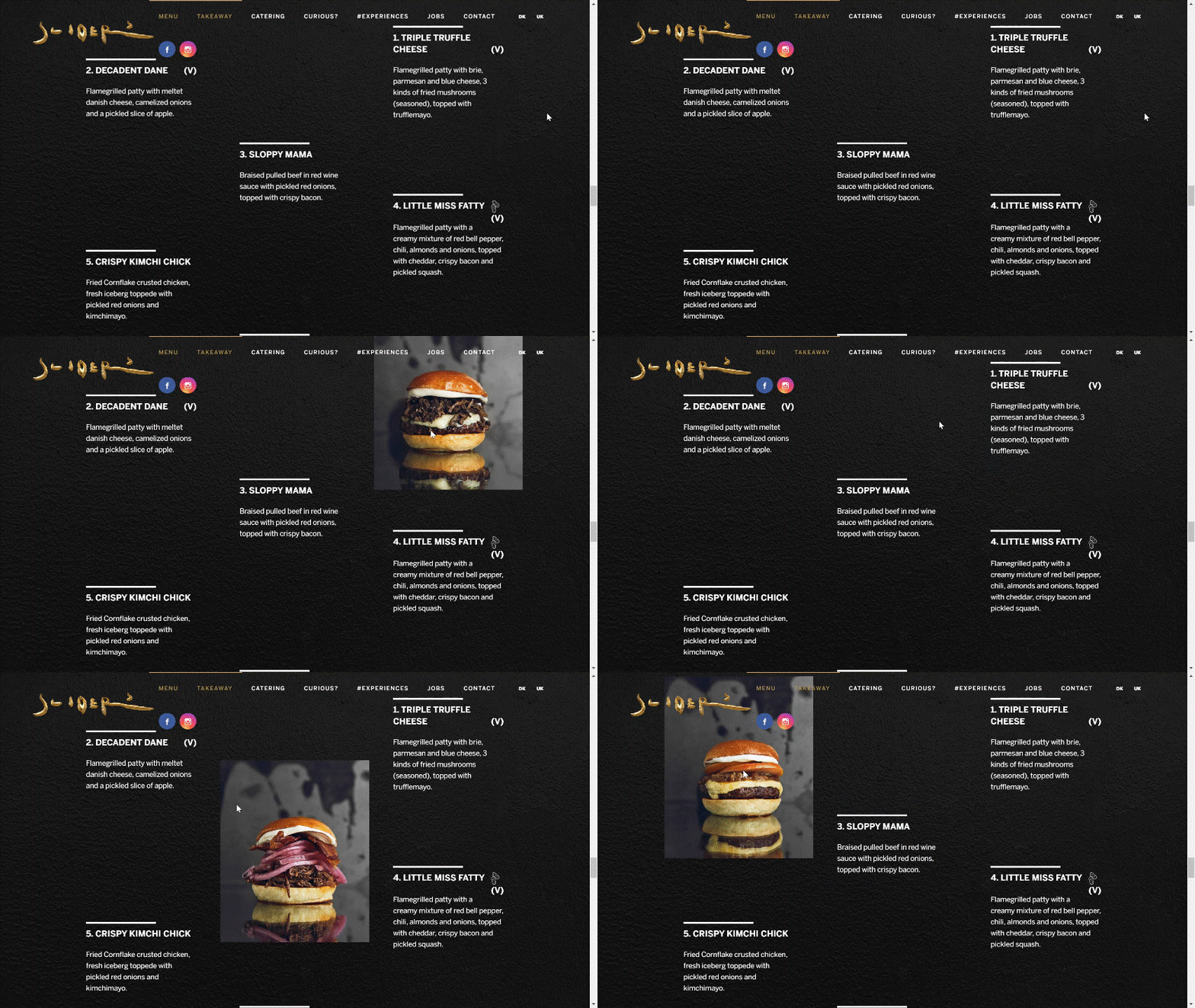
If you’re worried about adding pictures and full text to your website, this is the perfect solution. It has the added bonus of making your site more dynamic.
Check it out here Sliders
12) Middle Child
Speaking of dynamic, nothing makes a website stand out more than moving elements. As discussed with Bresca, adding animations to your website makes the site more interesting to explore. If you are interested in seeing a whole range of different types of animation you should look at Middle Child’s website.
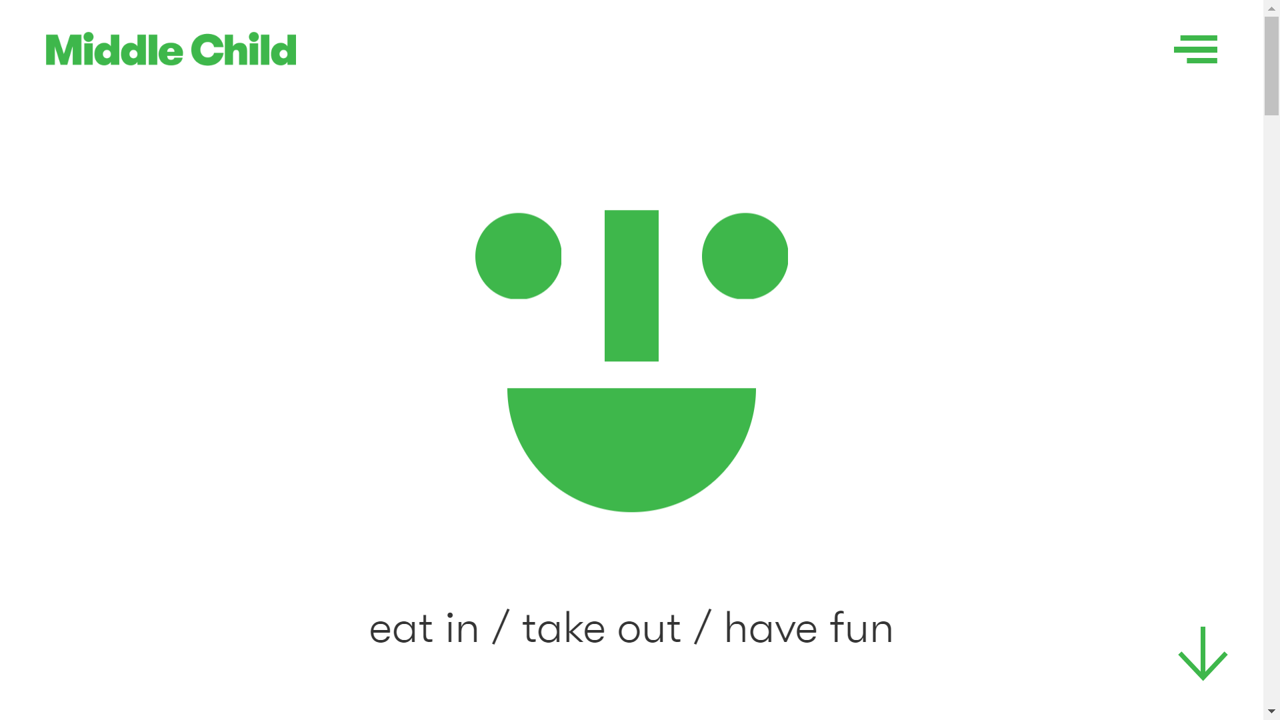
This Philadelphia restaurant uses scrolling text, a sandwich train, and a blinking logo to make their otherwise simple website a bundle of fun. It creates a playful, child-like feel that perfectly matches the brand name.
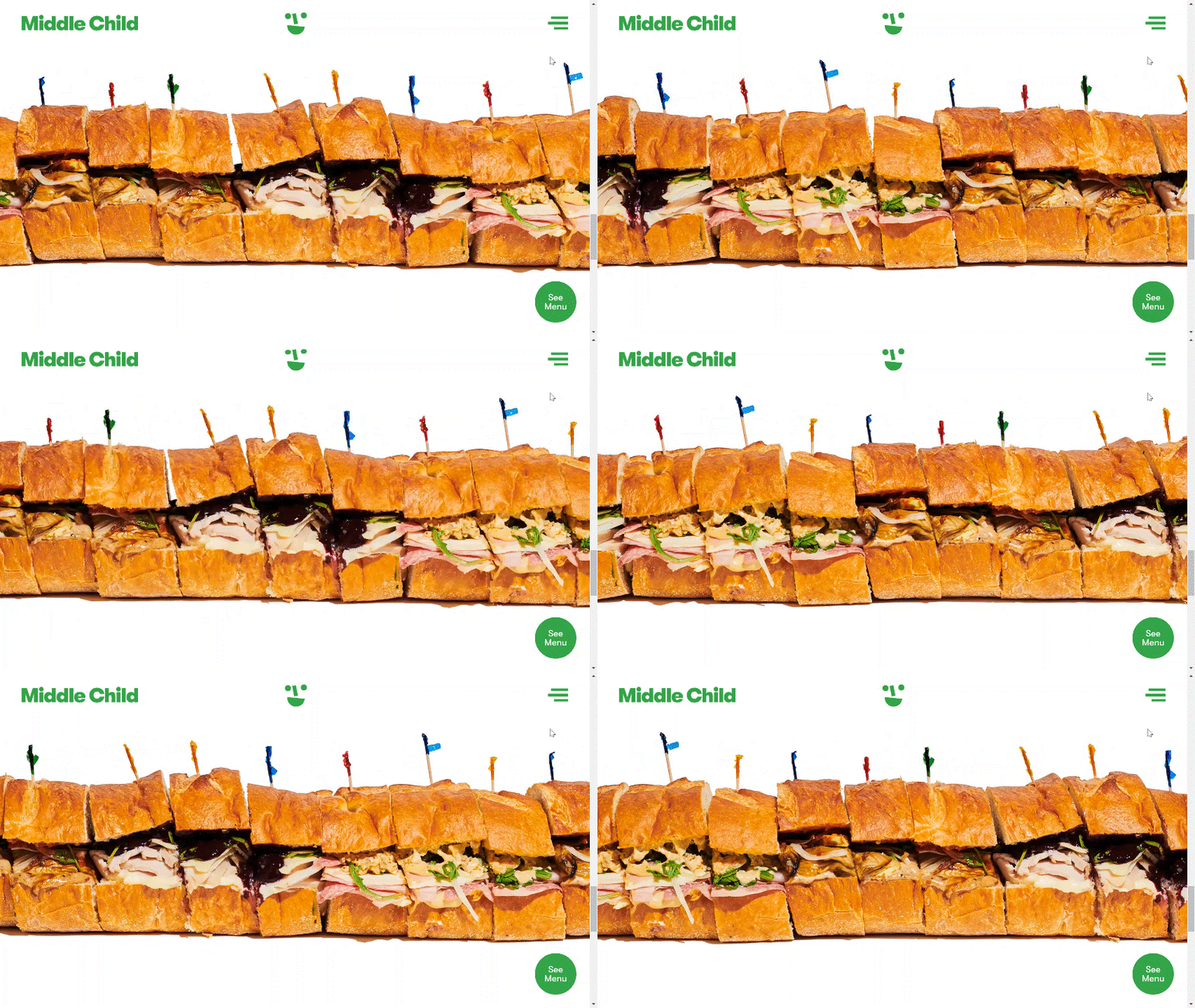
If you want to create a more fun-loving atmosphere, less subtle animations are the way to go.
Check it out here Middle Child
13) Malai Ice Cream and Cake
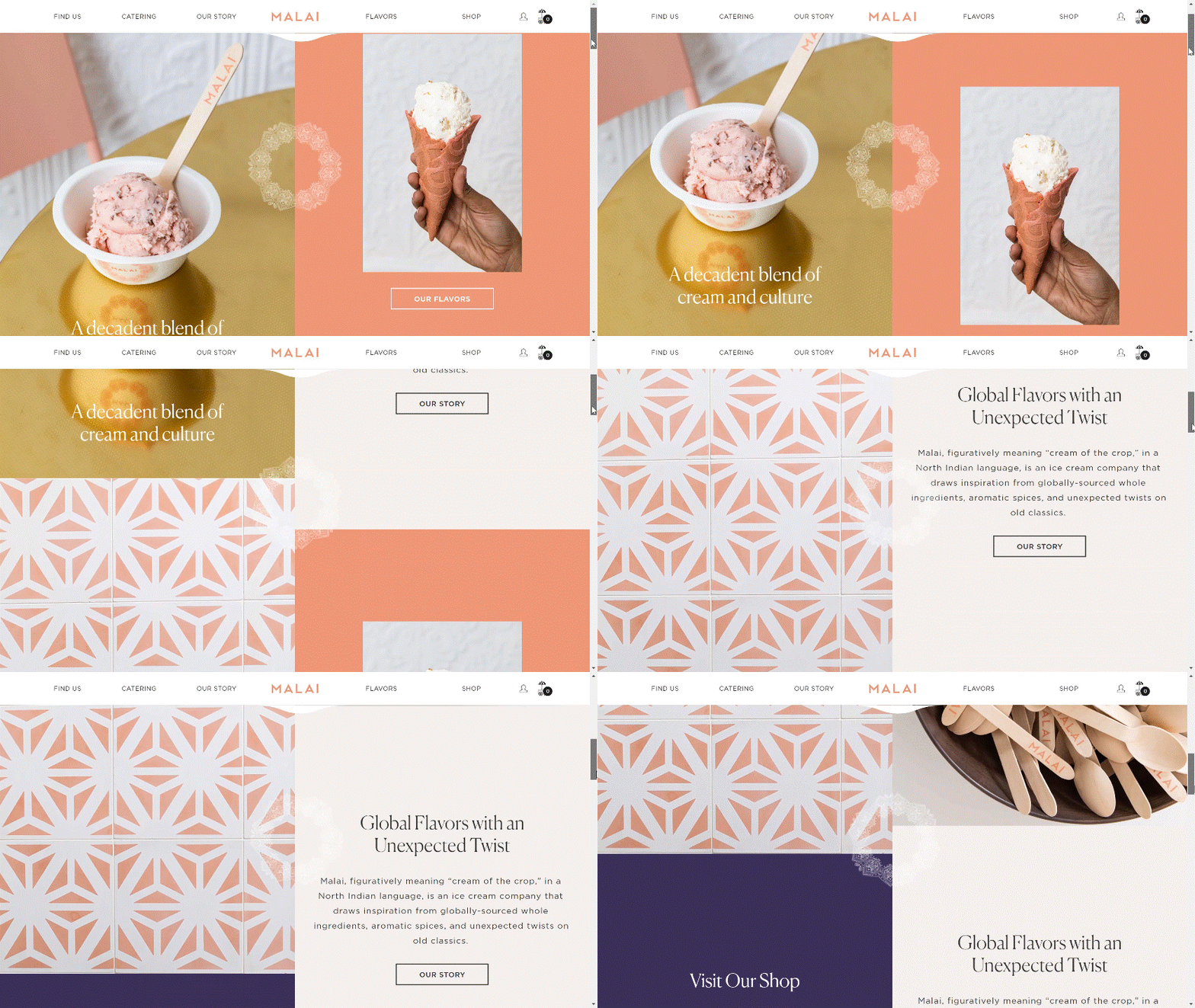
Malai Ice Cream and Cake is a chain headquartered in Brooklyn, New York, that uses South Asian flavours to inspire their unique desserts. Their website uses a scrolling animation that is both interesting and fun. The two halves of the screen move independently, one scrolling up, the other down, as you make your way down the page.
This page animation is more dynamic than simply fading in and out but doesn’t harm the viewer’s ability to read through the page. It’s a fun way to make your site stand out.
Check it out here Malai Ice Cream and Cakes
14) Top 2000 Online Café
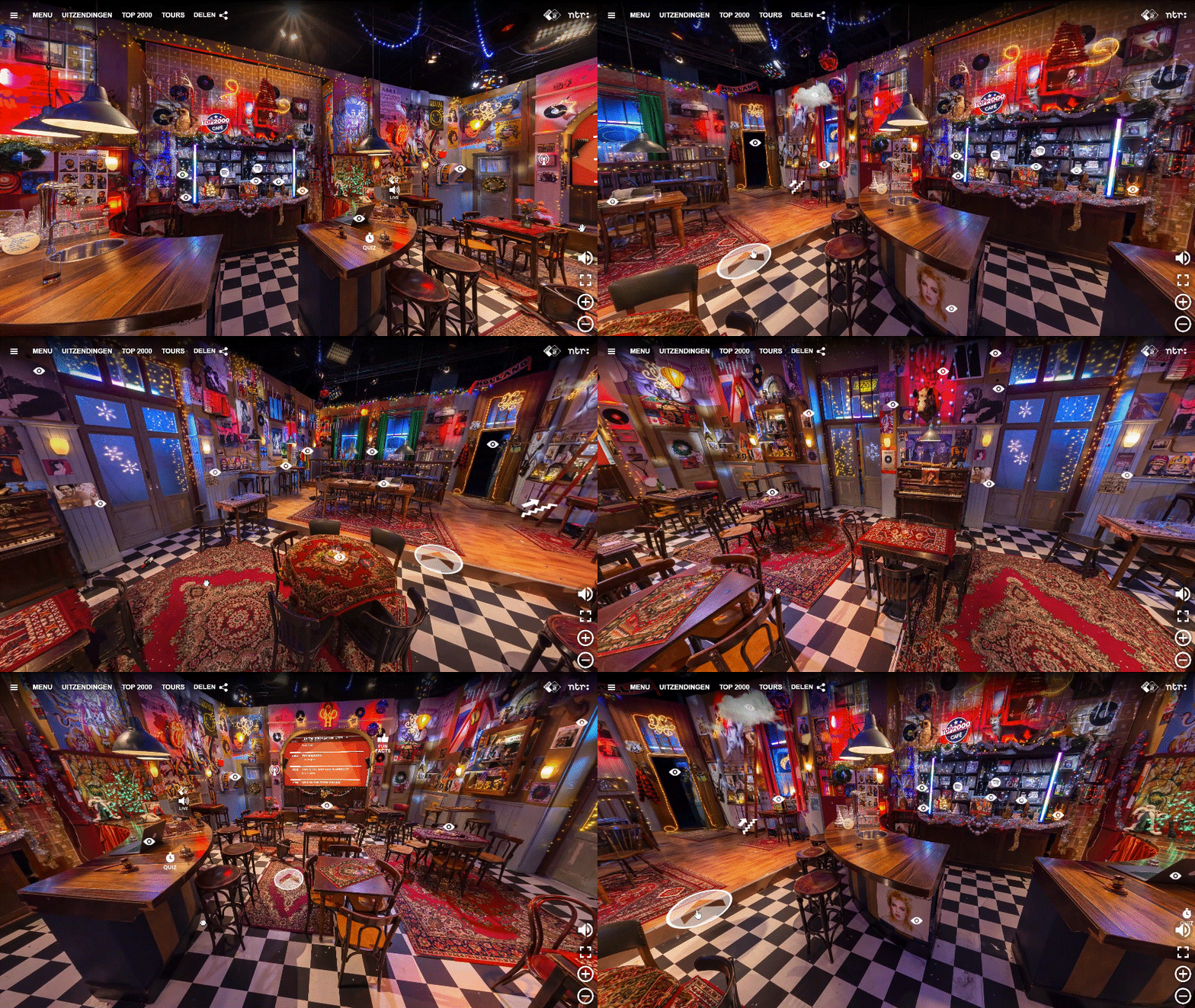
Okay, so it might not be a real place, but this fictional cafe’s site is so unique it’s worth including. A completely interactive 3-D space from the back of the bar to the second floor, there isn’t a single area that can’t be explored on this website.
If you have a truly unique and interesting space, the confidence expressed by making the experience available online could make your business feel like an iconic landmark. A gutsy strategy, but I can think of a few special places that could probably pull off this look.
Check it out here Top 2000 Online Café
15) Simmons Bar
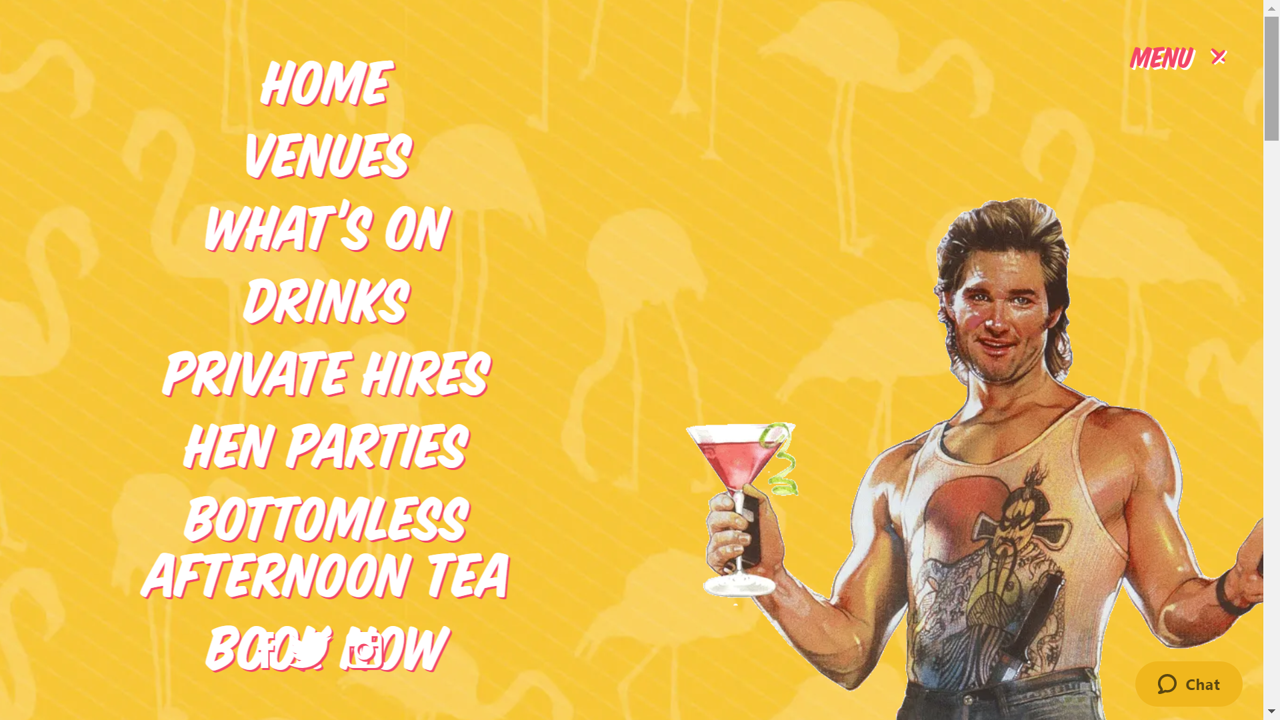
This website is a reminder to stay true to your brand’s theme, no matter how crazy it is. Simmons bar in London is definitely a place to go for a fun time. Their website is full of fun elements, from bright colours and fun drawings to a martini-drinking Kurt Russell cutout in the pulldown menu.
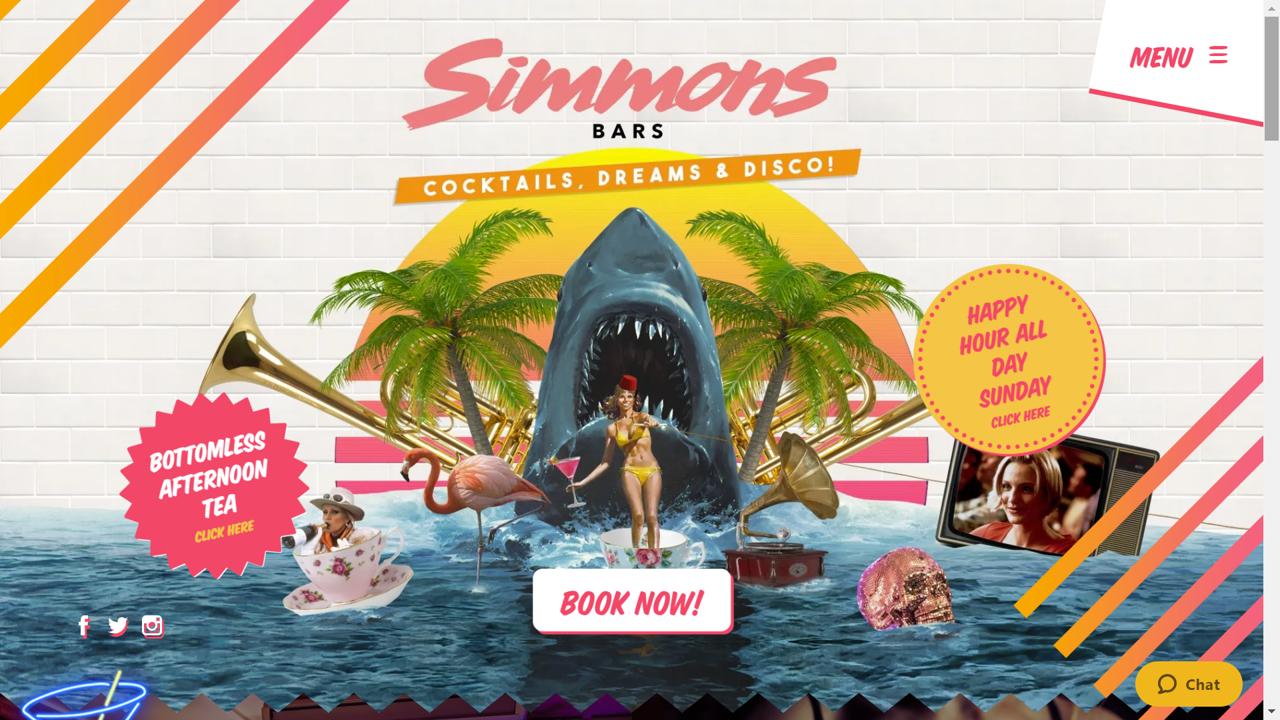
It doesn’t matter how crazy your restaurant or bar is, you can find the perfect way to present your brand online. Don’t be afraid of stepping out of the box.
Check it out here Simmons Bar
Conclusion
Building the perfect website can be a challenge. So, if you really find yourself at a loss for how to represent your brand online, take some inspiration from these fabulous examples. They all have great elements that really enhance the way their restaurants’ brands are presented.
Most of all, each site stays true to brand: reflecting and emphasising the uniqueness of the businesses’ values, food, and location. Lest we forget, the most important thing is…always be yourself.

The post Restaurant Websites | The 15 best to get inspired by in 2020 appeared first on Tenzo.
]]>Holiday lights are up, ugly reindeer jumpers are out, and you can’t cross the road without seeing someone hawking mince pies. Yes, Christmas is upon us! We look at how restaurants and Christmas can help make Christmas jolly again. While Christmas is largely seen as a holiday for eating at home, from 2014-2018, restaurants saw […]
The post Restaurants and Christmas | 6 ways to make Christmas jolly again appeared first on Tenzo.
]]>Holiday lights are up, ugly reindeer jumpers are out, and you can’t cross the road without seeing someone hawking mince pies. Yes, Christmas is upon us! We look at how restaurants and Christmas can help make Christmas jolly again.
While Christmas is largely seen as a holiday for eating at home, from 2014-2018, restaurants saw a rise in the number of customer reservations for eating out on the 25th of December. 10% of people in one survey expressed the desire to eat out on Christmas day.
Below are some ways in which food and beverage businesses can boost their visibility throughout the month of December.
We’ll be Open for Christmas
The first piece of advice would be to actually be open over Christmas. According to Yelp, of the 30,000+ restaurants in London, only 713 are said to be open. With the growing interest in eating out over the festive period, this means there is a lot of room for restaurants looking to corner the market.
Festive Menus
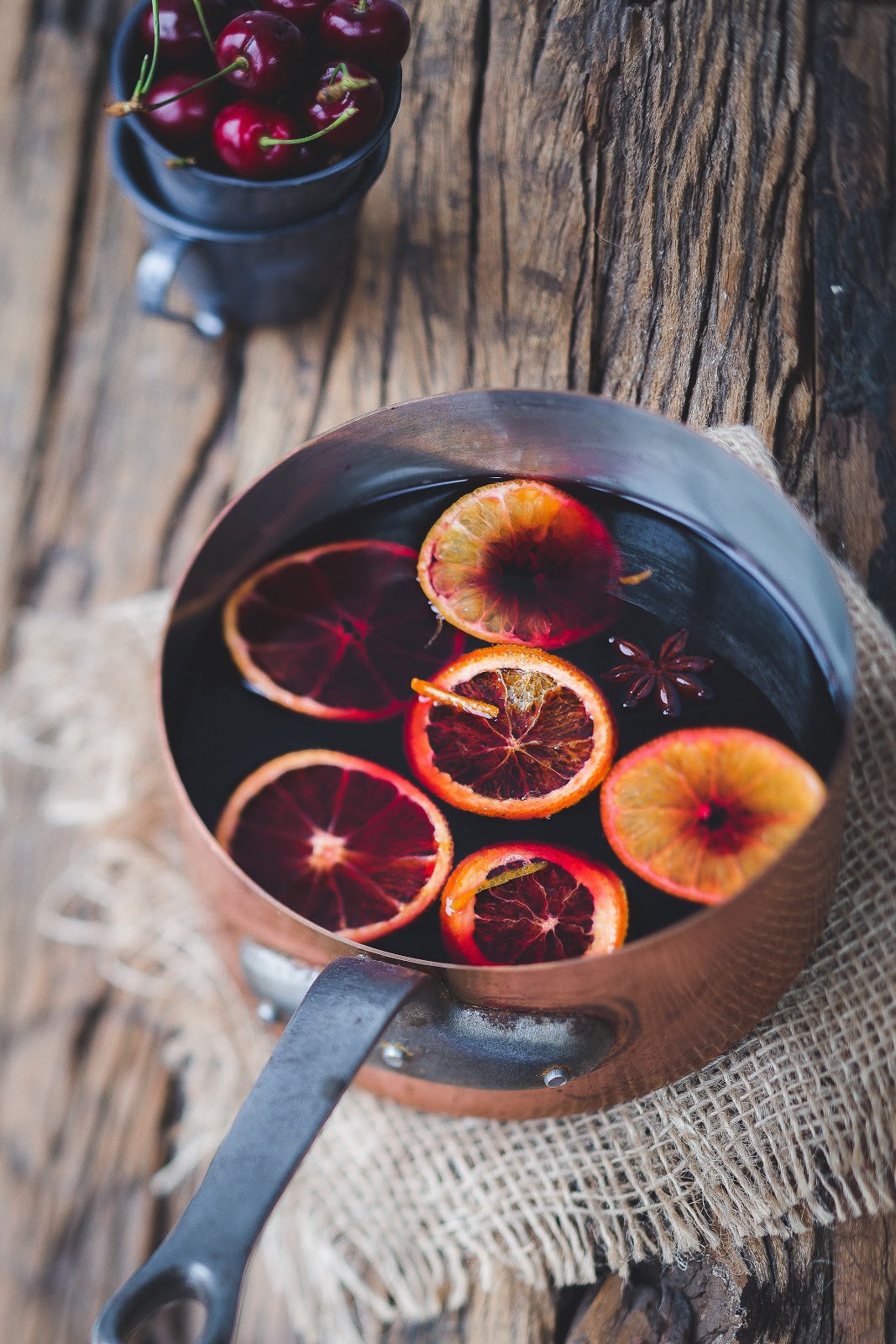
When people think of Christmas, they think of things like turkey, cranberry sauce, mulled wine, pigs-in-blankets, and Christmas pudding. This doesn’t necessarily mean offering these items in the traditional sense – don’t think turkey on a plate beside roast potatoes and brussels sprouts – but rather incorporating these flavours and foods in your menu during yuletide. For example, Moro, a Spanish restaurant in London, serves a chorizo and chestnut soup as part of their Christmas set menu. Or, perhaps, for another subtle touch, consider using cranberry vodka in a cocktail to nudge customers into the Christmas mood.
You can also make subtle Christmas tweaks to your core menu items; Nando’s recently created the Mzansi (Xhosa word meaning South Africa) burger, which takes its famous PERi-PERi chicken breast, as well as chicken thighs, and Christmas-ifies it with a chestnut pâté and “festive” slaw. Gridiron in London (Mayfair) does an ash-burnt leek with winter truffle and walnuts, a tasteful way to feature winter flavours.
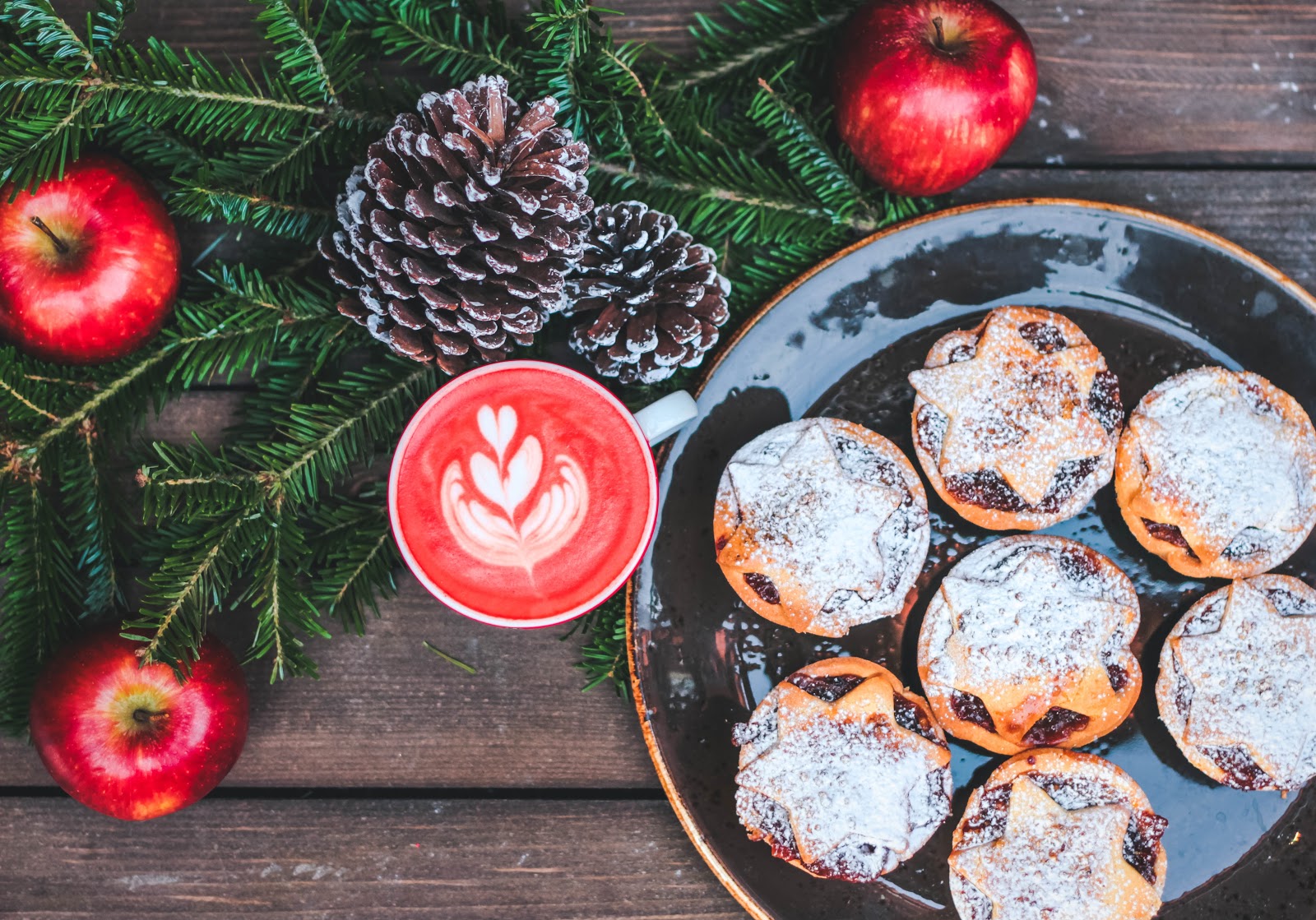
Offer a Christmas Day meal
While many consider Christmas to be all about the home-cooked meals, others can’t be bothered with the faff.
Take a cue from Norma on in Fitzrovia, London, who offer not one, not two, but three different Christmas menus. The first features a classic three-course meal while the other two are differently priced “feasting menus,” which include dishes meant to be shared family-style. By having various options, Norma is catering for a wider variety of Christmas dinner needs: Dinner for two? Done. Ten relatives who want to emulate a more home-cooked meal? Done. Davy’s in London also takes this approach by offering Christmas Breakfast, party bites, and dinner!
Offer take-and-bake Christmas dinners
For those who are not keen on the idea of cooking an entire holiday feast but want to eat in the comfort of their own homes, consider offering pre-made take-and-bake meals to be picked up a day or two early. That way, those who would rather avoid the stress that comes with making a feast can instead have a relaxing afternoon with friends and family. One example of a grocery store doing this is Whole Foods, who provide entire Christmas feasts as an option. For the eco-conscious, Cook even provides a Christmas lunch (for 2, 8, or 12) that is carbon neutral “from field to fork!”
And for restaurants this does not necessarily mean providing everything, from pigs-in-blankets to turkey and gravy. Consider just offering pre-made versions of some of your most popular appetizers or side dishes, so the turkey is all that’s left to prepare!
It’s Beginning to Look a Lot Like Christmas: Decor
You know the drill – It’s Christmas, the lights come out, the wreaths find their way onto doors, the scent of pine and cinnamon wafts over. When thinking about decor for wintertime, it is important to keep in mind what works best for your restaurant.
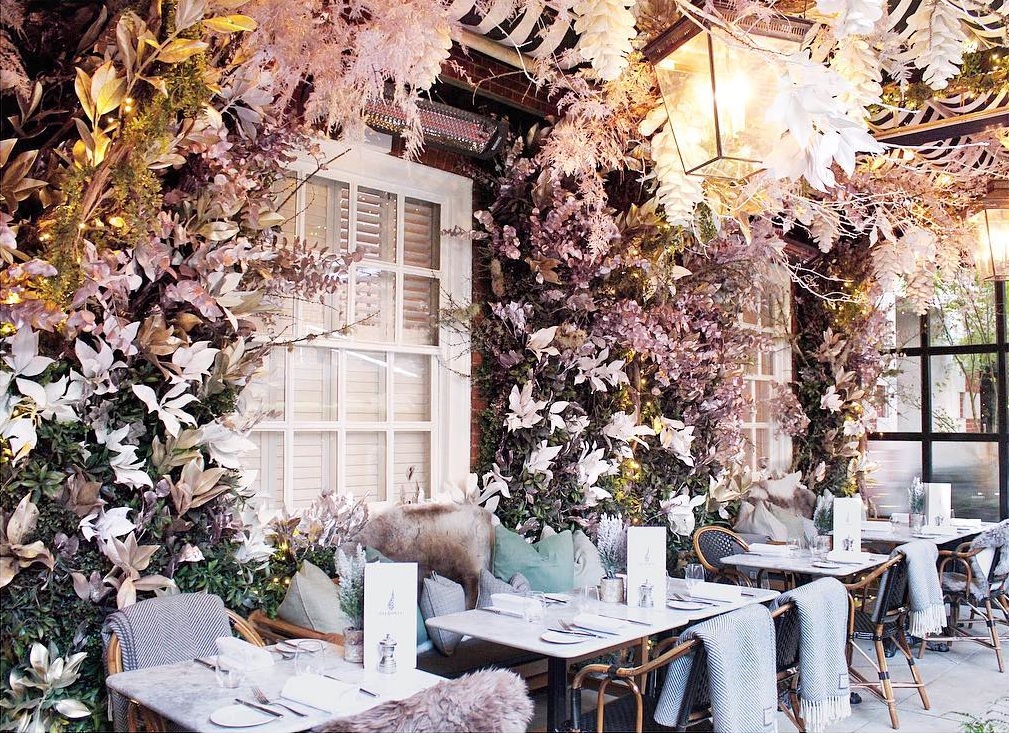
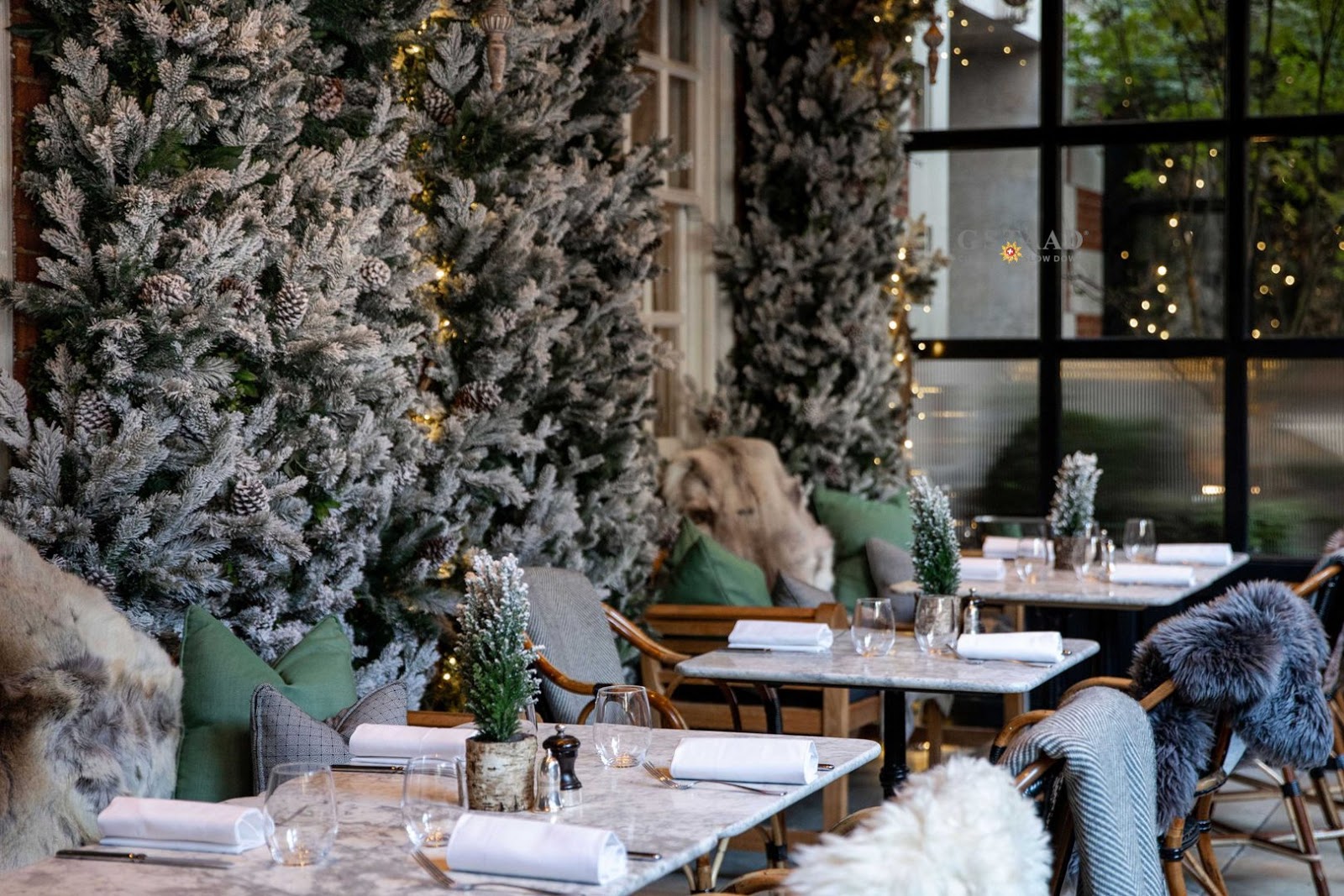
Dalloway Terrace in Bloomsbury, London changes their decor to mimic the seasons, or what we wish the seasons were – think a tropical setting for spring, fresh florals for summer, autumnal colour shifts of leaves for autumn. And for winter? Recreating a winter wonderland indoors so that customers may dine bathed in holiday spirit. Dalloway Terrace changes the designs every year to spice things up. Take a look at two examples from winter at the restaurant for the past two years:
Falling on the more extravagant end of the scale, a dining experience at Rolf’s German Restaurant in New York falls comes complete with an entire ceiling of baubles and lights for a VERY merry environment.
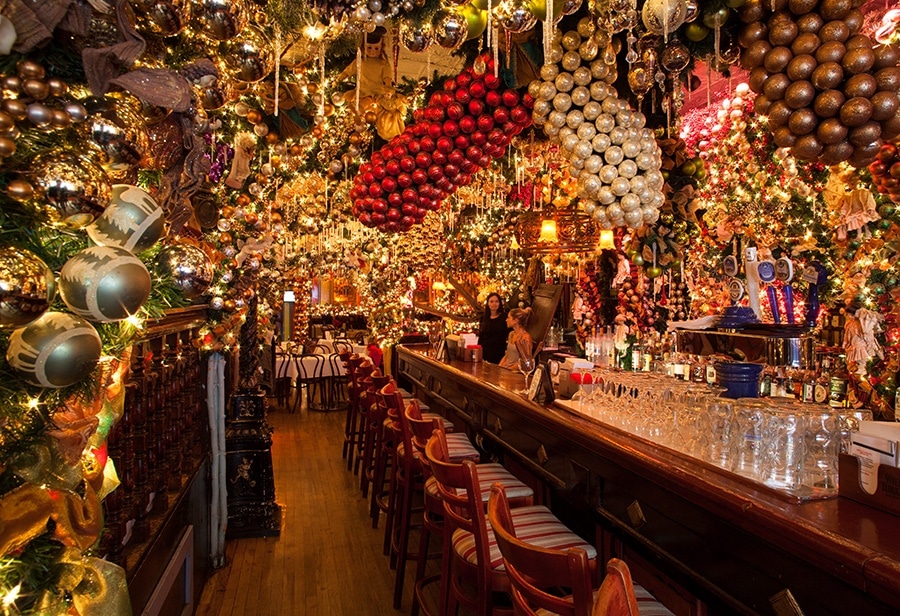
And remember, if all else fails, twinkly lights. You love them, we love them, everyone loves them.
Host an Event
Charity events
People tend to be more charitable around Christmas. And, contrary to what some might believe, Millennials appear to be the demographic which tends to donate the most to charity. According to the UK Charity Commission, this added up to an average of £31.29 per person aged 18-24 during the 2017 Christmas season.
Combine this with the knowledge that members of Gen Z tend to prefer experience-based dining, you may also benefit by drawing younger traffic to your event and restaurant.
Office Christmas parties
In 2017, UK employers spent a mind-boggling £4 billion on Christmas parties, according to a survey by Travelodge. Take a note from Rosa’s Thai Cafe and create a special menu for this as well. As people start having parties from the end of November onwards, you could have your private rooms booked for weeks in a row and set in the books way ahead of time. And of course, what better way to appeal to companies shopping for Christmas parties than to have a lively decorated restaurant interior and menu items guaranteed to get people in the Christmas spirit?
Promotions
Deals for large parties
If you want to highlight that your restaurant is changing things up for the yuletide season, think about adding special promotions and deals only available within a certain window of time, like December 20th to December 30th! To encourage families and large parties to eat out, think about deals targeted towards large groups.
Drinks deals
Once again, drinks deals never fail to sell, especially given that in colder weather where temperature and hours of sunlight are down, people tend to drink more than when in warmer climates.
Scientists at Hepatology found that in regards to temperature and drinking, there is a negative correlation. Hence, people DO, in fact, drink more alcohol in winter, and it benefits restaurants to be prepared for this influx! For Christmas time, think mulled wines, ciders, Irish Cream, and eggnog.
The Gift (Card) That Keeps on Giving
Gift cards to restaurants can be a great way for friends and relatives to ensure that they are giving out a useful and much appreciated present. By having these available and advertised for the occasion, restaurants can also increase revenue. Also, it doesn’t hurt that many times, they actually end up spending more than the gift card value. Either way, restaurants can see profits from offering gift cards.
Media
Online branding for the holiday season
As 86% of diners now look at the menu online before committing to a restaurant, it is important to make sure that your website, where you display your menu, is up to par.
Spicing up your website to advertise specific Christmas-themed features at your restaurant will persuade potential customers to stop by and try out any updates to the menu or decor. This might include going all out like Gordon by advertising “A Very Ramsay Christmas” at his hotel and restaurant York and Albany.
Alternatively, look to 12:51’s minimalistic website holiday design advertising for cute and understated graphics of baubles.
Social media, social media, social media
And, make sure not to forget about employing social media! Consider creating a winter or Christmas-themed Snapchat filter and/or promoting any Christmas menus, events, or deals on platforms like Instagram, Facebook, and Twitter to ensure you are reaching the widest audience you can and maximize sales!
Lastly, sending out a Christmas email campaign can also help spread the word that you are making changes especially for yuletide celebrations.
Look forward to future blog posts solely dedicated to social media and how it can be used in restaurant marketing to improve this aspect of your restaurant even more!
Conclusion
Above are but a few of the many creative ways in which restaurants, bars, cafes, and other hospitality businesses can profit from Christmas celebrations. Through some of these tips and methods, you can lift the spirits of your customers while also seeing an improvement in revenue for your restaurant. Of course you could make like Scrooge and avoid the holidays all-together, but what would be the fun in that?
If you want to find out how the Christmas season affects your sales, Tenzo is the tool for you. By aggregating historical data from past seasons, Tenzo’s AI forecasting can make accurate predictions about this year’s sales. Request a demo today!
The post Restaurants and Christmas | 6 ways to make Christmas jolly again appeared first on Tenzo.
]]>“I’m so glad I live in a world where there are Octobers” – Anne of Green Gables. The celebration of Halloween in the UK has risen (from the dead), and with that comes an opportunity for restaurants to benefit from its increasing popularity. We’ve put together 6 Halloween Ideas for restaurants to ensure success this […]
The post Halloween Ideas for Restaurants to Ensure a Successful Spooky Season appeared first on Tenzo.
]]>“I’m so glad I live in a world where there are Octobers” – Anne of Green Gables. The celebration of Halloween in the UK has risen (from the dead), and with that comes an opportunity for restaurants to benefit from its increasing popularity. We’ve put together 6 Halloween Ideas for restaurants to ensure success this year.
.
Halloween, a holiday that originated through many iterations from the Gaelic festival Samhain, has had an enduring presence. Since the 80s, the festival has taken hold in the Uk and is now a major festival, with more than half of Brits projected to shell out money to celebrate on the 31st of October.
Despite Christmas still taking the cake with spending in general, Halloween has surpassed it in related Google Searches. This may suggest that, while people do spend more on the winter holidays, Halloween has great potential to compete in the coming years. In regards to restaurants, the holiday provides a great opportunity for food and drink purveyors to spice things up for long-term customers and lure in potential new customers wanting to do something special for Halloween.
Below is a list of six Halloween restaurant ideas that can be tapped to benefit from the season of pumpkins, ghosts, and witches.
Gather the Cobwebs and Decorate for Halloween
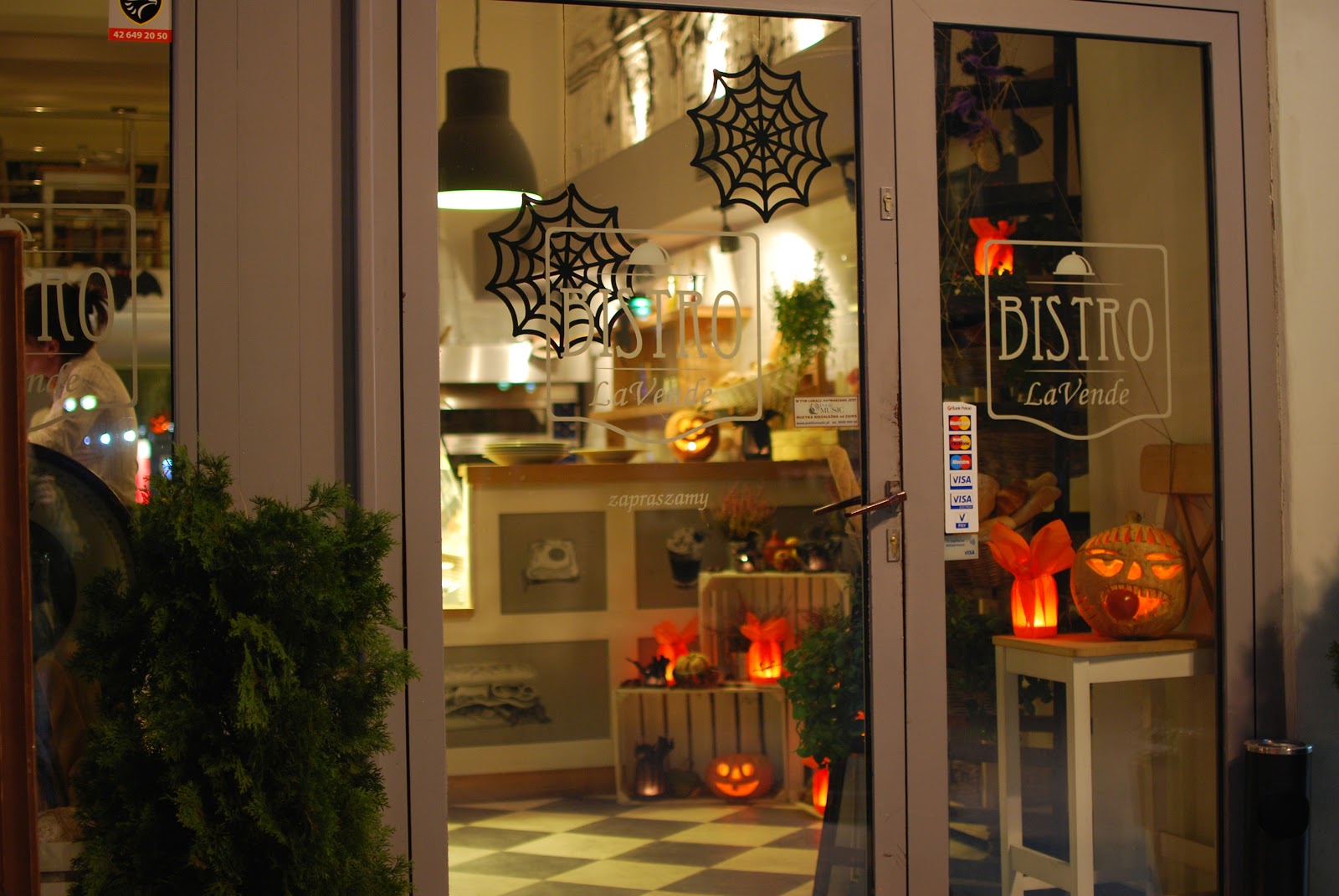
One of the easiest ways to prepare for this fall celebration is to create a Halloween atmosphere within your restaurant.
For coffee shops and cafes, consider buying Halloween-themed paper straws to feature in the week leading up to Halloween. With the growing use of paper straws and the impending ban on plastic straws in UK restaurants next April, simple touches such as these will have an impact on the popularity of your restaurant during Halloween season.
For fine dining restaurants, consider including autumnal centrepieces at tables or pumpkin and gourd arrangements at the restaurant’s entrance for a more subtle touch. To add a twist to your menu and to combat the all-too-true tale of pumpkin waste that occurs year after year, consider involving all parts of the pumpkin – use the pumpkin flesh in your cooking and the hollow pumpkin skins can be turned into Jack-o-lanterns!
Give ’em Pumpkin to Talk About: Incorporate Pumpkins
Pumpkin sales have exploded in the UK in the past few years, with some farmers seeing an increase in pumpkin yield of 400% from 2015 to 2019.
If you want to go the extra mile with pumpkin decor, carving them is also an option! Below are some cool designs to try out, and you can even commission branded pumpkin carvings to weave in your branding.
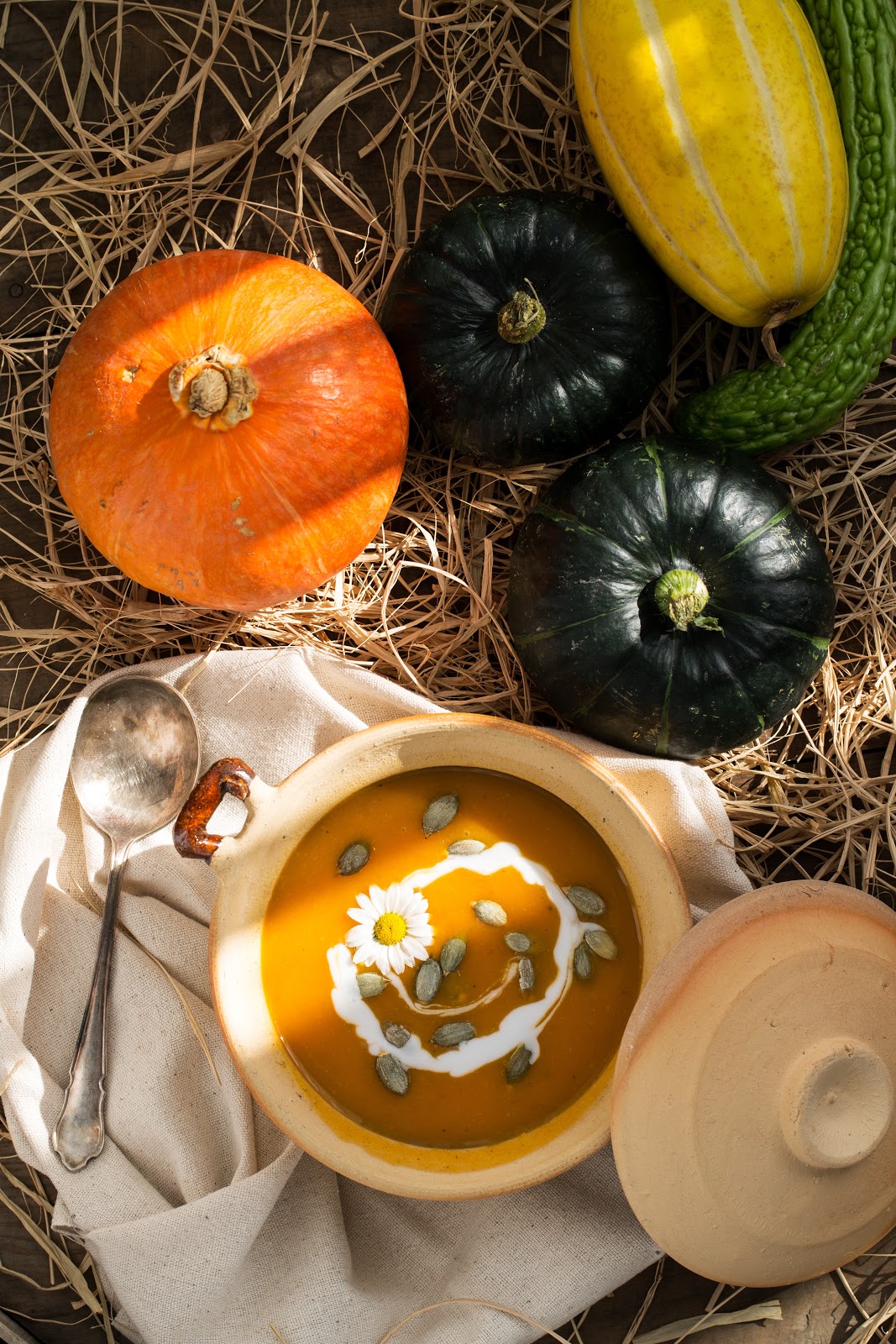
People have expressed a growing fondness for pumpkin-flavoured goodies and menu items (Did somebody say pumpkin-spiced-latte?). Why not turn this trend into profit?! Have a soup of the day? Consider switching out the usual split pea and ham for Roasted Pumpkin Soup. Maybe make a pumpkin and coconut curry! Or, use multiple parts of the pumpkin such as the seeds and the flesh in this Roasted Pumpkin Spinach Salad, which is topped with roasted pumpkin and pumpkin seeds and dressed in a pumpkin dressing. In October, there is no such thing as too much pumpkin! Need more inspiration? Check out what other restaurants have been up to in their kitchens!
For the traditionalists, swap out pumpkins for turnips. More in-line with the origins of Halloween and less common on menus than pumpkins today, these will surely add a unique note to both your plates and decor as well. Keep in mind, though, that carving turnips proves far more difficult than when using pumpkins!
Eat, Drink and Be Scary: Add Halloween-themed Menu Items
Another way to provide a little something special for your customers is to change up your menu to feature Halloween-themed items. This may consist of an entire overhaul of the menu for a few days. Look at Gordon Ramsay’s Bread Street and Heddon Street Kitchens who, in 2018, went all-out with Halloween banquet experiences. Heston Blumenthal showed us just how far you can take Halloween inspiration on his show Heston’s Feasts.
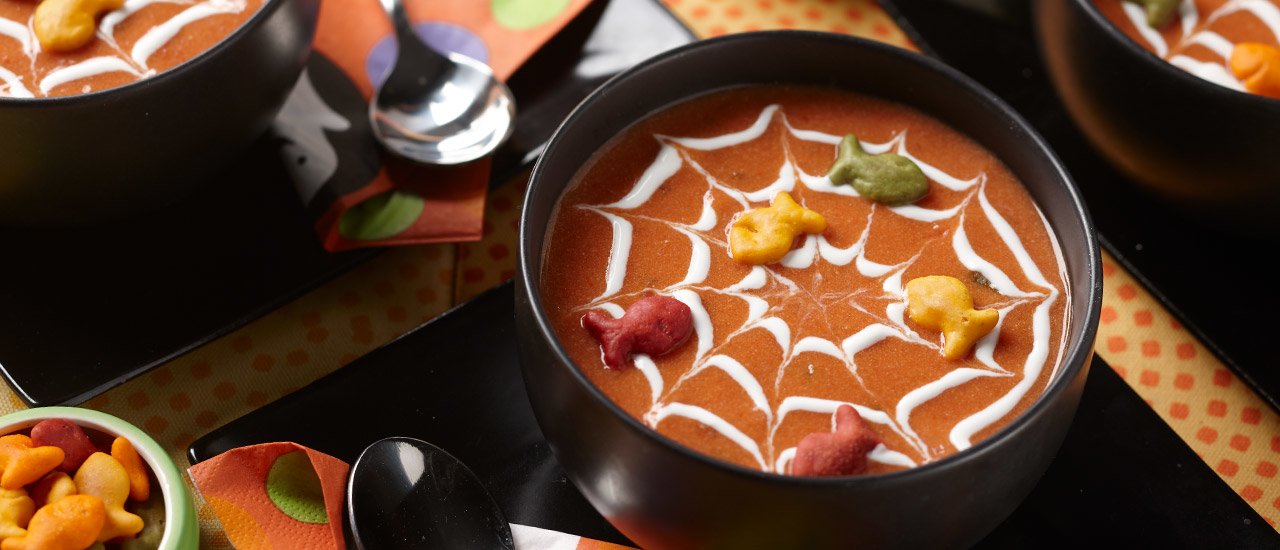
Or, restaurants can take advantage of Halloween specials and make small yet impactful changes to the menu. Embellishing classic cream of tomato soup with a spider web topping design will add a subtle yet spooky feature to the menu. For dessert, perhaps consider making your usual chocolate cake a spooky red velvet for the occasion! In terms of drinks, adding dry ice to a cocktail can enhance an already-existing menu item.
However, reaping the benefits on the 31st doesn’t require new menu items or a special menu created just for Halloween. Spicing up already existing menu items can add a special twist to time-proven classics. One example of this is Mac & Wild’s Bloody Scotch Egg, a gory twist to a regular brunch item that temporarily made its way onto the menu in honour of Halloween. Mr. Bao, a Taiwanese restaurant in Peckham, also got on board with the trend and created the pumpkin bao: a pumpkin-shaped and pumpkin-filled bao.
#Squashgoals: Employ Social Media
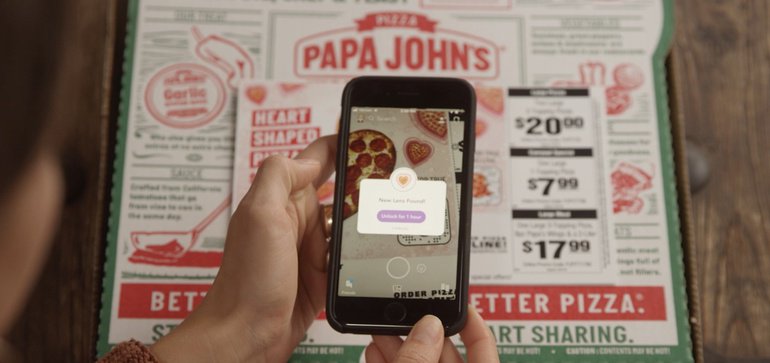
In 2019, pizza chain Papa John’s created a Valentine’s Day Snapchat filter to go along with their heart-shaped pizza deal. According to Mobile Marketer, they found that 1 out of 4 people who swiped up on the filter ended up ordering a pizza. Creating a custom Halloween filter for your restaurant during Halloween time could help lure in passersby who happen upon the filter when snapping nearby. A memorable lens also creates something fun for customers to talk and get excited about. On top of this, Snapchat’s geolocation features can also send more diners your way.
Another option would be to create a costume contest on Instagram where people tag themselves at your restaurant in costume. They could then get entered into a pool to win a gift card, discount, or coupon for one free item (perhaps even a Halloween special).
For more general information on using social media as a marketing tool for your restaurant, subscribe to our blog for our upcoming post on this topic!
Let’s have some Skele-fun: Host an Event
Try hosting an event to celebrate Halloween! If your restaurant has private rooms, consider offering a specific Halloween package in which you provide special decór, cocktails, food, etc. Renting out these private rooms to people to host murder mystery parties also could be a great use of the space and a hit for anybody participating.
Alternatively, if you already host a recurring event at your restaurant, such as a Pub Quiz, Karaoke, or a bottomless brunch, consider making the event appropriately themed for October! For example, Dim Sum Restaurant and Cocktail bar (and Tenzo customer) Ping Pong takes their weekly Boozy Brunch and Halloween-ifies it, complete with on-theme music and, with the spookiest costume, a round of blood-coloured shots on the house. Little changes such as these make a difference for customers without requiring excessive expense and time.
Lastly, if in search of a full restaurant transformation, look no further than Sexy Fish, or should I say Scary Fish, for inspiration. The restaurant transforms for a one-night Halloween extravaganza, complete with live entertainment and various harvest-themed treats, such as pumpkin gyoza.
Trick or Treat Yo’self(or your diners): Offer Discounts
Of course, if all else fails, people do love a deal. Halloween restaurant promotions are a great way to draw customers wanting to celebrate the spooky season.
For families, offer for kids to eat free if they come in on Halloween wearing their costume.
In terms of drinks, offer 2 for 1 deals on Halloween cocktails during a haunted happy hour. Create a Scary Hour that follows Happy Hour or is on the weekend with all sorts of Halloween-themed discounts and spooky music.
Halloween is also your chance to rake in the group bookings. Encourage groups of friends to join in the festivities, by offering 10% off for groups of ten or more.
Offering deals or hosting events also makes use of the Google My Business features, Events. Feature these events straight on your profile and they will show up on Google Maps, a sure-fire way to increase interest. And, when people Google happenings in the area around Halloween, your event will show up in the list!
Conclusion
Halloween provides a fitting opportunity for restaurants to capitalise on people’s desire for a little spooky fun, and by implementing some of the above ideas, you too can join in on the festivities!
While there are many ways in which to involve your establishment in the holiday celebrations outside of the six listed above, hopefully, these recommendations get your restaurant started in the right direction.
The post Halloween Ideas for Restaurants to Ensure a Successful Spooky Season appeared first on Tenzo.
]]>I think we can all agree it’s been a very strange year for the restaurant industry. For the first time ever, restaurants had to shut their doors for several months with no options for revenue aside from delivery or takeaway. Thankfully the world has opened up again and restaurants can operate somewhat normally (social distancing, […]
The post Restaurant Online Presence | Optimising for this new era appeared first on Tenzo.
]]>I think we can all agree it’s been a very strange year for the restaurant industry. For the first time ever, restaurants had to shut their doors for several months with no options for revenue aside from delivery or takeaway. Thankfully the world has opened up again and restaurants can operate somewhat normally (social distancing, masks, and hand sanitiser included). However, consumers have become even more accustomed to seeking out restaurants online for their next delivery, takeaway or dine-in fix, meaning that to be successful restaurants absolutely have to stand out online and restaurant online presence is more important than ever.
The unfortunate truth is people are still not entirely ready to go out to eat. In fact, according to a US study from CivicScience only 49% of consumers feel comfortable dining out. In the UK, cases are spiking and conflicting government advice (Eat out to help out! Actually 10pm curfew, no more than 6 people gathered together, tiers 1-3) is causing diners to think twice before heading to their local. All of this means that your restaurant’s online presence is more important than ever.
In this article we’ll break down how to optimise your restaurant’s SEO so that you show up first in search engine results pages (the likes of Google, Bing, or DuckDuckGo) as well as how to make the most out of delivery platforms and Google Business listings to drive more orders and repeat customers.
And keep an eye out for our next article all about standing out on social media!
Searchability
The first thing you need to do is make sure that new customers can find you online. That means that your website needs to be super searchable and easy to find. How do you do that? By optimising your keywords.
This helps your website rank highly for non-specific search terms. Just think – most people don’t know exactly what they’re looking for online: the majority of search terms will be things like ‘best Indian food near me’ or ‘pubs showing Sky Sports’. By using this kind of language throughout your website, you help search engines like Google understand what you offer and therefore include you in the highest ranked results for that term.
You might think this sounds complicated, especially the process of coming up with what keywords you should include. But, there’s actually a really easy way to figure out what you should be including on your website.

Google Search Console is made to help web developers understand their organic reach (how people find the website outside of paid channels like ads or more direct channels like social media). When you link your website to Search Console you will be presented with all the queries (search terms) that have given your website impressions (where your website has shown up in the search results). You’ll also be shown how many clicks the term generated.
High impressions but low clicks means that you don’t include the query often enough in your page’s content. You can also see what your average ranking is for every query. If you don’t appear in the top 10 results, you’re not on the first page and you should try to include that keyword and variations and synonyms more frequently in your copy.
But beware! Don’t just stuff every keyword under the sun into your content. Google and other search engines also reward comprehensible and enjoyable content, so it needs to read as naturally as possible as well.
Your main shopfront
It’s best to think of your website as your main shop front on the internet, you want it to look as appealing as possible and pique potential customers’ interest. This is especially important if you think that 77% of diners look at a restaurant’s website before deciding if they want to eat there.
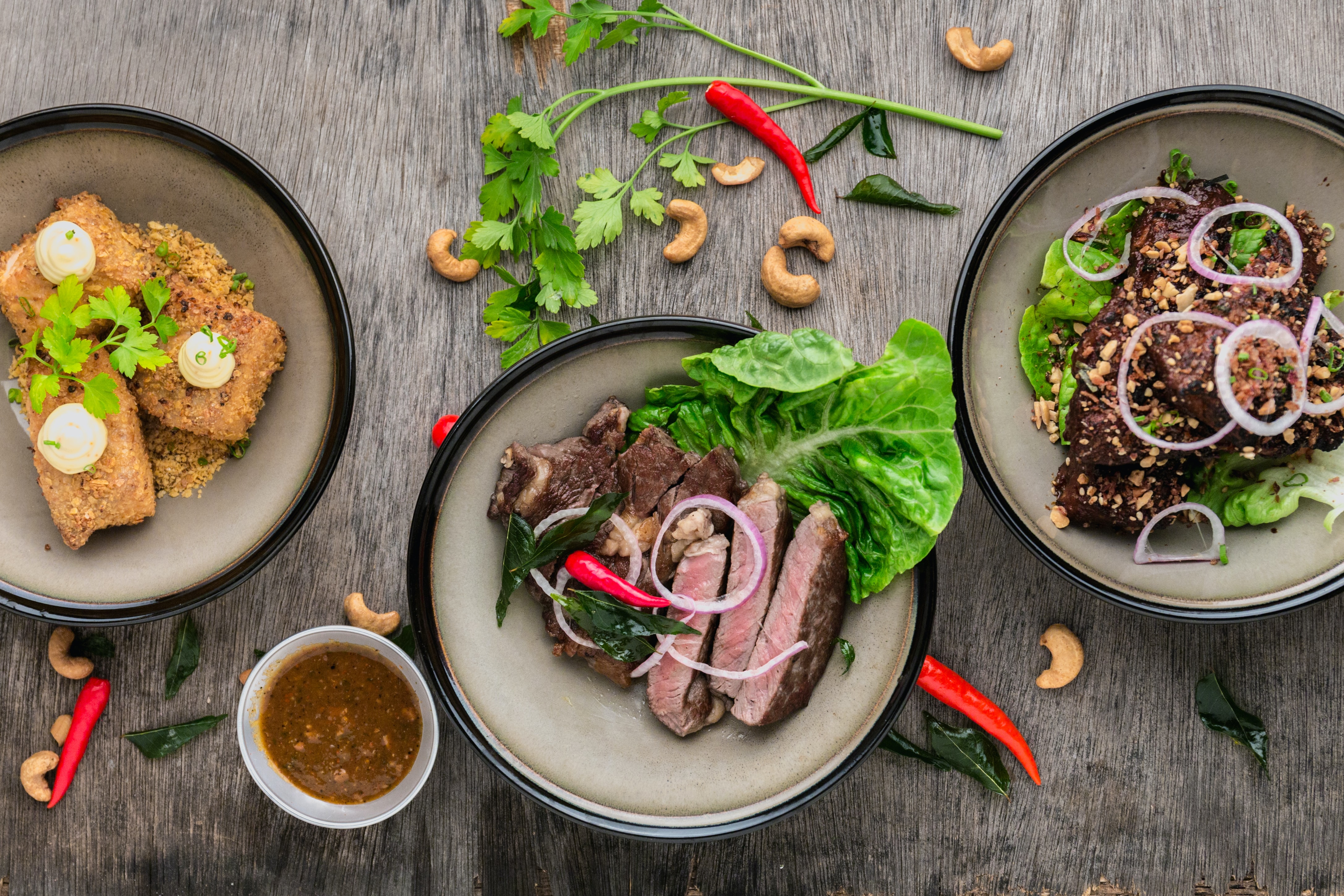
You want to put your best foot forward, so including photos of your restaurant, staff and of course food is a surefire way to start. Make a connection with your potential customers by telling the story behind the restaurant. Add an ‘about us’ page, have a page that aggregates all your reviews so that they are all available in one place, and if you offer different services such as corporate catering or party orders make sure you include informative pages all about them.
Having a dedicated page for each of your offerings not only increases the amount of keywords you can use, but websites with multiple pages and more information actually rank better on search engines as well. A win-win.
If you’re using reservation platforms or specific delivery apps, make sure you link to these as well so that customers can find everything in one place and make the decision-making process as easy as possible. This means keeping your menu page up-to-date as well. There’s nothing more disappointing than having your heart set on a dish only to find out that it’s no longer available. Search engines reward websites with regularly updated content, so doing this is definitely in your best interest.
Google My Business
While your website is your business’s online HQ, think of where you appear elsewhere on the net as satellite offices. They still need your time and attention if your overall brand is to look good.
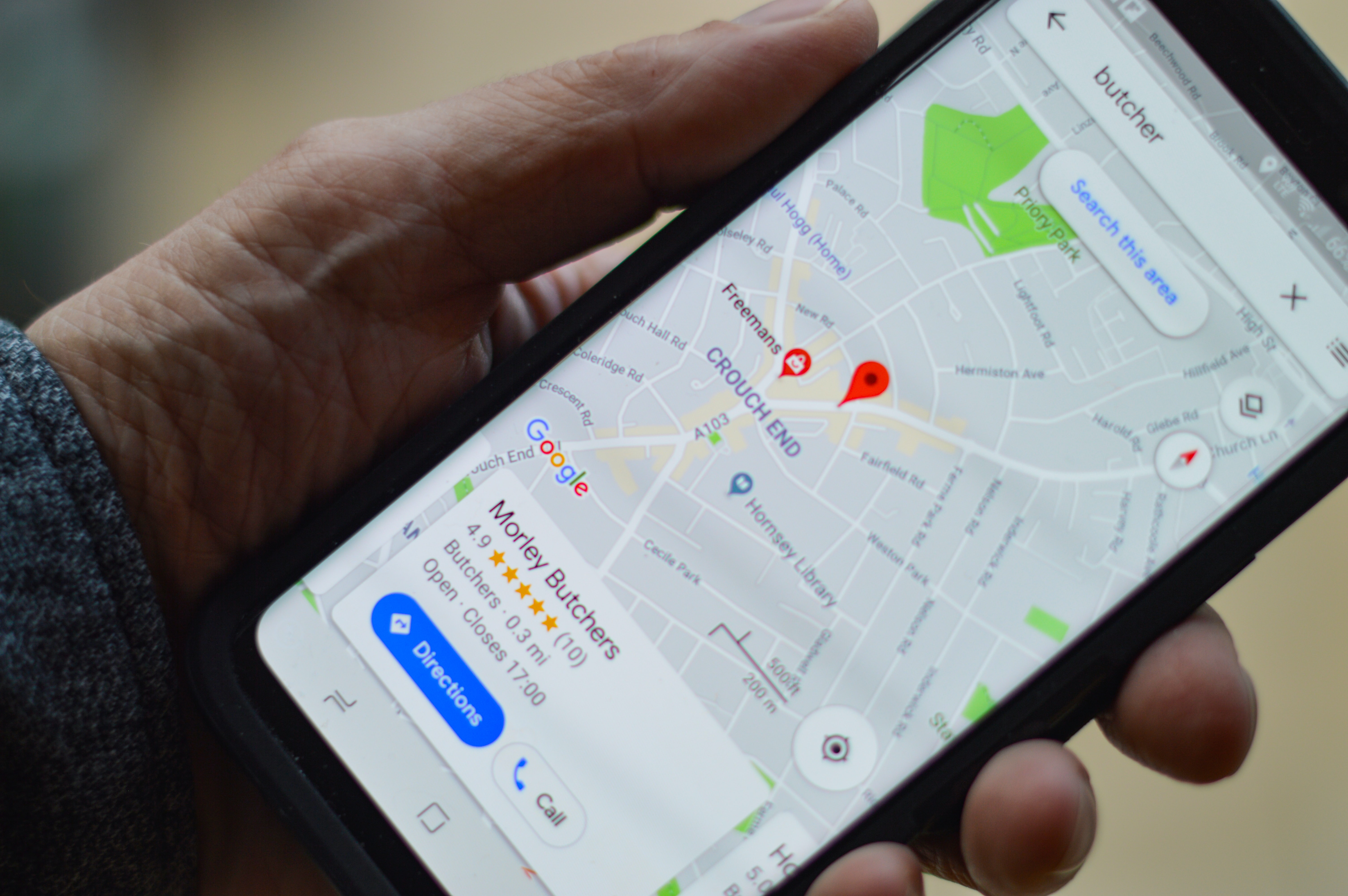
The first place that needs your attention is your Google My Business listing. This is the information box that appears when you show up first in search results as well as in Google maps when users click on your restaurant. It includes important details such as your hours, phone number, address, website, reviews, business type, photos and much more. It’s where the majority of customers will take information from so it’s essential that it’s kept up-to-date.
Make sure you select the right business type for you and be as specific as possible (French restaurant as opposed to just restaurant). You should also make sure to say whether you’re open for dine-in, delivery or takeaway and update this information if Covid restrictions force you to change your offering. When inputting your opening hours, be sure to include any holiday hours and don’t forget to change these in line with government regulations (eg changing closing time to 10pm due to curfew in the UK).
Google also loves multi-media posts. This means that regularly uploading image and video posts to your My Business profile keeps you relevant in Google’s books. Images of your business can be uploaded by anyone, so it’s a good idea to keep up a good stream of photo posts that show your restaurant in its best light, otherwise you may only get blurry or unappealing user uploaded images connected to your profile. It’s also a great idea to geo-tag all of your images to make it as easy as possible for Google to recognise them as official images of your brand.
While you’re posting beautiful images of your location, don’t forget to also post about any offers, deals or events that are going on. Search engines will actually show these in priority when a customer comes across your business listing on the search results pages or if they click on your location in either Google or Apple Maps. It can be an easy way to promote your deals and bring in even more customers from search engines.
Reviews
Another important aspect of your My Business profile is that it shows all of your Google reviews. A Harvard Business School study actually found that a one star increase on review sites leads to a 5-9% increase in revenue. The problem in the past was that it was often difficult to get customers to fill in reviews on sites like Tripadvisor, Yelp, Facebook or Google as you didn’t have the wherewithal to prompt them.
That’s all changed in the age of the pandemic though. Nowadays, you have so many more ways of contacting customers. Firstly, order at table technology allows you to collect customer email addresses, as does free wifi services. Plus, more and more people are booking through online booking platforms – another way to get email addresses. A simple ‘thank you for coming’ email along with a click to rate link can be the push that customers need to fill in that review. In fact, 76% of people who are asked for a review go on to do so.
But emailing isn’t the only way to get reviews. Did you know that you can get a QR code that automatically sends the scanner to your review page? We’re now all so used to scanning QR codes because of track and trace and mobile ordering that including a QR code on a business card in every delivery order or alongside the bill in the dining room could seriously increase the number of reviews you’re receiving.
Delivery platforms
Menu
When it comes to making your mark on delivery platforms, much of the same applies. Delivery marketplaces like Deliveroo and UberEats prioritise businesses that give their customers the best experience. This means making sure that your menu is comprehensible and that your brand looks appealing.
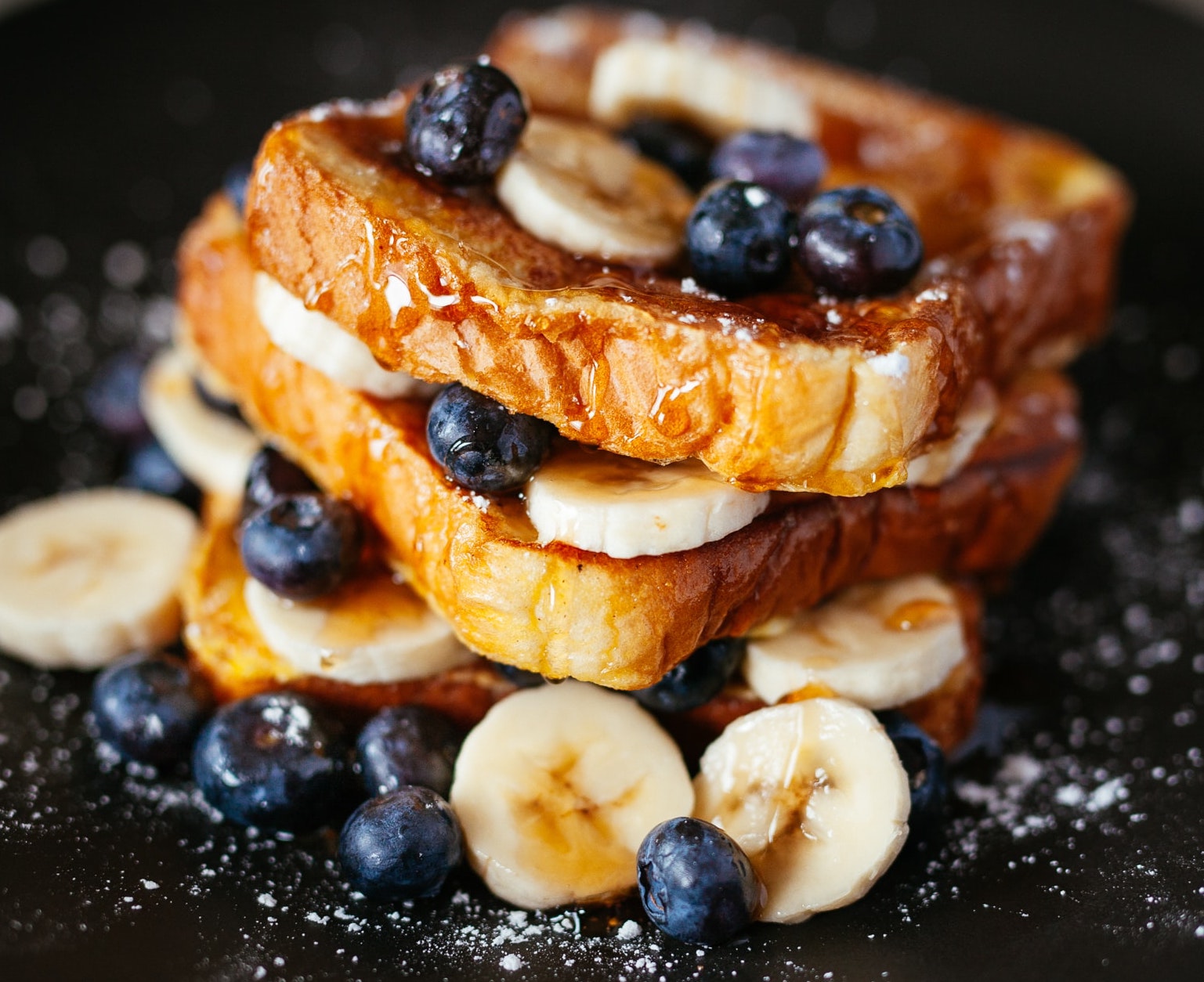
The best way to do this is through images. Having a picture of the menu item immediately triggers a deeper reaction from potential customers, making them more likely to order from you. In fact, according to Deliveroo, ‘providing dish photography for just 10% of your menu can boost overall orders by 12%.’
Another surefire way to stand out is to include descriptions of your dishes. Once again, reading about the different aspects and ingredients in a dish can trigger more visceral responses in your customers. Plus, when you describe your dishes, customers know exactly what to expect therefore avoiding any potential disappointment if they’re expecting one thing and receive another. You’ll also be pleased to know that shorter menus tend to be more successful as so many customers already suffer from a phenomenon called decision fatigue, so this actually leads to less work overall.
Delivery times
In order to give their customers the best experience possible, delivery platforms will also prioritise businesses with shorter delivery times. Obviously, you can’t change how close you are geographically to your customers but you can control how quickly orders are accepted from apps as well as streamlining order preparation in the kitchen. Using a delivery aggregator like Deliverect or Itsacheckmate means that delivery orders go straight through to your till and kitchen display system, automating the entire acceptance procedure and allowing you to get better data on each of your platforms, your order times, most ordered dishes and more.
Finally, you don’t ever want to be complacent with these marketplaces. Make sure you test and keep testing what works and what doesn’t. Though platforms may not have the option to A/B test, you can always test one menu for a certain amount of time (labelling dishes on your first menu with an (a)) and then switch to another (labelling these dishes (b))and compare results. You might find that shorter menu lengths or that highlighting certain dishes increases your orders – or even that running deals at specific times doubles or triples your order volume. The fact is you won’t know what works best unless you test all eventualities.
Conclusion
Improving your restaurant’s online presence is necessary at the best of times – everyone goes online to find where to eat nowadays – but it’s especially important during these particularly unstable times. Ever-changing restrictions and rules about who can meet at restaurants, if we’re even allowed to go to them in the first place, means that restaurateurs need to really think about how to stand out in the crowd.
Changing with the times and diversifying your offering is all well and good but won’t do anything if no one knows about it. Your online presence is your way to shout about yourselves from rooftops, so make sure the megaphone is on the highest volume by following the tips outlined in this article.
The post Restaurant Online Presence | Optimising for this new era appeared first on Tenzo.
]]>Social media nowadays is an absolute must have; that’s really not news to anyone. Having a social presence is something all business owners are encouraged to do, but it can be easy to underestimate the value that social media brings. In today’s virtual world however, having engaged followers can be the difference between being full […]
The post Restaurant social media tips for 2021 appeared first on Tenzo.
]]>Social media nowadays is an absolute must have; that’s really not news to anyone. Having a social presence is something all business owners are encouraged to do, but it can be easy to underestimate the value that social media brings. In today’s virtual world however, having engaged followers can be the difference between being full on your first day of reopening and watching the tumbleweed roll past. Find all our best restaurant social media tips and tricks to bossing your restaurant’s social media strategy in 2021 in this blog!
The pandemic has fundamentally changed the way businesses can engage with customers. Whereas before friends might invite friends to their favourite restaurants, or a potential customer may walk past a new opening after work and decide to check it out, nowadays unless that new opening appears on our daily walk route, no one’s going to find it.
Customer connection is something the pandemic has taken away from restaurateurs. The true definition of hospitality and welcoming fellow humans into our space to enjoy food and each other’s company is no longer possible. That’s where social media fills the gap.
The good news is that social media gives you infinite occasions to show your personality and your brand in the best possible light. It offers far more control than face-to-face interactions (not that face-to-face isn’t the ideal scenario, just looking at the bright side of social media). You can really build your brand identity the way you want to present it with every post, story or ad.
This is especially important considering that the new coming-of-age generation (gen z) have been shown to place shared values as a main driver when picking where to spend their money. Your social accounts give you the space to promote your values and your philosophy which aligns with customers’ and immediately creates a stronger personal bond between the brand and the customer.
Your first steps
This may sound obvious, but you’ll need to decide which platforms to dedicate your time to for your ideal customer profile. Now, you might wonder, ‘I’ve got pages on Facebook, Instagram, and Twitter, what more could I possibly do?’ If you’re using the same content across all those platforms you might not be making the most of those pages.
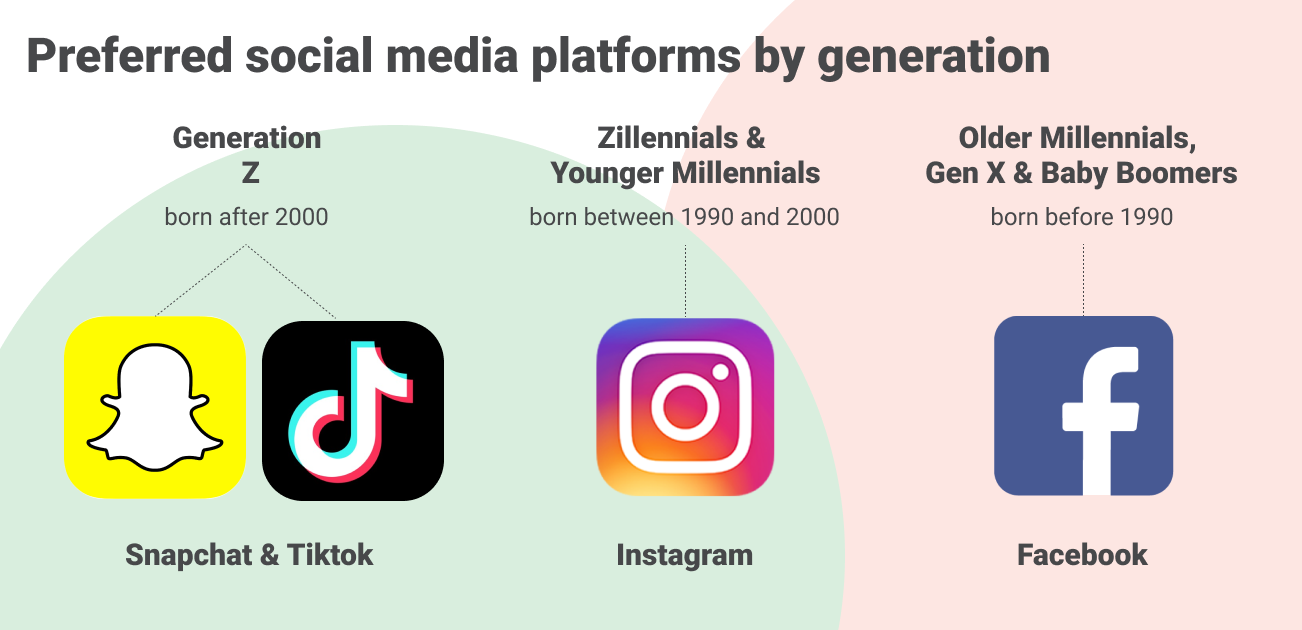
The platforms are all used differently by different generations. That means if you’re trying to attract the younger crowd, Facebook is not the place for you, but if you’re looking to bring in Boomers and older millennials, you’ve found your niche. Generally, Boomers and older millennials are most likely to engage on Facebook and give genuine reviews and feedback on your page, from ‘checking in’ for a meal to posting photos of their experience.
On the other hand, if you’re targeting younger millennials and ‘zillennials’ (those born between 1995 and 2000 – the new young professionals) Instagram is where you’ll find them. They’re most likely to tag you in their stories if they visit or order from you – and feel elated if you repost their stories.
Finally if you’re looking to hit trendy Gen Z (born after 2000/university aged) Snapchat and Tiktok are the places to make your mark getting involved with the latest trends and interacting with followers.
One other consideration is Linkedin. For the most part, Linkedin isn’t a very good platform for brand promotion as it caters more for networking and the B2B space. However, if you do catering business for offices (whenever offices are a thing again), promoting your service on Linkedin could be a good way to generate awareness from corporate clients.
The important thing is that even if you decide to promote yourself on multiple platforms (highly advised), you keep a consistent brand across all of them. Depending on what your customer persona is you’ll likely see most engagement on one in particular, but it’s still important to be found on any of them.
Engagement is key
Ever since the social algorithms rejected the chronological timeline, engagement has been the key to success. That means that it’s no longer just a question of posting a nice picture or video, but rather interacting with your followers. We’ve seen some great examples of getting followers involved in the business from the likes of Pizza Pilgrims who asked for a to show excitement over a potential new menu item.
There are more ways to incite engagement than just asking for comments though. On Instagram in particular, the save and share buttons are especially important. These are supposedly considered more favourably by the algorithm than likes or comments so if you can get people to save your content by sharing promos or recipes that they might need to refer to later or encouraging followers to share on their stories or with their friends some of the offers you may be running, Instagram will promote your content further on the explore page.
The key is to get everyone involved and that could be as simple as asking questions or running polls, to the more complicated live cook alongs or virtual tastings. Everyone’s got something to offer. We’ve seen coffee shops show the right way to brew coffee at home and cocktail bars teaching the art of the espresso martini. It’s just about getting creative! It can also be a great way to promote any DIY kits or boxes you’re selling making it an event friends can do virtually by watching the same video, stream or live.
Social Media is your personal megaphone
Imagine social media as an old town square where town criers shouted out all the news, but multiplied by a billion. These accounts are your personal megaphones and you need to really stand out to be heard. It’s the first place customers will check when looking for answers. We asked Josephine Holman, Marketing Operations Manager at Eathos, why this personal megaphone aspect of social media is so important:
“At a time when people also want instant information and ultimately don’t like to wade into the unknown, social media is there to show customers in picture perfect detail what they will be getting, where it is, what the opening hours are, where the restaurant is located and what other people have had to say about their experience there. Crucially, social media provides insight into customer experience.”
Reopening tip: As April 12th comes nearer, customers are looking for places that offer outdoor dining – if that’s you, make sure it’s known! Outdoor pub gardens or dining areas are big draws and can generate a lot of excitement and demand come reopening.
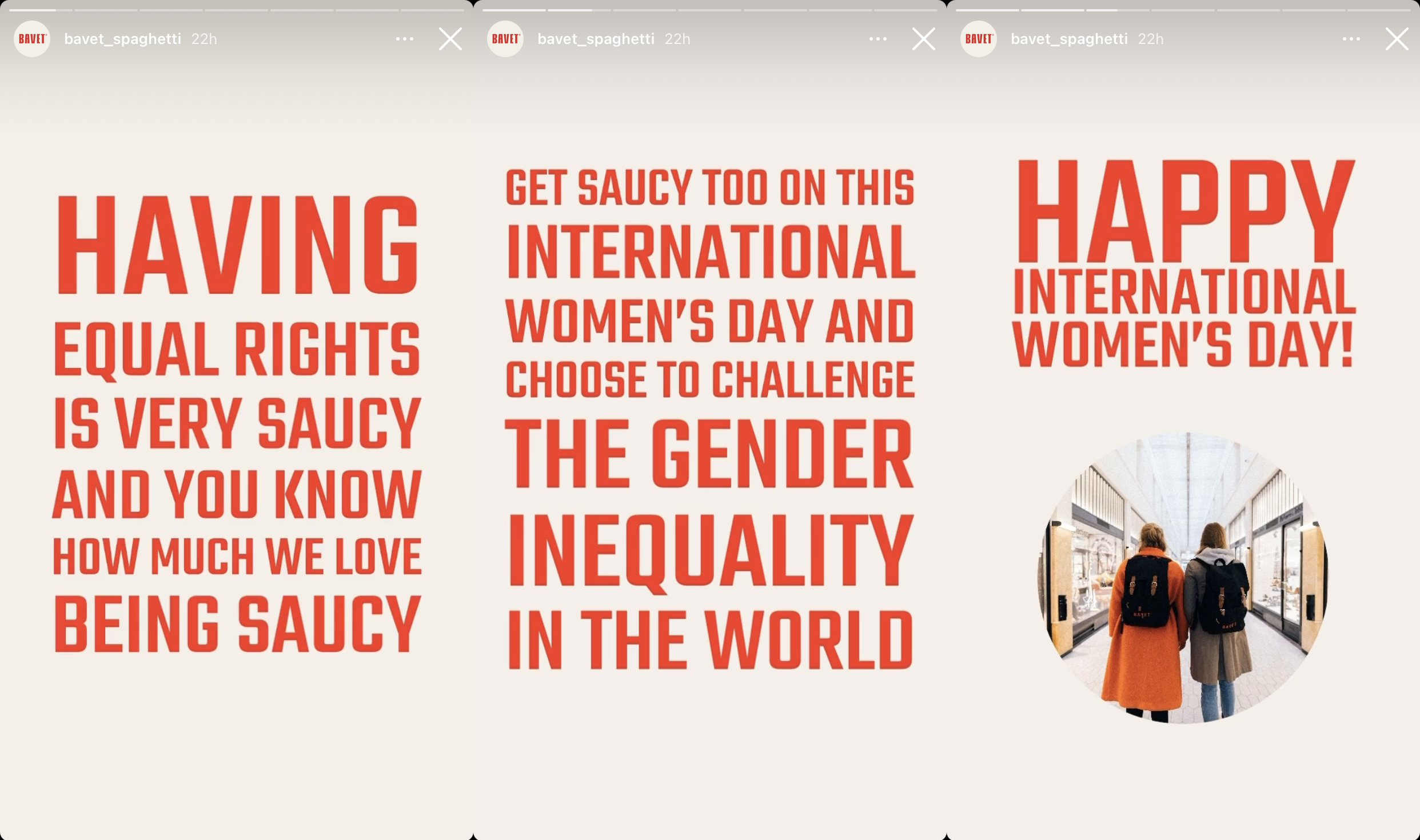
These posts can also serve to shape your identity and show support for causes that are closest to your brand’s heart whether that’s sustainability, equality, or anything else. As mentioned above, younger generations are more likely to spend with brands that they feel share the same values as they do, so it’s in your best interest to show what you feel strongly about.
And don’t forget social media is a place to also have fun. It can be a great way to show off your personality and prove that you’re not just a faceless corporation. Nando’s does this especially well following trends and making comedic skits on Tiktok. Not too much effort, but great engagement from their fans.
And remember, traditional bricks and mortar restaurants are not the only operations to benefit from a strong social media presence, virtual brands (ie those that only exist on delivery platforms and operate out of dark kitchens) can really take advantage of these platforms to foster trust in their customers.
Holman expresses that, ‘for virtual brands especially, social media is one of your only tangible pieces of brand identity that you’re able to share with a customer. You don’t have the luxury of presenting beautiful interiors, friendly waitstaff, quirky crockery, etc: your presence largely comprises what people see on social media.’ It gives a human edge to your brand and reassures potential customers that there are real human beings behind the scenes and not just robots creating meal after meal with no personality or pizazz.
FOMO makes the world go round
FOMO (or ‘fear of missing out’) is one of the most powerful tools that posting on socials can give you. Nowadays, with everyone following everything everyone else is doing, seeing a seriously succulent dish promoted on Instagram or Facebook, especially if it’s a limited time offering, can push even the most strong willed of us to swipe up and order.
That swipe up action is a golden ticket. If customers can go from scrolling through their instagram stories to ordering within two taps, they don’t have the time to question themselves, they simply act. But that elusive swipe up is only available once you hit 10,000 followers on Instagram, though you can implement an ‘order now’ button on your facebook page no matter follower count.
The trick to successful swipe ups is putting your best content forward. Professionally shot images that are well edited and really show off your food at its very best is irresistible on its own, but coupled with a promo your interactions will shoot straight up.
Reach broader audiences with ads
As we all know, part of the business model behind platforms like Facebook is selling ad space. They are the absolute best at it as like it or not they have figured out how to accumulate their users’ data and use it to show them the exact right ad at the right time to give the advertiser the best possible chance of a sale. This should absolutely be taken advantage of.
Knowing your ideal customer, you can target ads on social media platforms to the exact demographic and location you think are most likely to want your food. Your knowledge together with the huge amounts of data these platforms have is a recipe for success.
Location-based targeting is extremely useful for restaurants as it allows you to target only the users who fall into your delivery catchment area. This means that you can advertise specific deals you have running on a delivery aggregator or even on your website and send your audience straight to the right page.
Also consider running remarketing ads for those who visit your website (say from a prior ad) but don’t immediately convert to keep your product top of mind and catch them in the exact right moment to drive that sale. It’s one of the cheapest ad formats and can be implemented on Instagram, Facebook and Linkedin.
One small warning though when it comes to one specific type of advertising: influencers. Influencer marketing is a tricky one. On the one hand, influencers with tens of thousands of followers who can genuinely recommend your brand can lead to a real boom in sales. However, there are many stories of so-called influencers asking for free food in exchange for publicity who simply want to take advantage of restaurants.
If you’re going to work with an influencer, make sure to do your research. Remember that follower counts can lie, what you really want to know is what their engagement is like, i.e. how many saves, likes, or clicks they generate on a given post. If that number is high and your brand fits well with theirs, it could work. Although, most successful influencers l will work for a fee rather than simply free food. It’s much the same as paying for ‘traditional’ advertising and should be approached in the same way.
Conclusion
As mentioned at the beginning, it’s really no secret that having a social media presence is a must for restaurants nowadays. In fact, social media managers for big chains are often in the news for their witty retorts and quips. But, it’s not just the big chains who benefit from putting that extra emphasis on their social strategies.
Restaurants of any size benefit from the extra visibility what with everyone being permanently attached to their various screens, you’re bound to find your hardcore fans online who can then spread the word even further. And that loyal following will be key to thriving in this post-pandemic world.
Cover photo by Kerde Severin from Pexels
The post Restaurant social media tips for 2021 appeared first on Tenzo.
]]>