Before joining Tenzo, I served as a U.S. Army reconnaissance and operations officer from the Platoon to Division level (about 10,000 soldiers) and experienced how crucial proper data and intelligence is to mission success. I’d like to share my insights from the Army and working with restaurateurs to explain how a data strategy will help you […]
The post The Tactical Restaurateur: What can be learnt from a US Army officer. appeared first on Tenzo.
]]>Before joining Tenzo, I served as a U.S. Army reconnaissance and operations officer from the Platoon to Division level (about 10,000 soldiers) and experienced how crucial proper data and intelligence is to mission success. I’d like to share my insights from the Army and working with restaurateurs to explain how a data strategy will help you grow your top line and become a tactical restaurateur.
NOTE: We’ve previously written about how Tenzo and a proper data plan can affect the other end of your balance sheet by decreasing your labor costs and food waste by 10%.
As a US Army reconnaissance officer, I gathered information on the enemy – location, disposition, movement – and fed that to my command.
As an operations officer, I experienced how my reports and data sources were critical for our commanders to develop a successful battle plan to exploit our enemy’s weakness.
After the Army, I wanted to work at Tenzo because I realized how difficult and time consuming it was for restaurateurs to use their data to paint an accurate picture of what was happening at their restaurants. Their data was inaccessible, unsorted, and un-actionable. Their decisions had to be based mostly off intuition, not the proper “recon” reports I previously had. Tenzo is your restaurant command center, making sense of the numerous reports and data you receive.
1. Create a growth plan based on quantitative data
Report only what you observe – this is a fundamental of reconnaissance that was hammered into me. I learned to steer away from gut decisions and use only the quantifiable information available, because our intuition is full of bias and can often result in poor decisions especially when you’re tired from working around the clock on reconnaissance missions. I needed to feed the rawest data possible to my commander so our intelligence team could use that information and their knowledge on the overall situation to interpret my data and reports.
The same fundamentals of reconnaissance apply to your restaurant operations. Executives and managers must analyze the data, not just their intuition, to decide how to best grow. Will you increase footfall, average guest spend, or sell more of your higher margin menu items? Is it mission critical to achieve this during a certain meal period or a day of the week?
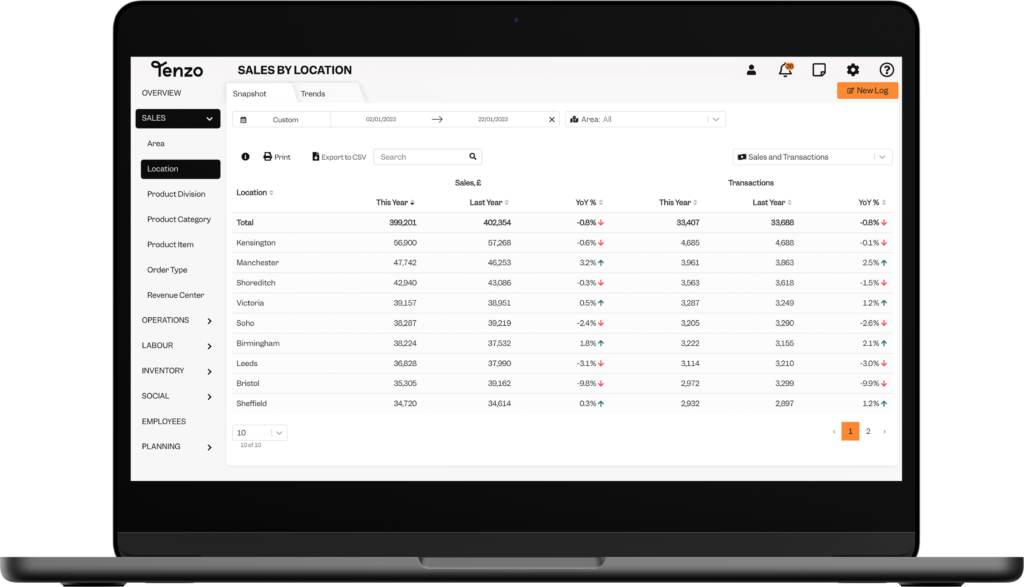
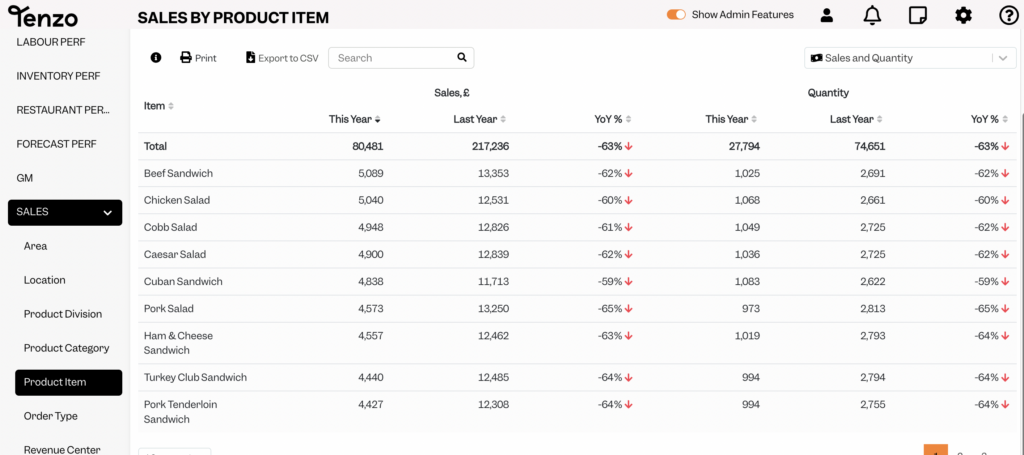
Tenzo integrates with your current data sources to bring all your sales, labor, and inventory data together, so you can develop the right growth plan for your business. You’ll know where your past growth has come from, when it occurred, and at which locations.
For example, with this fictional restaurant chain (image above), it becomes quantifiably apparent that the previous Year on Year (YoY) growth has come through increasing the number of transactions by 16.9%, but your average spend has only grown 0.2%. Additionally, this growth hasn’t been true for all the locations, with Leeds experiencing a 37% decline in transactions.
The right growth plan for this restaurant might be to increase average transaction size while maintaining or growing footfall, especially at Leeds, Bath, and Birmingham.
2. Empower your managers to achieve these objectives
An overall strategy for your restaurant is powerful, but each general manager and location will need to slightly tailor the plan for their unique situation and determine how to best achieve this. The Leeds manager might need to focus on increasing guest count while the others need to focus on guest spend.
The U.S Army employs “Mission Command”, which is the practice of empowering managers and junior officers to decide how to best achieve their individual objectives. This empowerment and decentralized command evolved because faster paced and more dynamic conflicts made it impossible for a central command to dictate every movement. This management style can pay huge dividends, but it requires that junior leaders have the necessary tools and information to make these decisions.
In the past, many restauranteurs have found this management to be difficult because data had been cumbersome to access. General and area managers did not have the time to download numerous CSV files full of data and create custom excel reports to understand their trends.
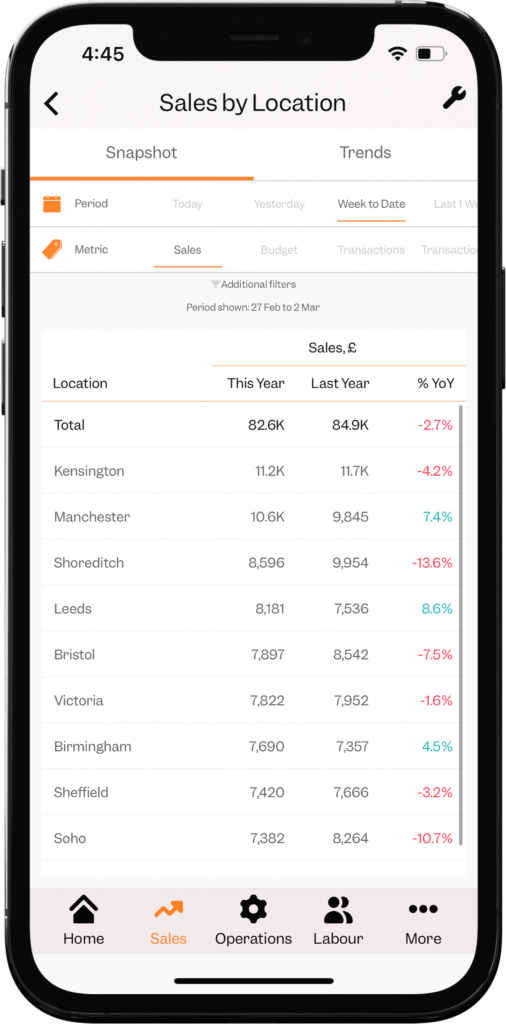
This isn’t the case with Tenzo. Tenzo will deliver actionable alerts to your managers when certain daily or weekly KPIs aren’t achieved and provide reports on their phone (iPhone and Android).
Now, the Bath General Manager can see that their particular location needs to focus on growth by increasing sales, specifically on Saturday, which is the only day they haven’t grown year on year.
3. Pull the right growth lever
The Bath manager needs to improve sales on Saturday, but how? Tenzo will alert this manager that Bath’s average guest spend has decreased, while footfall has actually increased. Now the manager knows they need to find a way to increase their average guest spend, which requires a much different technique than attracting more guests.
A common way to increase transaction size is to focus on increasing attachments, which typically are drinks, dessert, or starters. Tenzo will track attachment rate for this manager and alert them to which specific employees are selling the most attachments.
4. Ensure your team and managers stay coordinated
Growth is difficult and requires that the entire team is working towards the right goal and able to track potential warning signs. It is critical that your teams are able to stay coordinated and track their KPIs.
Tenzo helps with this through our Logbook and End of Day reports. This feature allows managers to create their end of day reports with Tenzo inserting the quantitative figures and KPIs. Tenzo will then compile every managers report and format them for the area managers and head office, saving time, increasing coordination, and allowing your team to easily access these reports.
.png)
5. Encourage competition, improve accountability
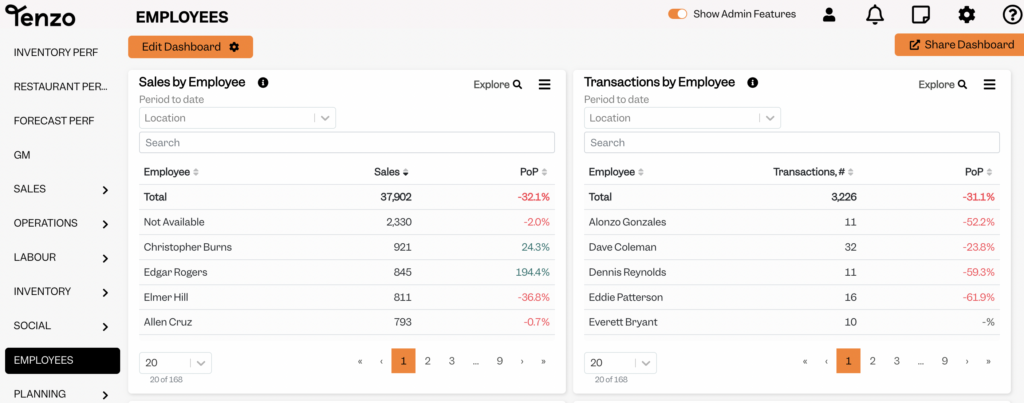
Competition and accountability were crucial factors keeping my army teams motivated. Restaurant staff are no different. However, creating an accountable and competitive environment in a restaurant is not so easy. Tenzo can help provide this environment through the use of leaderboards. For example, at the individual level, Tenzo provides performance accountability by ranking staff by average sales per hour as well as average transaction size and individual product item sales. At the team level, Tenzo can track location-level trends for social media reviews as well as individual location sales.
Data is crucial to increasing revenue
Basing mission plans on solid data made the army units I served in extremely successful. A data strategy is crucial to developing the right growth plan for your restaurant. AI and business intelligence are now becoming crucial in order to grow revenues, just reducing costs will not do, as reported by BCG. Tenzo is helping the restaurant industry achieve this growth.
If you’re ready to bring actionable insights to your business, please contact us to learn more.
If you feel you could use any help in understanding the tech eco-system which helps you gather data to make these actionable insights, then we highly recommend you reach out to Eposability. They specialize in helping you to drive growth from your systems and ultimately produce clear actionable data to make decisions from. We have also put together a short piece on what this eco-system could look like in our blog.
The post The Tactical Restaurateur: What can be learnt from a US Army officer. appeared first on Tenzo.
]]>Worldwide, one-third of all food produced is lost or wasted costing us around one trillion dollars. Food waste is a substantial part of the waste produced by the hospitality sector. It accounts for over 50% of the waste produced by certain kitchens There are three main effective ways to reduce food waste in busy kitchens. Firstly, technology […]
The post Tackling Food Waste in Commercial Kitchens appeared first on Tenzo.
]]>Worldwide, one-third of all food produced is lost or wasted costing us around one trillion dollars. Food waste is a substantial part of the waste produced by the hospitality sector. It accounts for over 50% of the waste produced by certain kitchens
There are three main effective ways to reduce food waste in busy kitchens. Firstly, technology can help you manage your kitchens and prevent food waste from happening. Secondly, it’s important to accurately forecast future demand to prepare the optimal amount. Finally, if you still have leftover food you can use a platform to sell it, instead of tossing it (along with your profit).
For this article we’ve joined together with Too Good To Go and Winnow to discuss how to minimise food waste, help the environment and your margins at the same time.
Shine a Light on Food Waste in Your Kitchen

Reducing food waste comes with great opportunities for the hospitality and food service sector. It saves money and contributes to the environment at the same time. Investing in the right technology is the most effective way to shine a light on food waste, prevent it, and reduce it.
For a long time resource efficiency within the hospitality and food service industry was focused mostly on heating, electricity, and water solutions. In recent years, however, the industry is waking up to the opportunities lying in food waste reduction. Some of the world’s most renowned brands, such as AccorHotels, Compass Group, IKEA, and Costa Cruises, have set targets to reduce their food waste.
With the introduction of digital tools, chefs are now able to automate many of the administrative tasks required to measure waste. What gets measured gets managed. The first step for any kitchen to capitalise on the opportunity food waste presents is to gather accurate data. Winnow’s vision for the kitchen of the future is one where waste management is automated. This gives teams better visibility, as well as giving chefs more time to focus on what they love doing: cooking.
Winnow was launched five years ago with a simple belief that food is too valuable to waste, and that in the hospitality sector food waste could be reduced by introducing digital tools to measure and manage waste.
Working with thousands of chefs from all over the world, Winnow’s latest report also shares strategies to cut food waste at key stages such as:
- Labelling techniques to minimise spoilage.
- Developing standard recipe banks for your teams to reduce cooking errors.
- Preparing food in smaller batches over service to reduce overproduction.
Today Winnow operates in 30 countries and are trusted by Compass Group, Accor Hotels and IKEA. But we are really just at the beginning of a wholesale system change. Soon we will see the entire sector look for ways to reduce their food waste, having an enormous impact on the environment while increasing the efficiency of their operations.
Read more about Winnow

Forecasting Daily Demand to Prepare the Optimal Inventory Levels

Understanding your waste habits is critical to reducing future waste and Winnow is an excellent tool. An accurate forecast is the next step to reduce your food waste.
When forecasting your future demand it is important to look at:
- Past Sales
- Over Growth Trends
- Annual Seasonality
- Weather
- Significant Events – Sports, Holidays, Festivals
Forecasting daily sales is complex because you need to segment your past data and compare similar data sets. For example, if you are forecasting for July 5th, a Thursday, you can’t simply look at July 5th last year. You need to look at the first Thursday in July for the past few years and then compare what the weather and events were on that day.
A forecast will return your predicted demand, but how do you use this in conjunction with data on your past waste?
Easy! Let’s say that Winnow showed you that last Thursday you experienced 100 customers, prepared 10kgs of steak, but only sold 9kgs of it – you had to throw out 1kg of steak.
Now, If you forecast 140 customers then you should prepare 12.6kg of steak (40% more than 9kgs). Understanding your past waste data allows you to take advantage of an accurate forecast.
If you want to improve and automate your forecasting, Tenzo can help. Their AI has beaten in-house forecasting teams by 20-40% and reduced error by over 50% – saving you time and money!
Turning Surplus into Profit

Even the most well optimized kitchens will have a margin of error. Who can prepare for that rainstorm at lunch reducing customer footfall in the area? Equally, when the sun comes out and everyone wants your fresh salads you don’t want to be caught short.
Too Good To Go is the world’s largest marketplace for surplus food, allowing your business to reach hungry customers eager to save the world and your food! The app based platform works by having a set amount of portions available daily for customers to pre-purchase and collect at the end of service. These numbers are easily adjustable to work with your supply and demand, also allowing you to refund any orders you can’t fulfil.
The biggest benefit of reducing surplus food for businesses is the ability to recover sunk costs. Reports by WRAP suggest that it costs businesses 97p per plate of food wasted. This means that you actually lose money on any food not eaten. As well as allowing you to recoup these costs, the app works as a marketing platform for you, bringing customers to your store who may have never tried your food before. Give them a great experience and they’re more than likely to return as a full paying customer when they’re next in the area.
Finally, in the age of increased consumer conscience and CSR, don’t you want to be a business who cares? Customers are more aware than ever about the costs of consumerism and are opening their eyes to bad business practice. A quick look on twitter will show you all the eagle eyed consumers calling out local businesses leaving bags of wasted food by the bins. Stand out from the wasters and do your bit for the world.
Find out more about Too Good To Go
The post Tackling Food Waste in Commercial Kitchens appeared first on Tenzo.
]]>A key challenge for kitchen operators is deciding the quantity of food to prepare. If managers under prepare, they lose sales. If they over prepare, they waste labour and food costs. This article will give managers a statistical method to optimise food preparation to maximise profit. Typically, managers base their prep sheet off how many […]
The post Food Prep: How to Maximise Profit appeared first on Tenzo.
]]>A key challenge for kitchen operators is deciding the quantity of food to prepare. If managers under prepare, they lose sales. If they over prepare, they waste labour and food costs. This article will give managers a statistical method to optimise food preparation to maximise profit.
Typically, managers base their prep sheet off how many customers they have forecast for the next day. For example, if I expect 100 customers I’ll prepare 100 pizzas worth of inventory.
However, preparing for your estimated forecast is generally not profit maximising – because lost sales hurt. Should managers over prepare, under prepare and by how much?
It Depends.
We’d like to teach you a method to increase your profit by determining the optimal amount of food to prepare! To do this we’ll use a fictional case study of Anthony’s Burrito Shack. To keep it simple, Anthony only offers one type of burrito.
Problem to Solve: How many burritos should Anthony prepare tomorrow?
Optimise Food Preparation to Increase Profit Using Forecasting
1. Understand your Average Demand and Variation
First and foremost, Anthony needs to estimate his demand tomorrow. Anthony has tracked how many customers visited per day over the last few months. Most managers will know their average demand – but variation is important as well. Variation reveals the probable range that Anthony can experience.
Anthony uses Excel’s “=AVERAGE” and “=STDEV” to gain insights on how many customers to expect tomorrow.
This returns an average of 500 and a standard deviation of 60 for Anthony.
On average, Anthony experiences 500 customers and his standard deviation reveals that he usually experiences between 380 and 620 customers .
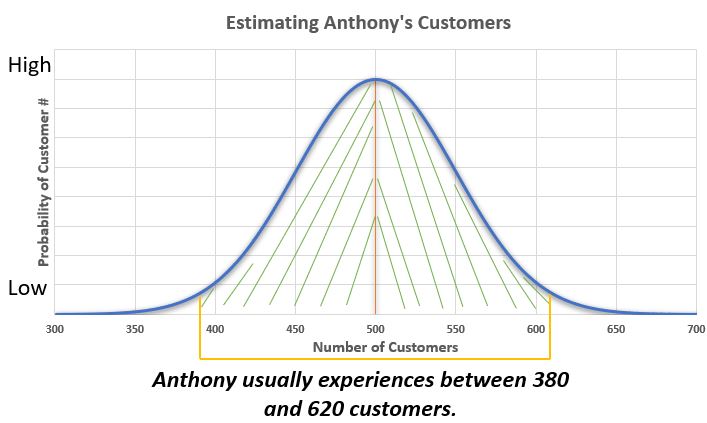
Anthony knows his average demand and range but how many customers should he prepare for? How should he balance lost sales vs wasted inventory?
Next, we need to examine his costs before determining how many burritos to make (Hint: the answer is not 500).
2. Understand your Costs & Margins
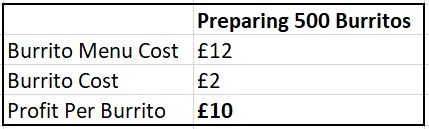
- Overage Cost: If Anthony over-prepares , he loses £2 per burrito
- Underage Cost: If Anthony under-prepares, he loses £10 per person – this is a lost sale
Note: We simplified Anthony’s shack – he only has one type of burrito. Usually, a percentage of your customers will order something else off the menu if you’re sold out. If Anthony offered two types of burritos he could take that into account and adjust his Underage Cost.
3. Balance Lost Sales vs Wasted Inventory – “Critical Ratio”
Now that Anthony understands his costs, he can calculate how many burritos to prepare!
In order to do this, Anthony needs to find his “critical ratio”.
This ratio determines the amount to prepare based off your costs. In other words, it optimises the amount of burritos that should be prepared to maximise profit by weighing lost sales vs wasted inventory.
Anthony finds that his Critical Ratio is 0.83, given by:
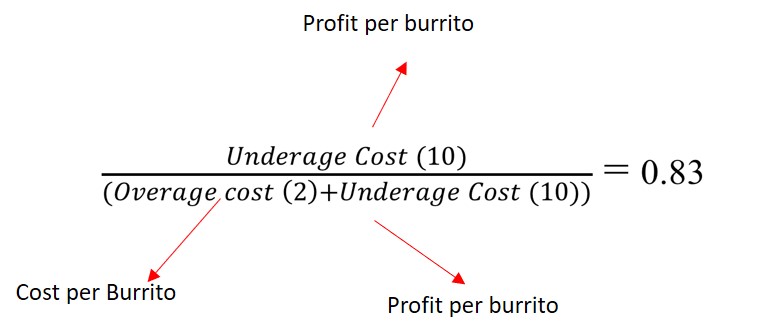
The 0.83 critical ratio means that he should prepare the number of burritos required to match customer demand 83% of the time. In other words, 17% of the time (about once a week) Anthony will probably not have enough burritos for every potential customer.
Anthony then needs to use Excel to find how many burritos will satisfy customers 83% of the time.
Use: =NORMINV(Critical Ratio, AVG Customers, Standard Deviation))) – This function will give the key number!

This function returns 558, which is the amount of burritos to prepare.
Anthony should prepare 558 burritos to maximise profit – even though his average is 500 customers!
4. Proving the Accuracy of the Critical Ratio.
I’ll show the results of Anthony preparing 500 Burritos vs 558 Burritos to prove that using your critical ratio is profit maximising.
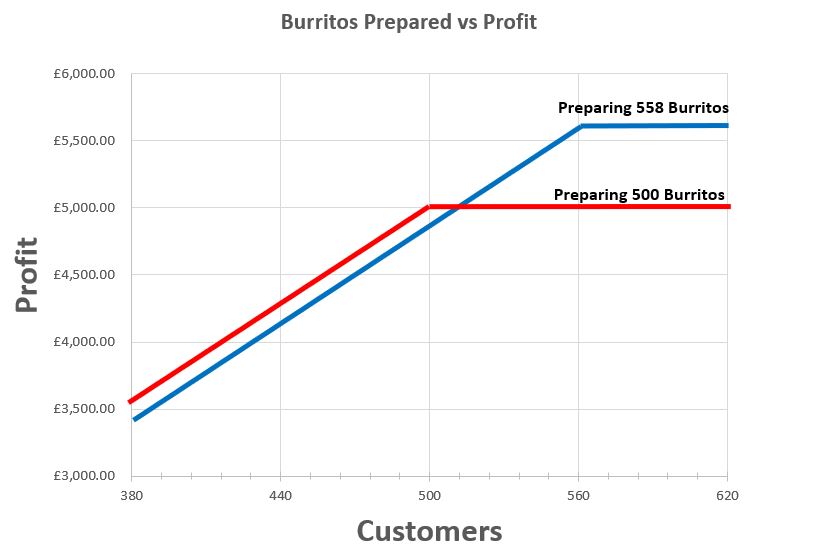
The chart above shows that preparing for 558 customers has a lot more upside than preparing for 500 customers. Conversely, If the customer demand is below 500 you barely make less money.

The critical ratio means that preparing more than 558 is not efficient! If Anthony made 580, because he wanted no lost sales, he would only make £4,770 on average – because the cost of the unsold burritos would outweigh the additional sales.
5. Should Anthony always prepare more than average demand?
The profit maximising quantity is based on your margins – your overage and underage costs. If the cost of Anthony’s ingredients raises to £10, the optimal quantity to prepare is 441, not 558, because unsold inventory is more damaging than lost sales.
6. How can we model more accurately?
If Anthony wants to improve his model he should examine the costs that go into his overage costs. Currently his overage cost is only determined by: Revenue of a Burrito – Cost of A Burrito (£12-£2 = £10).
However, the true cost is likely greater than that. He should look at storage costs for each burrito made (refrigeration costs) and staff costs that go into each burrito. Anthony might find that preparing the 58 extra burritos requires him to employee one more staff member.
Anthony might also be able to sell his leftover burritos at discount at his store, or over one of the great food reduction apps like Too Good to Go or Karma! This would also lower his overage cost – depending on the quantity and price of the reduced food.
Feel free to contact us for advice on how to include these more complex inputs!
7. How to maximize profit further!
Once you’ve been able to model your revenue maximizing quantity, the next step should be to increase the accuracy and precision of your demand forecast. We recommend using our forecasting module which has been shown to reduce forecasting error by over 50%!
The post Food Prep: How to Maximise Profit appeared first on Tenzo.
]]>To say that the coronavirus pandemic accelerated digital adoption across industries would be an understatement. Trying times like these breed innovation, and the restaurant industry alone has incurred arguably the most drastic changes to avoid permanent shutdown. We look into the future of restaurants, and how the pandemic has altered their business operations. McKinsey projects […]
The post The Future of Restaurants: Innovation Born of a Pandemic appeared first on Tenzo.
]]>To say that the coronavirus pandemic accelerated digital adoption across industries would be an understatement. Trying times like these breed innovation, and the restaurant industry alone has incurred arguably the most drastic changes to avoid permanent shutdown. We look into the future of restaurants, and how the pandemic has altered their business operations.
McKinsey projects that the restaurant industry could expect full recovery not sooner than 2025 with Technomic consultancy reporting that 20-25% independently-run restaurants will never reopen. Granted that government schemes like Eat Out to Help Out and the extended rent moratorium did give some breathing room to the industry, full recovery can only be achieved if businesses start rethinking their channels and operating models to reflect this new normal.
We’ve put together a list of ways restaurants are doing just that to increase margins, generate new revenue streams and generally stay afloat amidst these trying times.
Training/masterclasses over zoom
As the virus continues to make some people uncomfortable going out, many have turned to learning new skills with the help of dedicated webinars. That’s why restaurants are turning to online revenue by tapping into the virtual classes market. F&B businesses can take advantage of this trend by sharing their knowledge and skills with a new audience.
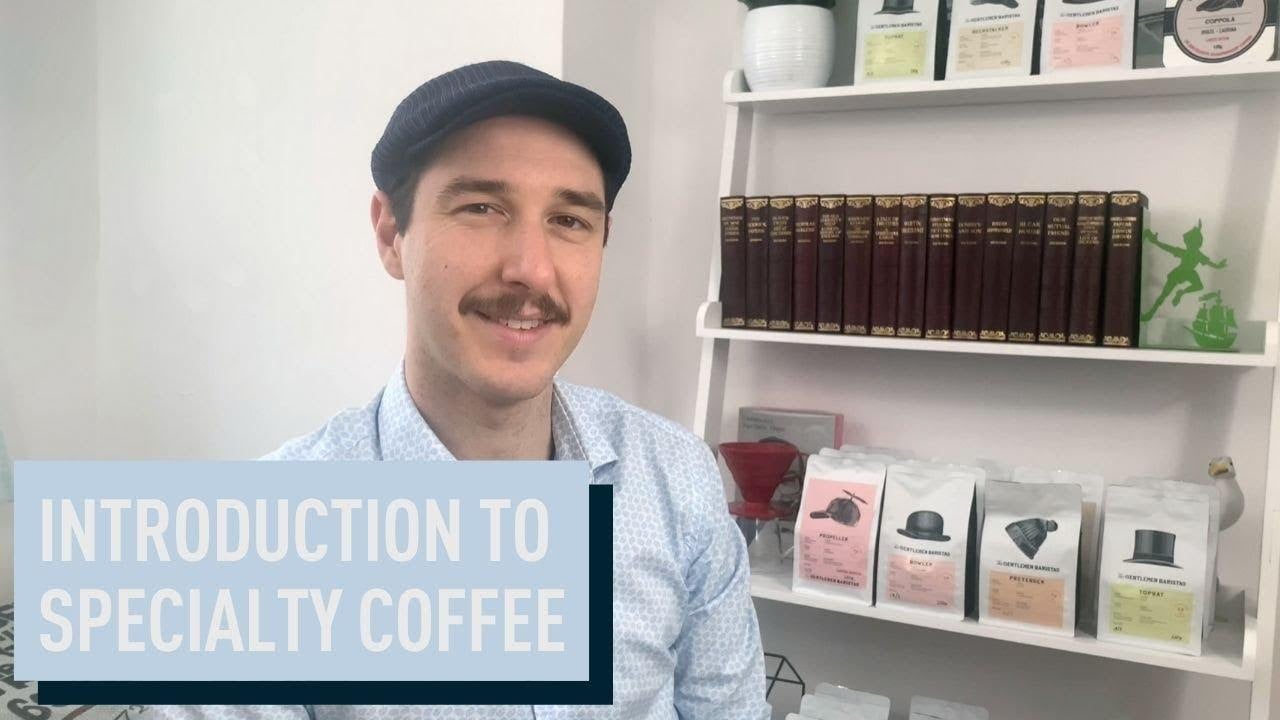
(Pic source: The Gentlemen Baristas)
One notable example is The Gentlemen Baristas launching their Online Coffee School. The Gentlemen Baristas offer scheduled classes where they teach everything you need to know about coffee, from brewing, to making a fragrant cup of espresso, the proper way.
Kerbside pickups
Kerbside pickups gained a lot of traction during lockdown as customers looked for low-contact and convenient services when obtaining essential goods. During times when everyone is trying to exercise caution, kerbside pickups not only improve the experience by providing a convenient alternative to going indoors, but also cut down on delivery cost and boost brand loyalty.
In fact, big juggernauts like Burger King and Nando’s have designed future locations to make the most of kerbside pickup’s newfound popularity. Burger King’s plans for their new Miami branch has a dedicated parking area for kerbside pickup customers as well as pickup lockers to reduce human interaction as much as possible.
Order & Pay
The pandemic has meant that the traditional menu is no more. Honestly, it’s strange to think that all menus were communal pre-March 2020. Now our choices are wasteful one-time-use paper menus or the newly popular order and pay apps. Platforms like Storekit allow customers to order and pay straight from their own devices without needing to download an app. They make ordering a breeze and keep customers feeling safe and comfortable.
Automats
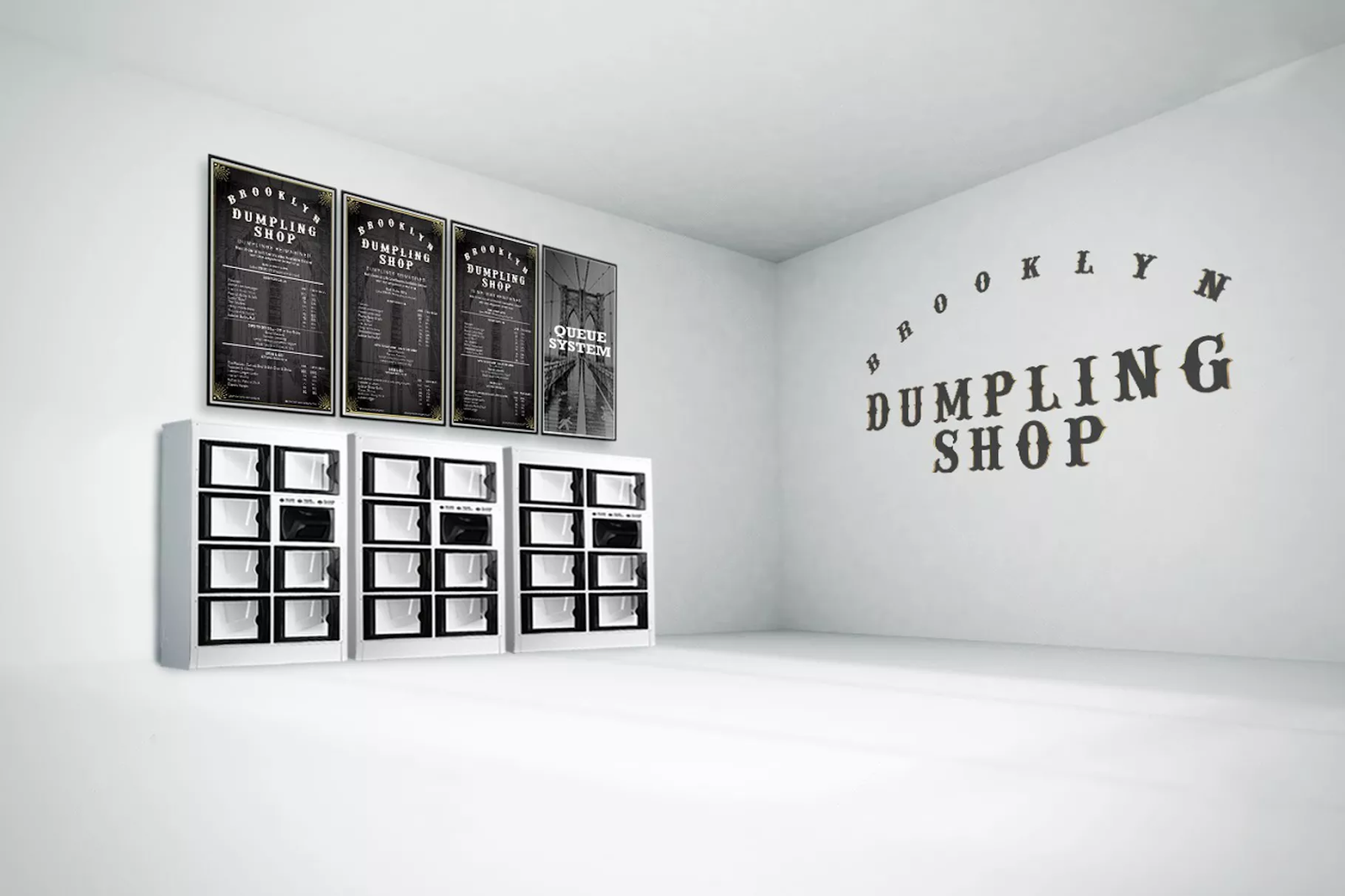
(Pic Source: Brooklyn Dumpling Shop)
Not a new concept in any way, but one that is seeing an increase in popularity since the start of the pandemic. Popular in the 1920s, automats are seeing a resurgence as people don’t want to spend too much time indoors. Restaurants like Boston Dumpling Shop have since taken this technology and enhanced it by incorporating different temperature settings in its pickup lockers for the most optimal storage. To further avoid unnecessary contact, customers continuously receive text updates about their order and scan their phone to access their food.
Influencer collaborations
Dunkin Donuts have tapped into social media virality and enlisted the TikTok influencer, Charli D’Amelio, as a partner and added her custom iced beverage to their nationwide menu for a limited time. As well as a custom beverage, Charli D’Amelio is launching a TikTok dance contest for best choreography performed to an original song produced by Dunkin Donuts.
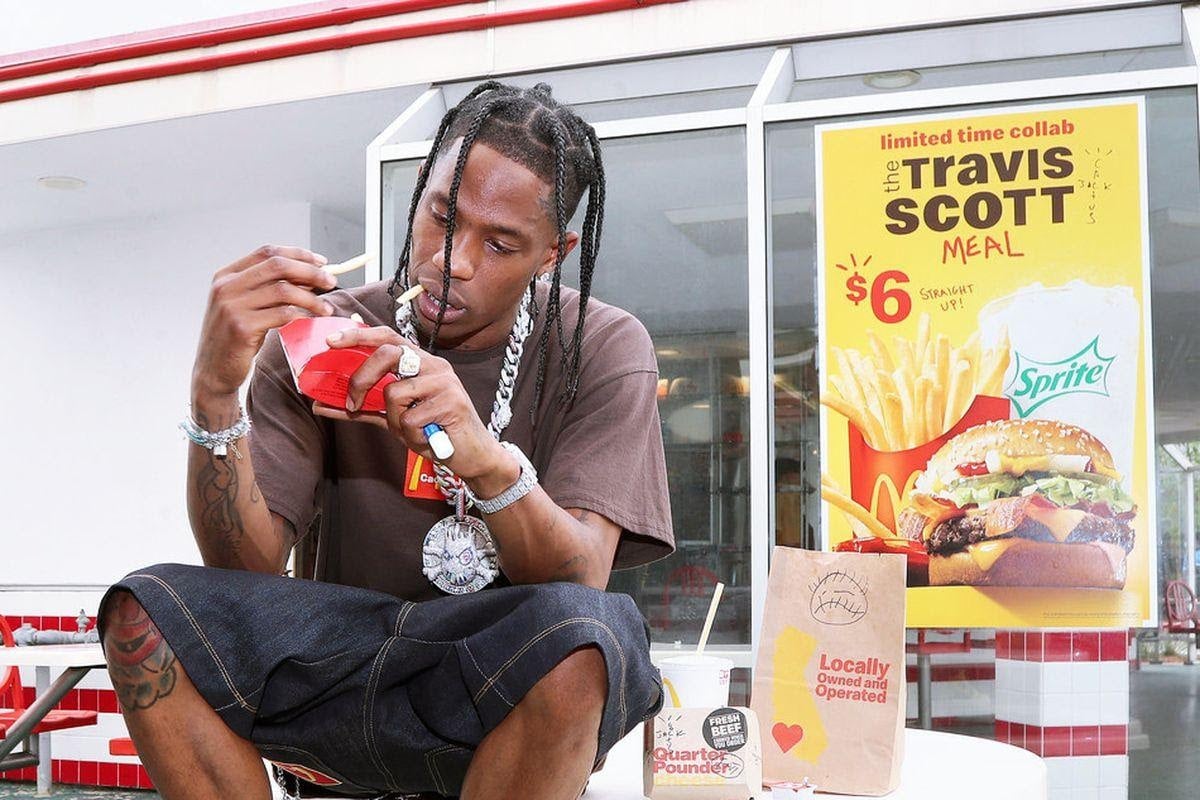
(Pic Source: Jerritt Clark / Courtesy of McDonald’s Corporation)
Perhaps the biggest news in fast food recently is McDonald’s first celebrity collaboration in almost 30 years. Fully embracing the hype, like they did with Michael Jordan and Chicago Bulls back in 1992, McDonald’s have partnered up with Travis Scott in a new marketing ploy to release the “Travis Scott Meal”. Despite only including a Quarter Pounder, fries, BBQ sauce and a Sprite, the fast food titan is running out of ingredients in locations where the popular meal is currently being sold.
McDonald’s clearly demonstrates that scoring the right collaboration can soar your sales without altering your operations in any substantial way.
DIY kits
Perhaps one of the largest changes within the industry is restaurants doubling down on delivery services. With eat-in being completely off the table, or vastly limited, a new kind of experience has emerged, which entails recreating your favourite dishes in the comfort of your home.
A popular example is the Pizza Pilgrims Frying Pan Pizza DIY kit that basically flies off the shelf. All you need is a frying pan and an oven and you’ll whip up fresh, delicious pizza in no time.
Red Velvet NYC offers subscription-based deliveries for those who want to make beautiful, Pinterest-worthy desserts at home. Delivery boxes are sent bimonthly and come with a wide range of allergy-sensitive recipes, ingredients and all the necessary tools you need to bake them.
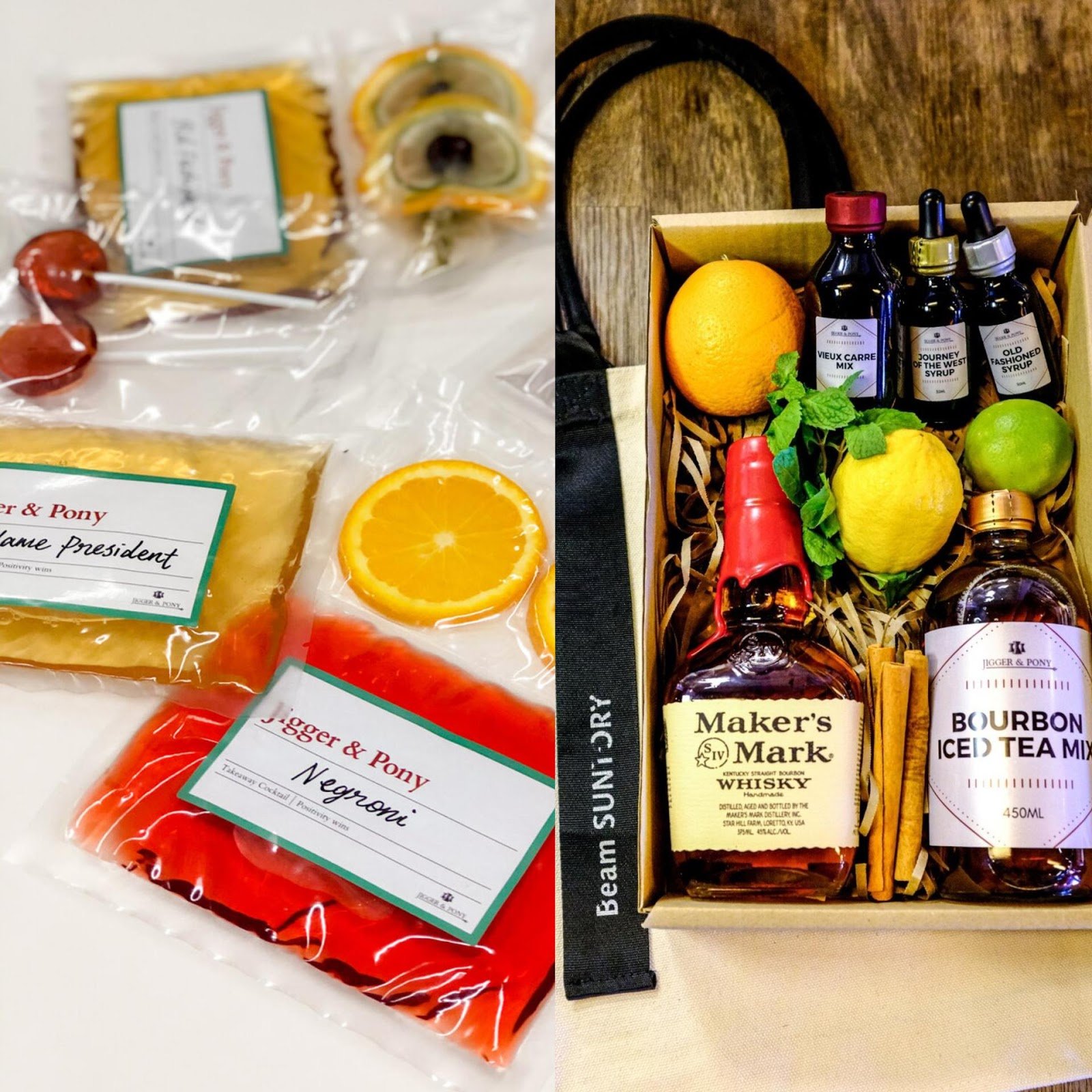
(Pic source: Jigger & Pony)
DIY cocktail delivery service offered by the #1 voted bar in Asia, Jigger & Pony, caters to everyone. From classics with a modern twist, to their signature, award-winning cocktails, Jigger & Pony menu features 24 cocktails and is exactly what you need to spice up a house or a dinner party. You can hear all about how founder Indra Kantono set up and grew the service on our podcast In the soup.
Creative social distancing measures
Even though most innovations allow businesses to continue their operation and ensure safe consumption, they sadly take away from the dine-in experience as they keep the human interaction to a bare minimum. However, some innovations have emerged that manage to adapt the eat-in experience to adhere with social distancing requirements, all while keeping enjoyment of dining out.
A Dutch plant-based restaurant, ETEN, offers a more intimate solution to social distancing by creating private greenhouses where guests can enjoy a 4-course, corona-proof meal. Guests are able to choose between a two- or four-person greenhouse with their dinner being served using long wooden boards to eliminate the possibility of contracting the virus.
Some restaurants definitely saw the new norm as an opportunity to elevate the guest experience amid the social distancing restrictions. Not only did Bar B Q Plaza in Bangkok use their mascot as a social distancing barrier, but also to defuse the tension surrounding the pandemic and keep their guests entertained.
A similar approach was taken by a cafe in Izu Shaboten zoo in Japan by strategically placing stuffed capybaras to keep guests entertained while ensuring they are at a safe distance from each other. Not only does this make the regulations seem less strict and reduce the risk of spread, but this genuinely became a highlight for people that stepped out to eat for the first time in months.
Ghost kitchens
One trend that has been supercharged by the pandemic is the emergence of ghost kitchens. While eat-in restaurants have had to reduce their number of employees, ghost kitchens have had to hire by the thousands as the demand for virtual eateries and delivery restaurants surged. This trend has given a boost to companies like TiffinLabs, which specialise in converting underused real estate into efficient, delivery-enabled kitchens. Needing only 19-28 m2 of space, ghost kitchens are probably the most sought after revenue stream, the value of which is set to become a $1 trillion global market by 2030, Euromonitor reports.
Conclusion
It’s been great to see so many restaurant businesses hustling during these past six months. Clearly, this hasn’t been an easy or simple time for anyone, but this innovation certainly shows that restaurants aren’t going anywhere, but the way we interact with them has definitely changed and perhaps for the better.
If you’d like some additional insight on what restaurants should be prioritising when surviving in the new normal, we recommend you to read the expert recommendations in our new restaurant playbook blog here.
We’d also like to hear your thoughts on how you think the restaurant industry will be further developing. Feel free to message us on any one of our social media accounts:
The post The Future of Restaurants: Innovation Born of a Pandemic appeared first on Tenzo.
]]>In the latest episode of “In the Soup”, Robb Harris, Finance Director at Upham Pubs, discusses the challenges facing pubs, restaurants, and bars during the COVID-19 crisis. One particular thing Robb focuses on is the changes to customer demand and trends driven by the pandemic. This means that restaurateurs will need to be flexible and […]
The post Covid-19 Challenges for Restaurants; capitalising on this new normal appeared first on Tenzo.
]]>In the latest episode of “In the Soup”, Robb Harris, Finance Director at Upham Pubs, discusses the challenges facing pubs, restaurants, and bars during the COVID-19 crisis. One particular thing Robb focuses on is the changes to customer demand and trends driven by the pandemic. This means that restaurateurs will need to be flexible and creative in order to make the best of the situation and thrive in a more cost focused environment. Read on for tips on how to identify these new trends and capitalise on them.
Customer trends and demand will change
In the U.K, likelihood is that the government will slowly repeal Covid restrictions leading to multiple levels of soft launches for restaurants. As we heard from the Prime Minister on Sunday, certain hospitality businesses will potentially be allowed to open with social distancing in place starting from July. However, there will no doubt be a phased approach to this, starting with locations that have outdoor space working all the way through to the most crowded spots. There may also be an expectation for staff to wear masks and personal protection equipment (PPE) to begin with.
These restrictions, along with differing levels of customer concern and wariness, will alter demand across your different locations, with the spread of demand likely to be uneven. For example, more urban areas with a younger demographic may find residents less risk averse and keen to resume the social lifestyle that comes with living in a city. Rural and suburban areas, on the other hand, with more families and an elderly residents, may be more reluctant to go back to their pre-Covid behaviour.
Experiment
A good, cost effective idea may be to experiment with a few clusters with demographic and geographic similarities in order to understand new customer trends. If you have restaurants spread across the country, you could cluster and categorise your locations as “Urban”, “Suburban” and “Rural”. You could then choose 1-2 locations for each category to open in order to test customer demand in these types of locations.
You might also find that you need to change up your menu to suit changing customer habits or because you can no longer get hold of the products you used to use (think no fresh mozzarella or produce from Italy). Plus, uncertain customer demand means a greater chance for food waste, which could have a huge impact on your profit margins. To counter food waste, chefs should make sure that their menus make use of common ingredients across different menu items.
Capitalise
Cluster and customise your openings Alter the menu and reduce food costs
As you open more and more locations, you can continue to adjust based on the data you collect. Our recommended experiments by location cluster (urban, suburban, or rural) will reveal which sites are in the best position to open. You might find that urban areas may be well suited for evening-only hours, while suburban and rural areas may be best suited for weekend roasts making use of any outdoor space.
Alter the menu and reduce food costs Optimise staffing
After experimenting and capturing customer reception to your new menu – using social media and sales data to identify which dishes are most popular – restaurants should adopt this similar menu across locations to reduce food costs. Focusing on easily accessible ingredients and using them in different ways (think whole animal cooking or root to leaf use of vegetables) across the menu will allow you to cut your food costs while still offering high quality meals.
Optimise staffing
Eventually, a new norm will be established and identified. Customer demand will become more steady, which will enable more accurate staffing schedules. However, these schedules cannot be the same ones your teams have been using for years – new ones will need to be developed. Figuring out how and when to increase staff from a base level will be key, not to mention the extra consideration of safe distancing. You’ll need to pay close attention to the schedules to make sure hours are distributed fairly as well.
How to prepare your organisation
Proper technology will be vital to identifying and capitalising on these trends. Before restrictions are lifted, it may be an ideal time to rethink business processes, strategy, and technology. Really consider how to make the reopening journey as seamless as possible, to avoid any extra costs of pivoting to new ideas at the last moment.
If you want to hear more about reopening and our tips and tricks, sign up to Planday’s webinar ‘Staying afloat until you find solid ground’, where Tenzo CEO, Christian Mouysset, will be breaking down the data to help guide you to a successful reopening.
The post Covid-19 Challenges for Restaurants; capitalising on this new normal appeared first on Tenzo.
]]>Mark Withington, Tenzo’s Enterprise Sales Director, reflects on the problems restaurant operators run into time and time again when it comes to restaurant targets and metrics. KPIs, OKRs, Targets, North Star Metric – all business jargon hinting at driving business performance through goals and accountability. One common frustration we’ve seen in restaurants is that […]
The post Setting and Achieving Effective Restaurant Targets: A total guide appeared first on Tenzo.
]]>Mark Withington, Tenzo’s Enterprise Sales Director, reflects on the problems restaurant operators run into time and time again when it comes to restaurant targets and metrics.
KPIs, OKRs, Targets, North Star Metric – all business jargon hinting at driving business performance through goals and accountability.
One common frustration we’ve seen in restaurants is that picking the right metric, setting the right target, and achieving those business goals is not a simple task. It becomes even more challenging as the number of locations grows; breaking down your overarching goals into tangible metrics for your area managers and general managers (GMs) to strive for. But have no fear, it is indeed possible.
In this blog, we’ll break down:
- The typical challenges restaurants face when trying to optimise performance through metrics and targets
- How to set targets and achieve metrics the right way
The challenges every restaurant business faces when it comes to setting targets and metrics
Engagement & understanding
Often, managers are given metrics and targets without understanding how these fit into the wider strategy of the business. Without that context, managers can find it hard to actually own these new metrics and targets which often leads to demotivation. Managers want to understand why each goal was selected and how they’ll be able to have an impact on the business as a whole.
As an example, if head office decides that attachment rates of specific items should be improved, managers want to know why this was chosen, and how that target was decided.
Over bundled
Sometimes managers are given targets that contain factors outside of their control.
For example, Year-on-Year (YoY) growth is influenced by the brand, promotions, marketing, guests, average transaction value, competition, etc. Managers don’t typically control all of these factors so bundling it all together can cause many to become demotivated and disengaged.
We’ve usually seen this occur when head office takes their objectives (from the owner or board) and passes them directly onto the restaurants.
Unrealistic & achievable
Metrics and targets can demotivate managers if they’re too much of a stretch – a balance is needed. This often happens when offices assign the same target to every single location, without the understanding that each location has a different starting point.
For example, an average transaction value target of £15 might be easier for your London locations to achieve, while harder for your more rural locations where prices can be lower and customers are more price sensitive.
Additionally, setting a goal of 4.5 stars on Google might be unrealistic for the location that today is sitting at 3.5 stars, while too easy for the location currently at 4.4 stars.
Difficult to monitor and track progress
We’ve heard frustrations from many GMs that they receive detailed reports too infrequently due to te how time-consuming it is to compile data across the points of sale, labour, and inventory tools. Logging in to each data source to download CSVs of matching period, and combining them in Excel is slow, frustrating, and often leads to mistakes.
These manually compiled reports usually arrive too late for the manager to actually learn from and have an effect on performance.
Asking shift leader why they might have had low attachment rates 3 weeks ago isn’t likely to yield a helpful insight – but it may if the question was asked regarding “yesterday” or “this morning”.
Poor incentives
Be careful though – some metrics and targets can incentivise non-profit driving decisions. Ensure that your metrics are robust and can’t be “cheated”!
For example, a manager might be tempted to reduce staffing towards the end of the week, regardless of predicted demand, if they have a 30% cost of labour as a percentage of sales target for the week and mistakenly overstaffed at beginning of the week.
Additionally, if stock-on-hand is measured and a target is too low, managers may eliminate wastage, but lose sales due to stock-outs.
How to set metrics and achieve targets the right way

A. Choose the right metrics to track
First, prioritise what you want to measure (e.g., Average Transaction Value…), and then how you should measure it (e.g., by day, by week,…).
First, prioritise what you want to measure by breaking down your business’ strategic priorities. For example, if revenue growth is the strategic priority then metrics such as average transaction value (ATV), attachment rate of key items, or review ratings may be appropriate. Then you need to pick how to measure these metrics (e.g., weekly average, by day of the week, by daypart…).
Generally, we advise aiming for these metrics to be simple, quantifiable, directly impactable at the location level, and incentivising profit-maximising decisions.
The last one is difficult! You’ll need to spend some time brainstorming and reflecting on what type of behaviour this metric may cause. Definitely engage your managers in this process. 1. It gives them ownership from the start and 2. they’ll know how each metric will impact their decision-making.
Finally, try to limit these metrics to 3-5 – otherwise, it can be overwhelming and limit focus.
B. Tailor each metric’s targets
Once the metrics are set, you’ll need to set the targets for each metric. These targets should be:
- Fair to each area/location
- Realistic, while still pushing stores to improve
- Impactful on the business targets
Targets can be benchmarked/set figures (e.g., Stars on Google, spend per guest…) or comparable figures (e.g., Year-on-Year improvement).
For the most part, we’d recommend using comparable figures (i.e. measuring % improvement), instead of fixed figures, as this provides a level-playing field for each location. Some locations just have advantageous situations, such as being situated in an up-and-coming area or located next to a theatre which naturally draws a post-theatre cocktail rush.
C. Communicate why and how the metrics and targets were set
Once set, communicate why these metics were chosen, how the targets were set and, if achieved, how they’ll contribute to the business’ growth. These types of narratives really help!
“We’re a coffee shop, and average spend per guest is too low if guests only order a coffee for us to experience significant growth. To drive revenue, we need to focus on selling pastries. Specifically, we’re going to track attachment rates. If 1-in-5, or 20%, of your store’s customers purchase a pastry, we’ll raise the average transaction value from £4 to £6.”
D. Regularly track progress
Make sure your managers have access to the data they need whenever they need it. This will allow them to understand what they should do differently, or continue doing, and steps to take with their teams. Effective metrics and targets can’t be “set and forget”.
E. Assist and support
Finally, provide support and insight to your managers. Help them understand trends and actionable steps they can take to achieve their targets. Restaurant managers have a lot on their plate, and interpreting complex data will not be the most pressing thing at any given time.
If they’re overstaffed, show them what days of the week and when during the day this is usually occurring. If their cost of goods sold is high, show them which 5 items typically have the highest impact on wastage. Remember that support is most important if you want these small changes to have a big impact on performance.
How Tenzo can help?
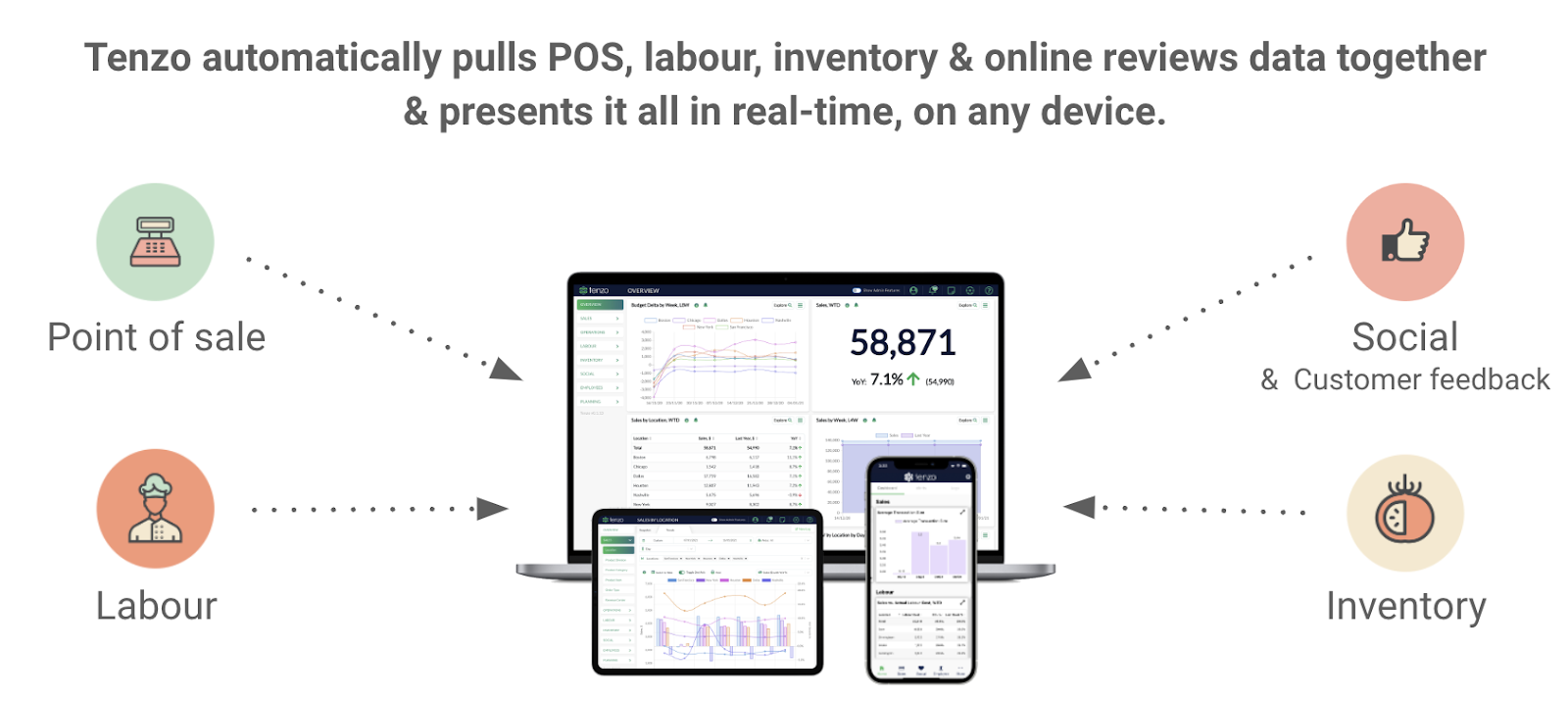
Tenzo brings together all your operational data sources within our business intelligence platform, on mobile, email, and web, with proactive alerts and notifications to provide:
- Head office with historical context and performance to set metrics and tailor targets
- Operators with intuitive dashboards to understand their real-time performance against these targets and drill into the key drivers
- Real-time reports and dashboards, with tailored views and permissions by user/position, delivered on mobile, email, and web
- Automated insights to managers
- Proactive alerts when labour plans don’t match forecasts or targets
Additionally, our Customer Success team has a plethora of knowledge and experience to help recommend effective and our most popular metrics, KPIs and targets based on your strategic business goals.
Get in touch with us today to chat more about achieving your metrics and targets with Tenzo.
The post Setting and Achieving Effective Restaurant Targets: A total guide appeared first on Tenzo.
]]>