We are extremely proud to announce that Tenzo is partnering up with WRAP to collaborate on food waste reduction through their The Food Waste Reduction Roadmap initiative and helping countries battling food waste around the globe! According to the FAO report, 1.3 billion tonnes of edible food is being thrown away annually, resulting in 3.3 […]
The post 10 most creative ways people are battling food waste around the globe appeared first on Tenzo.
]]>We are extremely proud to announce that Tenzo is partnering up with WRAP to collaborate on food waste reduction through their The Food Waste Reduction Roadmap initiative and helping countries battling food waste around the globe!
According to the FAO report, 1.3 billion tonnes of edible food is being thrown away annually, resulting in 3.3 billion tonnes of greenhouse gases being released into the atmosphere. Luckily, organisations like WRAP not only encourage businesses to embrace sustainability, but help them implement sustainable practices within their day-to-day operations.
Since the early 2000s, WRAP has played an active role in supporting initiatives around greater resource efficiency. They have partnered with communities, businesses and governments to create practical solutions and campaigns to help reduce consumption, prevent waste and recycle more.
In celebration of this new partnership, we’ve put together the top 10 most creative ways people are battling food waste around the world.
1. Canada – From Potato Peels to Plastic
Frozen potato manufacturing company McCain was growing frustrated with how much waste was created by unused potato skins in their manufacturing process and had the idea of giving discarded potato peels a second life by developing them into bioplastic composites – Chip[s] board was founded to do just that and now boasts a range of extraordinary bioplastics that are not just biodegradable, durable and recyclable, but are also sleek and aesthetically pleasing in design.
2. China – Feeding Food Waste to Cockroaches
With the population steadily increasing, more waste is being produced than landfills can handle. That is why in the outskirts of Jinan, a plant run by Shandong Qiaobin Agricultural Technology Co. is feeding 50,000 tonnes of food waste to a billion cockroaches on a daily basis. Not only do the bugs get rid of unmanageable mountains of scraps, but once the bugs pass away, they become nutritious food for livestock. “It’s like turning trash into resources,” the Shandong Qiaobin chairwoman says.
3. France – Perfume from upcycled flowers, berries and fruits
French perfume house, Etat Libre d’Orange, released a revolutionary fragrance that aims to create awareness about waste in the luxury industry. The fruity-floral perfume titled I Am Trash – Les Fleurs du Déchet (The Flowers of Waste), was created entirely out of unwanted and found objects.
4. Indonesia – Shoes from Chicken Feet Skin
You read that right. As a way to create environmentally friendly fashion products, a 25-year old entrepreneur, Nurman Ramdhany, started making shoes from discarded chicken feet he found in market rubbish bins. Operating under the brand name of Hirka, the company strives to educate people on the quality of chicken feet leather while promoting environmental sustainability.
5. Mexico – Cutlery from Avocado stones
Mexico is responsible for 50% of the world’s avocado supply. With that in mind, Biofase, a startup from Michoacán, figured out how to put discarded stones to good use. By using avocado stones bought from companies that produce guacamole, Biofase extracts a unique compound that they use to mold into 100% biodegradable cutlery and straws.
6. The Netherlands – 3D Printing Snacks from Food Scraps
Elzelinde Van Doleweerd and Vita Broeken created a process that recycles food that would have otherwise been thrown out. In partnership with 3D Food Company, the pair founded Upprinting Food, whose purpose is to promote sustainability within the restaurant industry. The production process is actually far from complicated. After mashing fruits, vegetables and bread they add herbs and spices to create ink for the 3D printer. After printing, the food is baked and dehydrated to create a deliciously crunchy snack.
https://www.upprintingfood.com
7. Singapore – Alcohol from Tofu byproduct
Tofu whey – the liquid that is generated during tofu production is often discarded and adds to pollution and oxygen depletion in waterways because of the soluble sugars that it contains. Scientists have discovered that by adding sugar and yeast to the liquid, it turns it fruity and floral in taste, with up to an 8% alcohol content. On top of reducing waste, “Sachi” also comes with a number of health benefits, such as prevention of cardiovascular disease, osteoporosis and some types of cancer.
https://sinfootech.com/product-list
8. Spain – Clothes made from discarded pineapple plant leaves
Piñatex® leather was developed when Dr. Carmen Hijosa saw an opportunity in using pineapple harvest byproduct to build a sustainable and scalable product as an alternative to mass leather production and chemical tanning. Hijosa’s vision is to develop farming communities by allowing farmers to use greater quantities of their waste leaves.
9. United Kingdom – Beer from recycled toast
Dubbed as planet-saving beer, Toast Ale is brewed from fresh bread surplus that bakeries would have otherwise thrown out – all to prove that the alternative to food waste is delicious and pint-sized. Company profits go directly to Feedback charity organization that addresses food waste issues across all stages of our food system.
10. United States – All-purpose cleaner from food waste
Motivated by all the Food waste rotting in landfills, Veles decided to turn all those sugars and acids into something more useful. Veles not only wanted to give this food waste a second life, but also wanted to create awareness about the benefits of using biomass as a cleaning agent. Packaged in a recyclable and refillable aluminum bottle, Veles all-purpose cleaner was created from 97% food waste by using a simple acid fermentation process, with natural fragrances representing the remaining 3%.
Conclusion
Food waste is definitely something we can all reduce, whether that’s at home or in restaurants, and is that something that has a direct impact on the environment. If you are as motivated as us to start making a better choices for the planet, do check out WRAP and their other initiatives to educate yourself on how you can start making a better impact today:
If you’d like to find out how you can use Tenzo to reduce food waste within your establishment, make sure to check out our forecasting module here.

The post 10 most creative ways people are battling food waste around the globe appeared first on Tenzo.
]]>The last eight months have seen the biggest technological revolution in the restaurant industry since iPad points of sale came onto the scene. Obviously this has all been precipitated by the worldwide pandemic. Advancements that would usually take five years to become widespread have come to the fore in six months instead. Anything that can […]
The post Artificial intelligence and restaurants: a recipe for success? appeared first on Tenzo.
]]>The last eight months have seen the biggest technological revolution in the restaurant industry since iPad points of sale came onto the scene.
Obviously this has all been precipitated by the worldwide pandemic. Advancements that would usually take five years to become widespread have come to the fore in six months instead. Anything that can help restaurateurs streamline their business and keep people safe is now being tested.
Unsurprisingly, like the rest of the business world, restaurants are now turning to artificial intelligence and machine learning to help optimise their processes and manage their operations. AI has snuck into all aspects of the modern restaurant from sales, to delivery, to inventory management and more.
Check out all the incredible innovation that’s coming out of the restaurant technology space today and see how far we’ve come in so little time.
How can machine learning optimise your delivery business?
One of the consequences of the ongoing pandemic for almost all restaurants is heavy, or even complete reliance on deliveries. The ever-changing restrictions in combination with the decrease in customer confidence has meant that delivery is now the main revenue generator for many businesses.
However, delivery is notoriously difficult to nail every time. Whether it’s food not arriving hot because the driver got stuck in traffic or a forgotten item that ruins the experience for the waiting customer, it can certainly be hit or miss. Luckily there are some new AI players that can help.
(Pic Source: Viktor Forgacs)
If you employ your own drivers, getting your deliveries from A to B as quickly as possible is absolutely key to maintaining the quality of the meal. That’s where Distancematrix.ai comes in. Distancematrix uses its AI algorithm to optimise delivery times by accounting for traffic, mode of travel, and even individual driver’s speed and breaks. They claim that by using them, you’ll reduce delivery time by 25% making for happier customers and increasing the amount of meals you’re able to deliver in a day.
(Pic Source: Satis AI)
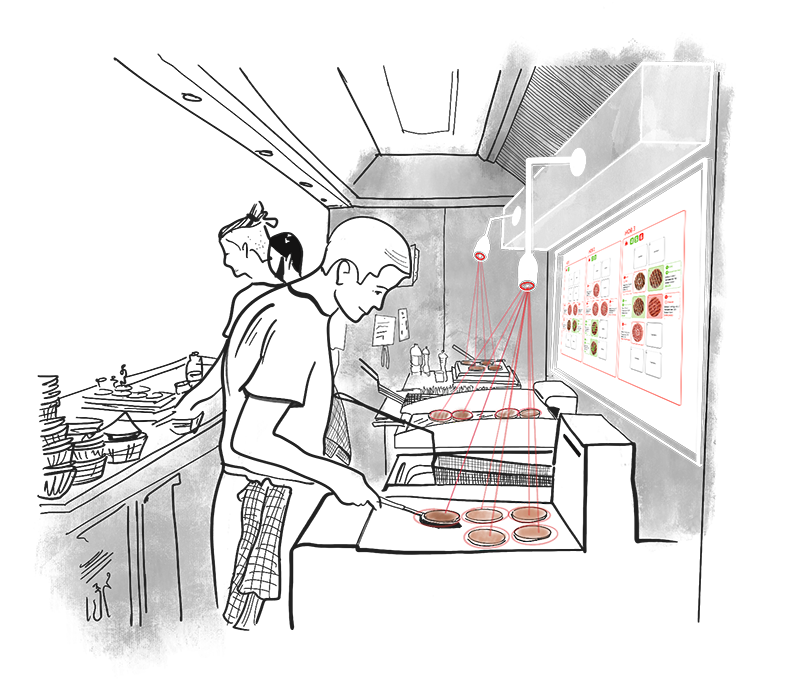
Unfortunately, we are only human and inevitably orders get mixed up. While this isn’t too bad in a restaurant because mixed up orders can be replaced, when orders have already traveled 30 minutes to someone’s house, a mix up can ruin a customer’s evening. Satis AI is here to stop that happening.
Satis AI uses sensors installed throughout the kitchen area to improve order sequencing, equipment tracking and packing accuracy. AI-powered sensors come with a range of modules aimed at decreasing human error and creating major efficiency gains. By tracking exactly what goes into delivery orders and alerting the team when the order is assembled incorrectly, the technology promises to reduce refunds and waste by 50%.
How can artificial intelligence increase sales in general?
The secret behind artificial intelligence is that it is constantly learning (hence ‘machine learning’). When you give the machine lots of data points, it can draw patterns and easily predict what may occur the next time something similar will happen. Because of that, restaurateurs can use AI to track food trends and see what consumers want right now.
(Pic Source: Food Navigator)
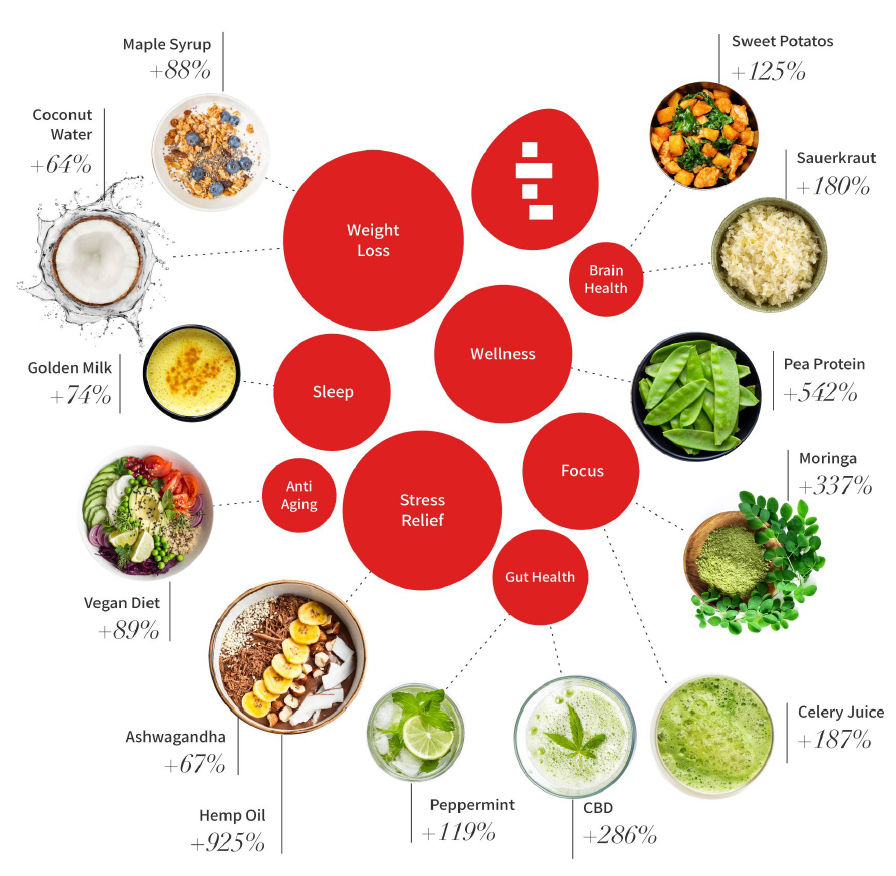
Tastewise is just the platform for the job. It has the capability to analyse multiple data points from inputs such as menus, reviews, and social media platforms to identify target segments and gain an understanding of underlying trends. Using real-time data, Tastewise predicts changes in consumer needs providing revenue-maximising opportunities.
You’ll know what customers are craving here and now and you’re able to give them exactly what they want.
AI can also be applied to individual orders. In fact, McDonald’s saw so many benefits in order prediction based on machine learning that it bought the company that did it best. Dynamic Yield uses an advanced machine learning engine to predict what customers will want to order based on what time of day it is, weather, the length of wait and previous orders and shows those items on the drive-thru menu first.
It was reported that this enabled Dynamic Yield to reduce the waiting time in McDonald’s drive-thrus by almost 30 seconds in 2019 alone, which when you consider how many extra hours of transaction time that produces over the year translates to a lot more orders and a lot more revenue. Unfortunately, McDonald’s now owns the rights to use their technology and they no longer serve other restaurants brands, but they do sell their services to ecommerce customers as well as the travel industry.
Of course, if you want to forecast your sales in advance (and who wouldn’t want 30% more accurate AI forecasts?), you’ve certainly come to the right place.
Tenzo uses a machine learning algorithm based on historical sales, events, seasonality and even the weather to predict your future sales at a daily-, hourly- and item-level. This enables you to always be prepared knowing what items will be most popular (and therefore what to have on hand), when the rush will be (and have enough staff working to handle it), and an accurate view of the revenue you’ll be taking in (giving you peace of mind).
To find out more about Tenzo’s forecasting technology, check out our dedicated article.
Will Al be the answer to the restaurant Industry food waste problem?
A third of all food waste generated comes from the restaurant industry. Not only does this cost the restaurant, but it also costs the environment. In fact, if food waste were a country, it would be the third largest producer of emissions just behind China and the United States.

(Pic Source: Embrace The Machine)
Winnow is set on changing this. Its Waste Monitor system uses machine learning-powered cameras to identify, track and monitor food waste that is disposed of in the kitchen showing chefs and operators exactly what they are throwing away in revenue terms.
Winnow’s AI technology not only makes chefs more accountable for their food waste, their analytics provide the insights needed to reduce waste by 50% and reduce their food costs by up to 8%. By partnering with major hospitality and food services companies, Winnow set a goal of saving the global service industry $1 billion by 2025.
Tenzo’s AI forecasting also helps you significantly reduce food waste. Find out more here.
There’s also no doubt that we’ll be seeing more inventory-related uses of AI in the near future. Think stock takes using just a camera, fridges with AI temperature controlled areas based on the food that is placed inside it and smart ovens that never let anything burn. All ways of reducing the food we waste and decreasing the hospitality industry’s environmental impact.
Conclusion
People can sometimes get scared by the notion of artificial intelligence thanks to science fiction films giving us the idea that the robots are taking over. But that’s simply not the case. Hopefully the above shows that artificial intelligence or machine learning simply create tools that can simplify and optimise the running of businesses. They are not invested in to take away the human aspect of a process, but rather work with people to create even better processes.
That’s why it’s so important in the restaurant industry right now. The current state of the world means that we need all the help we can get to run the most efficient and profitable businesses possible and thanks to all the research put into AI, that is now a real possibility.
The post Artificial intelligence and restaurants: a recipe for success? appeared first on Tenzo.
]]>