This is an unprecedented time for the hospitality industry and we know that it is going to be an uphill struggle with Coronavirus and F&B Businesses. This is especially true here in the UK where the Prime Minister has called for people to stop socialising, citing pubs specifically. And yet, at time of release, has […]
The post Coronavirus and F&B businesses : What you can do appeared first on Tenzo.
]]>This is an unprecedented time for the hospitality industry and we know that it is going to be an uphill struggle with Coronavirus and F&B Businesses. This is especially true here in the UK where the Prime Minister has called for people to stop socialising, citing pubs specifically. And yet, at time of release, has not ordered businesses to close, meaning that claiming insurance is not a possibility.
Hospitality plays an enormous role in our community – restaurants, coffee shops and pubs across the country are sometimes the only place that the community can get together. Staying open, until the government imposes closures, is what a lot of hospitality leaders will see as being their way to serve the community.
In order to help as much as we can in this time of uncertainty, we’ve put together a list of tips we hope can make this time a little easier for our customers, and other F&B businesses.
1. Renegotiate rent with your landlords.
The first thing we would advise you to do is to talk to your landlord. We would start by asking for a quarter’s holiday to help with the impact and leave the option of asking for another quarter. If they refuse, ask whether they’d be open to taking the rent from your deposit.
2. Changing opening hours

With a majority of people distancing themselves from others, including working from home, you may find that your usually busy times are a lot less busy. It is a good idea to reconsider your hours to reflect when business is now coming in.
3. Minimise staffing
Making sure your team is safe and that the levels of staffing are sufficient so that they can still earn enough whilst not burdening the business too much is going to be a very hard balance to strike.
However, make sure you know what your minimum staffing requirements are and stick to them. Try to keep to this minimum – not even an hour more. This may require you to make full-time employees part-time for the time being. Also be sure to keep an eye on your staff and if any are feeling the slightest bit ill or showing symptoms, they must be sent home immediately.
4. Consider reducing your menu to limit wastage.
It may be worth reducing your menu to crowd favourites, or to dishes which include many of the same ingredients so you can cut down on any wastage. Alternatively, consider donating food to organisations who gather for the needy – some of these may even have budgets to pay a reduced rate for any donations helping with cash flow. Too Good To Go and Karma are both good platforms to use to recover some of the losses from unsold food.
5. Ramp up deliveries
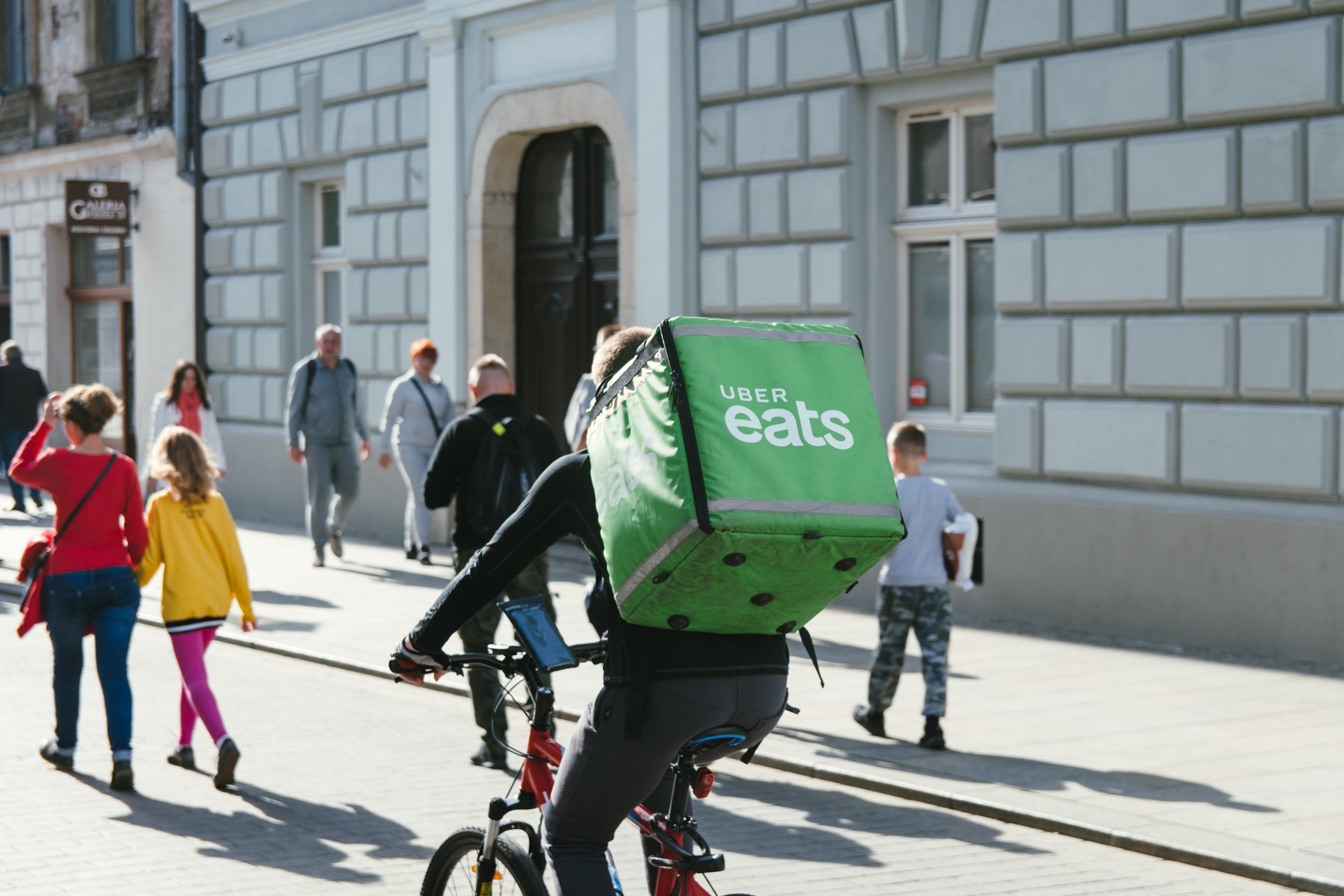
If you haven’t traditionally done much delivery business, now is the time to start. Delivery services now have options for contactless drop-offs reducing the risk of contamination for drivers. Plus, services such as UberEats and DoorDash are waiving the commission fees for independent restaurants to help with the transition.
6. Reach out to customers
Your customers understand that this is a very difficult time so reach out and ask for support. Offer gift cards or merchandise they can buy instead of the meal they planned to have. You can also let them know what measures you are taking to minimise risks and put them at ease. This restaurant in New York is even doing thermometer readings of every person who walks through the door to help appease fears.
7. Make your restaurant feel safe for the guests
Unfortunately, much about the virus is unknown, such as how long it can survive on surfaces. Therefore, careful and frequent cleaning of all tables, chairs, dishware, appliances, etc is a must. Staying on top of hand-washing is also imperative at the moment and signs encouraging this will not only encourage staff to keep their hands as sanitised as possible but also reassures customers. This helpful guide sets out what restaurateurs should be doing in terms of reducing the risk of contagion.
8. Rearrange seating
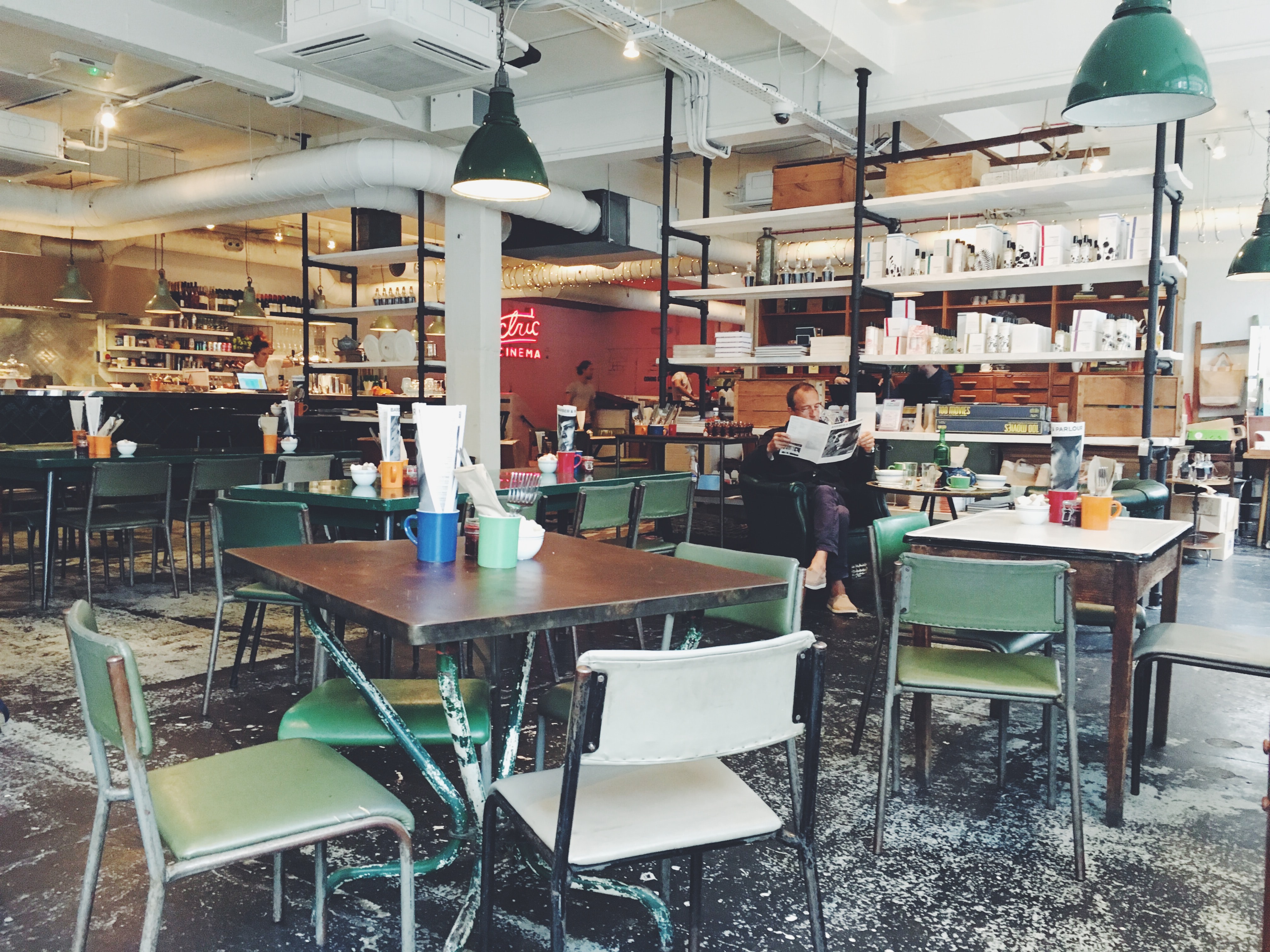
Several cities have now implemented maximum numbers for food businesses to ensure that patrons can be kept at a safe distance from each other. Moving your tables around to accommodate the 2 metre recommended distance is paramount to keeping potentially contagious people apart from others.
9. Queue management
In the same vein, with limited amounts of seating inside, you might start seeing queues to get into your restaurant. If this is the case, it’s very important to manage the line, keeping people at least 2 metres away from each other again.
10. UK businesses can claim back the business rates from the government.
More details about this will be published on March 20th, but as of now, there is support in place to help businesses. Businesses with less than 250 employees may reclaim all Statutory Sick Pay paid out for Covid-19. The Business Rates discount has also been increased to 100% for properties below £51,000 rateable value. Find out more here.
We will be regularly updating this post as new advice comes in. In the meantime, Tenzo customers have Tenzo’s full support. If you wish to speak to anyone here about your business and how to respond, please don’t hesitate to reach out via [email protected].
The post Coronavirus and F&B businesses : What you can do appeared first on Tenzo.
]]>The pandemic and subsequent lockdown have obviously put the hospitality sector in a difficult position. Although it was undoubtedly the right decision to shut down restaurants, pubs, bars and cafes as a matter of public safety, the loss of business struck the sector, unlike any other industry in the UK. This time has served to […]
The post Governmental Support; Thoughts on the Restaurant Industry and Landlords appeared first on Tenzo.
]]>The pandemic and subsequent lockdown have obviously put the hospitality sector in a difficult position. Although it was undoubtedly the right decision to shut down restaurants, pubs, bars and cafes as a matter of public safety, the loss of business struck the sector, unlike any other industry in the UK. This time has served to emphasise the precarity of running a restaurant: hospitality has always been a tight-margin business, with operators having on average less than 3 weeks of cash on hand. This means that any small disaster can set off a whole chain of them. Governmental support was used to curb the impact of the pandemic on the industry and landlords.
But how did this happen? Beyond being a customer-driven business, restaurants in the UK have had to deal with extraordinarily high rents, driven by upward-only five-yearly rent reviews as well as being hit with government taxes that larger online-based corporations are often able to circumvent. Add in a pandemic and you’ve got a perfect storm. The industry has done an amazing job of holding everything together these past couple of months, the amount of grafting and hard work put in has been awe-inspiring.
The last few months have sketched out a path to making running restaurants more sustainable in the long run. By reducing the tax burden and landlords moving to turnover based rents hopefully the hospitality industry, the third largest employer in the UK, can come out stronger at the end of this.
Governmental support
Pre-pandemic
Pre-pandemic, in some cases restaurants were giving more than 50 pence in every pound earned to the government in one way or another. Now, I’m not saying that these businesses shouldn’t be taxed, of course they should be, but what many people don’t realise is quite how much pressure small hospitality businesses are under.
Pre-pandemic, restaurants were faced with paying 20% VAT on their sales. The UK is actually one of the countries in the EU that doesn’t have a reduced VAT rate for the hospitality sector. Other countries have lowered their rates to encourage tourism and economic growth, something that hasn’t been accepted in the UK.
On top of that, business rates can be astronomically high as rateable value is determined by how much you pay in rent and businesses are expected to pay between 40 and 50% of that value. It’s no secret that rent has been soaring over the last few years, meaning that business rates were rising at the same rate. Then, unlike private tenants, commercial occupants also have to pay for rubbish collection which amounts hundreds of pounds a month if you think that often you’re paying a pound per bag.
Furthermore, restaurants are seemingly bearing more than their fair share of the weight of the economy as these businesses pay their full tax obligations, whereas huge corporations like Apple, Google and Amazon can find loopholes and significantly reduce their tax burden. Companies that take in billions in revenue should have to do their part to support this economy as well.
Unfortunately, the shift to an online-based retail model has meant that a lot of business has been set apart from the traditional taxation structure, which has caused local businesses to be disproportionately damaged. Spreading the cost across all businesses will mean less of a burden on smaller hospitality companies while providing increased taxes for the government – a win win.
Pandemic Support
It has to be said that the government’s support of hospitality has been admirable. Other than the week in March where customers were discouraged from going to restaurants but restaurants were not mandated to close, it seems that they have done everything they could to support these businesses.
All of hospitality is exempt from business rates this tax year and businesses with a rateable value between £15,000 and £51,000 were given £25,000 cash grants. As mentioned above business rates can be debilitating and an exclusion here shows that perhaps they never had to be that high in the first place. On top of that, VAT has been slashed from 20% to 5% giving operators the choice to either pass those savings on their customers or use the money to help their business stay afloat longer.
The furlough scheme has also been a real winner over these past few months saving a huge amount of jobs that operators simply wouldn’t have had the ability to keep on. There was of course a lot said about the fact that tronc wasn’t included, but that has at least encouraged a conversation about the viability of using tronc to top up wages in the first place. It is horrible that those whose salaries are partly made up of tronc have had to take huge pay cuts during this period when others haven’t had to, but it’s a very complicated issue both for their employers as well as for the government (listen to our podcast episode with Barak Peled for a more nuanced look at the whole idea of tronc).
Where the government has perhaps faltered a bit has been in their response to rent. They have announced a rent moratorium until the end of September (for now), however they haven’t put anything in place to stop landlords from demanding all of their rent including for the period of the lockdown on September 30th and evicting tenants if they are unable to pay. We’ve already heard that some restaurants, such as 18-year-old institution Milk and Honey, will be closing at the end of September as they have been unable to reach a compromise with their landlords. This is such a shame especially when we’ve seen other countries do their best to avoid these situations. In Canada, for example, the government has agreed to pay 50% of all small commercial tenants’ rent, have asked the landlords to absorb 25% and the tenant pays the remaining 25%, giving tenants far more breathing-room.
What should the future look like?
There are some big questions to consider for the future. Why not keep business rates to a minimum and VAT at 5% and collect that revenue in other ways? Plus it’s been made very clear that restaurants operate as community hubs and are the means to the survival of the high street. Retail has already been affected by online giants such as Amazon (who by the way don’t pay any VAT at all) and in London, the introduction of the £15 congestion charge every day of the week makes it even less appealing to travel into the centre, especially as the government wants to minimise the use of public transport during the pandemic. Restaurants have to be the draw so why not reward the businesses for doing their part for the economy?
If we go back to the same rates and taxes as before, a huge number of restaurants will certainly close and that doesn’t only affect the 3 million people who work in the hospitality sector. Restaurants are part of a circular economy which includes farmers, suppliers, wholesalers, logistics companies and more. If restaurants shut, all of these businesses are affected, something that I don’t think many people took into consideration before the pandemic. But with the amount of wholesalers having to pivot to a B2C model in order to keep the doors open, many more people are aware of how the supply chain works and it would be a real tragedy to lose that as well.
We might actually need some more changes to come into effect, such as a lowering of national insurance. Typically, governments tax things that should be discouraged (eg alcohol, cigarettes), however, when it comes to employing people the government asks for 13.8% of what you pay your team. Yes, employers will get £1,000 per furloughed employee they keep on until January 2021, but that doesn’t come close to what it will cost to keep them. This is especially pertinent in hospitality where you do need more manpower than most industries – running a restaurant simply cannot be done by yourself.
It’s very clear that what people missed the most during lockdown was the opportunity to go out for food or a drink and get together with friends and family and break bread. Throughout the history of humanity this has been key to creating bonds and making communities stronger. It would make sense for the government to reward the establishments that enable this.
Landlords
Pre-pandemic
As touched upon in the earlier section, rents have risen stratospherically over the last decade or so. A driving factor of this has been upward-only five-yearly rent reviews. These agreements mean that rents can only go up and reviews are usually based on whatever the latest lease has been in the area. Because of this, some premises who had a rent-review in December 2019, before the pandemic struck the UK, are seeing their rents go up by 70%! And this then has the knock on effect of raising your business rates as well.
Additionally, landlords are given tax breaks if a property is unoccupied meaning that it can be more beneficial to evict tenants if they don’t agree to their increase and have the property stay empty because empty properties are exempt from business rates for 3 months. And while the government has said it’s illegal to evict anyone for lack of payment before September 30th, many landlords are unwilling to negotiate with tenants and want their back payments in full by then. Currently restaurants are trading at about 70% of what they were at this time last year and as such it is mathematically impossible for tenants to pay back what they owe and still continue to operate. Something clearly has to change.
The way forward
There is a clear answer to this conundrum and that’s turnover-based rent. Many operators including the likes of Pret a Manger and Wasabi are pushing for this type of agreement where rent depends on how much business is coming through: a win win for everyone. Several landlords, including the Crown and Cadogan Estates, have already put forward plans for this type of lease meaning that many Central London restaurants have had their futures made easier. However, many landlords haven’t and are refusing to be even a little flexible.
Flexibility is going to be key to supporting the industry. And like it or not, commercial landlords need restaurants. There’s a huge amount of development going on, especially in London, and the way to attract buyers is by enabling a community, at the centre of which are restaurants. Big, brand new developments like Battersea Power Station rely on their commercial tenants to bring in the private ones. If these developers can’t budge on their rent, they won’t have anything to offer.
The days of huge rents being accepted because foot traffic was certain and generally high are also behind us. Many of the workers that used to flock to city centres every day and pick up coffees, quick lunches and afterwork drinks are no longer there. Working from home has become the norm and it’s doubtful that a full week in the office will ever return, with huge employers like Twitter and Amazon extending their new work from home policies into at least 2021 if not forever. There will be a definite shift from urban to suburban when it comes to popular locations and landlords need to see that.
Conclusion
This lockdown period has shown us how things could be and going back to the ways of the past doesn’t look to be an option anymore – people won’t stand for it. We’ve clearly seen that there is scope for support and perhaps both the government and landlords have also been surprised that they can forget about the austerity of the past and be a little more accommodating in the future. I have to say I’m hopeful that they see the benefits and continue the way they have been, but only time will tell.
The post Governmental Support; Thoughts on the Restaurant Industry and Landlords appeared first on Tenzo.
]]>We spend a lot of time thinking about forecasting. At Tenzo, we want to help restaurants predict their sales as accurately as possible and use those insights to make their business as efficient as possible. But, over the years, we’ve seen the same problems crop up time and time again: It’s a shame because every […]
The post The restaurant sales forecasting tech stack and ecosystem appeared first on Tenzo.
]]>We spend a lot of time thinking about forecasting. At Tenzo, we want to help restaurants predict their sales as accurately as possible and use those insights to make their business as efficient as possible. But, over the years, we’ve seen the same problems crop up time and time again:
-
Managers are given operational tools to deploy their team and order stock.
-
These tools typically use a 4-week average to forecast sales, but are often ignored by the team as accuracy isn’t high enough (especially on days like Mothers’ Day or Valentine’s Day)
-
The data needed to make more accurate forecasts is siloed in different systems and there is a lack of communication between them.
-
This means that they receive poor forecasts which are different in each system, contributing to lots of confusion and stress and either over or under spending
It’s a shame because every restaurant has the building blocks to get 30-50% more accurate sales forecasts, but, in the past, the process to get to these was not easy. We’re changing that.
The current sales forecasting pitfalls
On a day-to-day basis, restaurateurs are constantly trying to balance their revenue (sales) with their variable outgoings (cost of labour and cost of goods sold). It’s a constant balancing act to hit the sweet spot that maximises sales but doesn’t underestimate team and inventory needs.
Every restaurateur’s nightmare is to have unhappy customers because there’s a rush and you don’t have enough of certain ingredients or the service is too slow leading to negative reviews. On the flip side, however, having too many people scheduled and ingredients that go off before they’ve been used is a colossal waste of money – far from ideal in such a slim-margined business.
Unfortunately, this sort of situation happens far too often. The problem is that restaurant managers are asked to schedule staff and order stock for days and weeks to come, but they aren’t given the tools they need to do this as efficiently as possible.
Traditional methods
At the moment, most General Managers are given a 4-week average to help guide their decision-making. However, this average doesn’t take into account changes in seasonality, weather, holidays or events which can heavily affect sales. Further, the headache of having to redo rotas every week means that many will just copy the same as the week before without considering efficiencies or where they can maximise sales.
When it comes to inventory orders, most restaurants used fixed par levels to order ingredients. This means that they have a predetermined amount that they should have in and they just top up their levels to match that number. This also doesn’t take into account any seasonal changes or events which can change the popularity of certain items (think more salads in summer and more pies in the winter).
What therefore ends up happening is that when there is a one-off busy day e.g. Valentine’s Day, a Bank Holiday or even a football match, they end up under-staffed and under-stocked. This is also the case if you’re ordering and staffing the same amount for a week in the middle of July vs the middle of November.
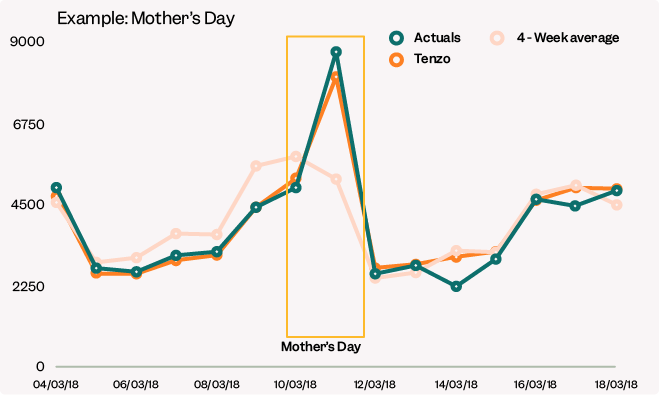
These methods end up generating a huge amount of waste (a third of all food waste comes from hospitality amounting to 1 million tonnes of wasted food per year or £3 billion wasted) and unhappy teams as they are asked to turn up at the last minute or sent home early if the demand is not there.
Why haven’t these forecasting problems been solved yet?
This has always been a problem in the industry so you may ask why it hasn’t been solved yet. The issue is that the restaurant tech stack has siloed data in individual systems up until now. You’ll have your POS (such as Lightspeed, Toast, Square, etc) which deals with all your sales data and (hopefully) integrates with your delivery partners so that all your sales are stored within that system.
Then you will have a separate labour scheduler where you’ll be able to schedule your team and keep track of time sheets to enable easier payroll. Some examples of these are Planday, Deputy, or Workforce.com. Some of these systems may integrate with your POS but might only show historical sales (not helpful for big swings in sales led by holidays and the like) or they will have forecasting capabilities but only show a 4-week average not taking into account events or weather.
Inventory tools which enable you to keep track of purchases and usage based on recipes (like MarketMan or Apicbase) may also have these sales integrations, but again only in the most basic sense. Neither labour nor inventory tools pull in the transactional data necessary to be able to forecast at the granularity needed (i.e. sales per hour to schedule hourly rotas or sales per item per day part to accurately forecast item-level needs).
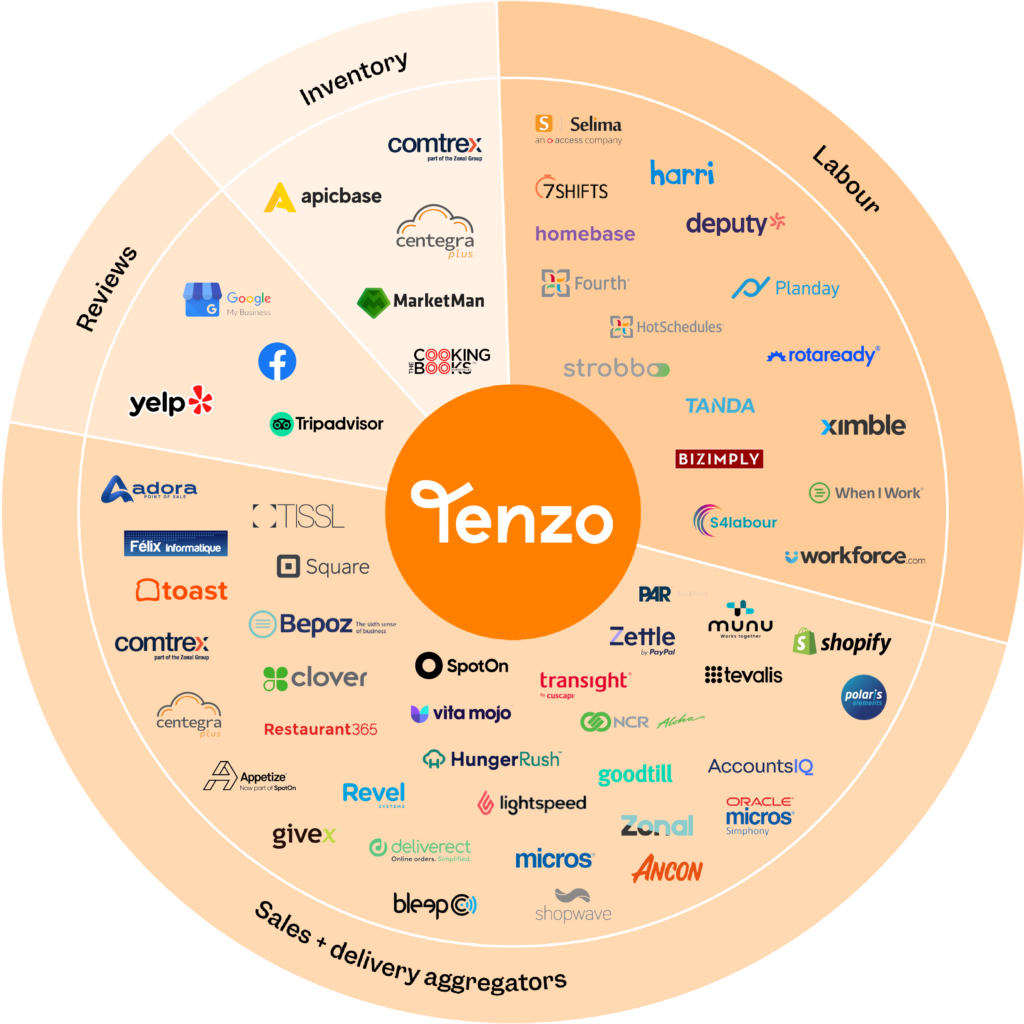
There are few tools available that do use AI or machine learning to give more accurate predictions, however the risk is that your labour tool and your inventory tool come up with different predictions. This leads to issues like too much labour but too little stock or vice versa. Plus, it confuses your team as they don’t know which numbers to trust and end up suspicious of both systems.
The thing is, these forecasts are not the main priority of these tools. Their main priority is to be excellent labour and inventory tools – which they are. Forecasting is an add-on for them so obviously the vast majority of their development time isn’t spent improving it. Further, it’s actually incredibly difficult to get the information needed from all of their customers’ POS systems to make it work well.
Are all-in-one restaurant management systems the answer then?
There are several platforms that claim to be able to service all of your tech needs from POS, to labour, to inventory, to forecasting. The issue here is that even more so than individual systems, they have to spread themselves too thin which unfortunately gives you mediocre functionality across all their products.
Using best-in-breed technology will ensure you have the best possible functionality for each tool, but that still leaves the question of forecasting. You want to have a system that brings data from all your systems into one place that can then give you the most granular possible forecasts.
Tenzo’s approach
By pulling granular transactional data from your POS and combining it with weather, events and machine learning algorithms, Tenzo is 30-50% more accurate than traditional approaches.
The truth of the matter is that we are specialists when it comes to restaurant data, so we have the infrastructure to give you the most accurate results for your business. All of our focus is on analysing that data so we put in the time and effort to make our outputs as good as possible.
-2.png)
Most importantly, we want to involve the GMs so that they are confident in the forecasts. We know that their local knowledge can make our forecasts even better, so we like to say that we give them a better starting point, but in most cases a GM can further improve Tenzo’s forecast by 5-10%.
We recognise that we don’t know everything – there could be construction outside the restaurant for a week or two that will reduce footfall and see a decrease in sales, but the only person to know that will be the GM who can then adjust the forecast accordingly.
By giving the GM the freedom to adjust forecasts, there is far more buy-in from the team than if they were simply given a number that is seemingly pulled out of thin air. Tenzo shows sales from the equivalent day a year before, last week’s sales and then our forecast to show that our predictions are based on fact.
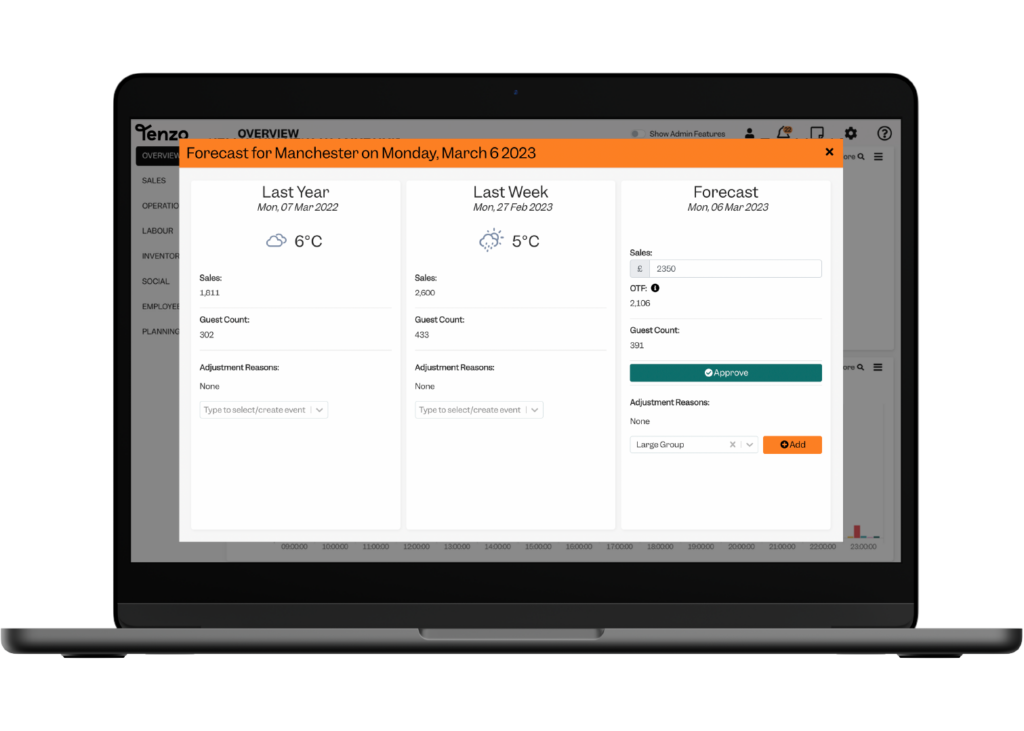
Once the GM has approved the forecasts, we break down the forecast by hour and by item. This allows the team to staff for the busiest times and order the items that will be most popular given all the variables.
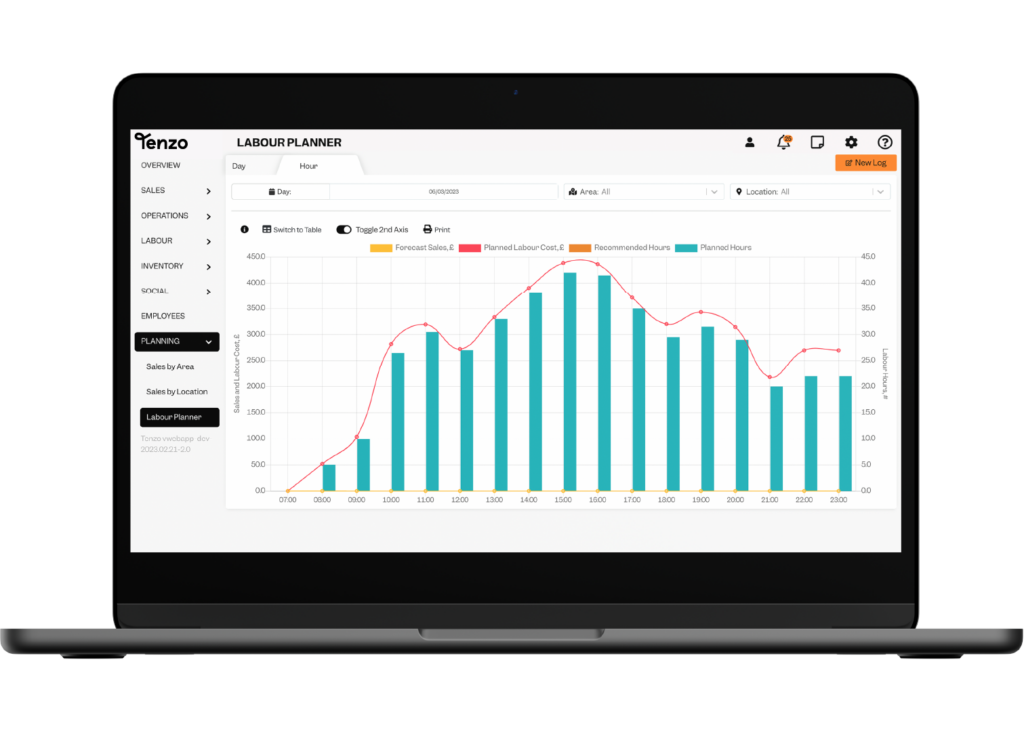
We also make that granular forecast available on our API, which means that labour and inventory tools can pull this from the API (or from Zapier) to make it available in their own tool. This stops the need to switch back and forth between multiple systems when planning and allows for a single source of truth to influence all of the plans eliminating the “too much stock/too little staff” situation and allows these tools to give their customers more accurate forecasts.
Always striving for better
We’re always trying to make Tenzo even better for our users. There are a lot of features in the pipeline which will make forecasting even more intuitive and easy.
First up, we’ll be expanding our alerts to include changes in forecasts due to outside factors like weather or events (e.g. if the English football team were to make it through to a semi-final in the Euros, forecasts at pubs would jump significantly). We run our forecasts every day so we can alert GMs if there are any significant changes.
Alerts can also be helpful reminders if the team hasn’t ordered enough food or if more staff need to be scheduled based on forecast sales. The lack of communication between your different systems can make it easy to forget to update the schedule when you update your forecast, so Tenzo will be able to alert you if that’s the case.
Work on hourly and item accuracy also continues thanks to our Innovate UK grant. Our goal is to be able to tell you exactly what you need to prep for the lunch rush before the queue is out the door to make restaurants as efficient as possible.
Finally, we’ll be adding even more data sources that will affect our AI algorithm to give us even more accurate forecasts such as reservation data and footfall counters, so keep an eye out for them.
We couldn’t be more excited about the direction we’re heading and to continue helping restaurants save on food waste and increase efficiency in any way we can.
Cover Photo by Raychel Sanner on Unsplash
The post The restaurant sales forecasting tech stack and ecosystem appeared first on Tenzo.
]]>What a year it’s been, we’re having a look at Tenzo’s 2020 results. We started 2020 growing 10% month-on-month and gearing up to expand the team to take full advantage of the numerous enterprise pilots we were running and to serve our ever-expanding SME customers in 10 different countries. Though we were hearing about a […]
The post Tenzo’s 2020 Results: A year like no other appeared first on Tenzo.
]]>What a year it’s been, we’re having a look at Tenzo’s 2020 results. We started 2020 growing 10% month-on-month and gearing up to expand the team to take full advantage of the numerous enterprise pilots we were running and to serve our ever-expanding SME customers in 10 different countries.
Though we were hearing about a novel virus in Wuhan, like most did not think much of it. That is until the UK announced its first case at the end of January – it all started moving very quickly from that point on, with Italy and France announcing lockdowns and the UK following shortly after.
The year has certainly been unprecedented (our new favourite word) and things are far from normal, but we wanted to take a moment to look back on 2020 and celebrate some of the wins that have made this year the best in Tenzo’s history so far!
1) We will end the year with more customers than at the start
This has to be the biggest win of the year. Despite Covid and subsequent lockdowns heavily affecting the restaurant industry, our customer base still increased by 15%. Even in the depth of the first lockdown, we were signing new customers! We have focused our customer acquisition strategy on three main targets:
1. Asia – although the explanations for why vary, it is clear from our customers that they are not feeling the impact of COVID as badly as those in Europe or in North America. We now have a number of paid pilots and customers in Malaysia, Singapore & Hong Kong.
2. Dark or cloud kitchens – the biggest trend to come out of lockdown, dark and cloud kitchens need analytics and good forecasting just as much as traditional restaurants. We are having conversations with large cloud kitchen operators across the world and have been helping a number grow in the UK.
3. Enterprise businesses – data that is coming out of China suggests that unfortunately many mom & pop restaurants have closed down permanently but that recognisable brands are thriving.
2) We helped increase Nando’s labour productivity by 15%
Our work with our enterprise clients has shown some great results especially in the realm of more accurate sales forecasts.
By reducing their forecast error by 25% and putting a mobile-enabled labour planning process in place, we have improved the labour productivity (i.e. sales per hour of labour paid) for Nando’s in Singapore and Malaysia by 15%.
3) We supported Qoot in making an additional £365,000 of revenue
Not only were we able to help Scot Turner, VP of Operations at Qoot save 15% in labour costs, we helped them identify opportunities to add revenue from his existing estate – Tenzo’s BI tool has helped Qoot clock up £365,000 in additional revenue. Read more about this case study here.
4) Our partnership program increased by 100%
.png)
Partners are at the heart of what Tenzo does: we pull data from a large selection of partners, whether that’s POS, labour schedulers or inventory tools, to bring together these sets of data in one unified view for our customers.
We’ve focused on improving relationships with our close partners this year – doing webinars, podcasts, blogs, email campaigns, case studies, and more together with them. We also launched a partner Slack to help ease communication between Tenzo and all of our fantastic partners.
We realised that our product can help them to solve the pain that they were feeling when trying to help their customers get access to their data. Partnership referrals are now our top lead source and we will be doubling down on this in 2021.
New partners this year include Square, Toast, Zapier, Shopify, RotaReady and many more.
5) We’re helping the restaurant industry save £100m by 2025 with the help of Innovate UK funding
We were successful in our application to Innovate UK to help restaurants minimise on food waste. We’re very excited at the prospect of partnering with Innovate UK to help the hospitality industry save over £100m in food waste by 2025.
6) We grew our blog readership by 8x
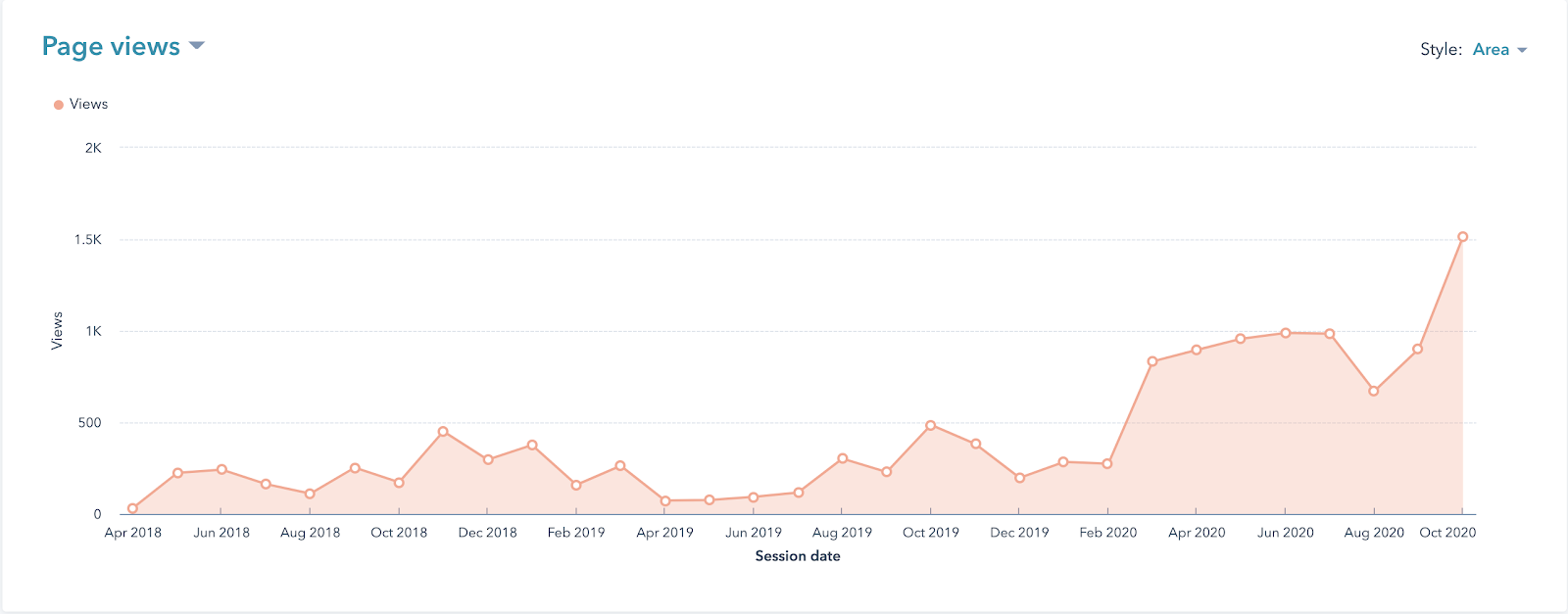
We wanted to do all we could to help our customers navigate this new reality and as part of that wrote guides and shared insights about how to adapt. This came in the form of our blog as well as our podcast. Some of our most read pieces include how to optimise your restaurant’s online presence, tips on starting dark kitchens, and how your Tenzo toolkit can support you. Our readership grew 8x over this period generating an incredible amount of high-quality leads.
7) Our NPS score nearly doubled this year!
In 2020 we did everything we could to support the industry. Given that we have first-hand experience in running restaurants, we knew that bills would be impossible to pay with no revenue coming in.
We didn’t want to add to this pressure, so we quickly told our customers that we would pause their billing if they were closed. We also wanted to help our customers adapt to this new situation as we felt that it was going to change habits for good, so we launched a weekly newsletter just for them with our latest tips on how to get their products and services to their customers.
One of our core values is that we are customer obsessed – by making sure that we did the right thing for the customer our NPS score went from 31 to 57.5!
8) We released loads of new features
Turning to product, our strategy was twofold:
1. Making it as easy as possible to get Tenzo users set up
2. Making sure we are enterprise ready.
Understanding that our biggest problem was getting data into Tenzo in a scalable way allowed us to focus on building the ‘data manager’, a tool that will load data into Tenzo more quickly, easily and accurately than ever before. Over the past 6 months we have spent a good deal of time building out the ETL infrastructure that supports this new ‘data manager’.
To further reduce the time it takes to onboard new customers, we built new tools for customer success including an admin portal, budget loader, report card discovery tool and many more.
In order to be enterprise ready, we have built out a number of components:
-
OAuth / Single Sign-on (the ability for customers to use recognised sign in services such as Google or Microsoft to avoid their users having multiple logins that they need to remember)
-
Sharding (the ability to break up one’s data into two or more smaller chunks, called logical shards, which will allow us to scale infinitely)
-
Micro-services (to enable a more scalable approach)
9) Every single one of our TrustPilot reviews were a full 5 stars

We have had a number of lovely reviews from our customers on TrustPilot this year including from Robb at Upham Group, Thom at Pizza Pilgrims and Scot at Qoot. We’d like to thank all our customers for their continued support!
10) Our wonderful team has started growing again
None of this would have been possible without our wonderful team! They have been incredibly resilient this year. They have helped us set the tone for what Tenzo will be like going forward by refining our core values and making sure we are the best we possibly can be. We’re so excited to be adding new members to the team to help us grow in Asia, deliver more savings for our customers and bring on new restaurant chains into the Tenzo family!
Looking forward to 2021, we are more excited than ever about Tenzo’s prospects. We will finish the year with higher revenue than at the start, we have secured funding from Innovate UK for our product, we’ve had great feedback from our customers, we have a number of ongoing conversations with global food brands as well as small & medium chain restaurants and, most importantly, a wonderful team that works tirelessly to achieve these incredible results.
The post Tenzo’s 2020 Results: A year like no other appeared first on Tenzo.
]]>