Not a single day passes without Machine Learning being mentioned in the news. The technology has either advanced driverless vehicle technology or defeated the world chess champion. But what about Machine Learning in the restaurant industry? First, you may be surprised to learn that Machine Learning already helps restaurants in many ways by: In this […]
The post What is Machine Learning and why it’s useful in the restaurant industry appeared first on Tenzo.
]]>Not a single day passes without Machine Learning being mentioned in the news. The technology has either advanced driverless vehicle technology or defeated the world chess champion.
But what about Machine Learning in the restaurant industry? First, you may be surprised to learn that Machine Learning already helps restaurants in many ways by:
- Forecasting sales more accurately
- Identifying staff theft
- Matching customers to restaurants based on their pre-selected taste profile
- Teaching robots how to cook
- Identifying the contents of food at a molecular level
In this article, we’ll provide a short definition of Machine Learning and discuss additional ways it can help the restaurant industry, specifically by forecasting sales more accurately and teaching robots how to cook.
What is Machine Learning?
Machine Learning describes the ability of algorithms to learn from data processing. The more data they process, the more they learn, and the more accurate they are at responding to a question.
How Can the Machine Learn?
For starters, an interesting question to ask an algorithm may be: Is this object a car, a pedestrian or a tree?
When algorithms try to answer a problem, they estimate a solution by taking into account several parameters. In our example above, the algorithm can examine an image and estimate the type of object in the image taking into account the shape, colour, and motion.

Example of algorithm estimating traffic
Naturally, most of an algorithms initial predictions will be wrong. The algorithm learns by testing what was predicted against by what really happened – this type of Machine Learning is called supervised learning. For each round, the algorithm modifies internal parameters or parts of its structure based on the initial fallacies and tries again. This process continues, which includes discarding the changes that reduce the algorithm’s accuracy and keeping the changes that increase the accuracy. The algorithm is said to have “learned” when new images are presented and are accurately classified.
How Machine Learning can help the restaurant industry?
Improve Sales Forecast accuracy with Machine Learning
Basic algorithms not using Machine Learning
Basic algorithms can forecast future sales based on simple parameters such as sales for last week and year as well as taking into account holidays, weather, etc.
As an example, to forecast tomorrow’s sales a basic algorithm will:
- Calculate the average between last year sales the same day and last week sales the same day
- Increase sales by 20% if it’s an holidays day
- Increase sales by 20% if it’s a sunny day
However, all those parameters do not have the same impact for your restaurants. For instance, weather can be an important game-changer for an ice cream restaurant next to the beach but a small factor for a pizza restaurant in a mall. A basic algorithm cannot personalise the forecast and understand that every restaurant is different.
Algorithms Using Machine Learning
Algorithms can help increase forecast accuracy over time personalising every parameter for each location, which means learning while processing data the parameter that has the greater impact on sales for a specific location.
At Tenzo we are forecasting experts. Our experience has shown the most relevant parameters to forecast restaurant sales are:
- All previous data (i.e. seasonal data, weekly data, growth trend)
- Weather (i.e. temperature, precipitation, sun hours)
- Holiday (i.e. bank holidays, half-term, Mother’s day)
- Events tailored by customers (i.e. football matches, theatre production)

The Tenzo algorithm combines the above mentioned parameters to forecast future sales. Then we assess accuracy by looking at the actual results.
For each new forecast, Tenzo’s algorithms modify the impact of each parameter based on the initial fallacies and try again. As previously stated, the algorithm keeps the changes that increase accuracy while discarding changes that decrease the accuracy. The more data we process, the more we learn, and the more accurate we are with our next forecast.

MAPE (Mean Absolute Percent Error) – This is how we expect our software to increase accuracy over time
Using Machine Learning we demonstrate up to 50% improvement in forecasting accuracy vs. basic forecast algorithms and up to 30% vs typical manager generated forecasts.
Our forecasting predicts demand hourly, which saves restaurants staffing costs by optimising labour schedules. Tenzo also reduces inventory wastage by preparing the optimal inventory level.
Teach Robots How to Cook using Machine Learning
California-based Miso Robotics is a startup focused on AI-driven robotic solutions for the kitchen environment. The company’s flagship AI kitchen assistant “Flippy” combines 3D, thermal, and regular vision to assist with grilling, frying, prepping, and plating.
In this example, Machine Learning was used to teach the robot:
- To recognise a steak, a cooked steak, and a cheese slice
- When to flip the steak and when to stop grilling it
For the recognition process, we explain below how colours and shapes are parameters used to recognise an object from another one. Each time, the algorithm modifies internal parameters or parts of its structure based on the initial fallacies (burnt or not cooked steak) and tries again. In the end, the algorithm will understand a brown steak is a cooked steak.

Example of how the robots can analyse the grill
To understand if it’s the right time to flip and if the steak is cooked, the algorithm can examine its different sensors and predict an answer according to those parameters.
In this example the most relevant parameters are:
- Temperature of the grill
- Temperature of the steak
- Colour and shape of the steak
- Time spent on the grill
Then during the supervised learning, a human assesses accuracy by looking at the steak.
For each new steak, the algorithms modify the impact of each parameter based on the initial fallacies and try again. The more data the robot processes, the more it learns, and the better the steaks are cooked.

The Flippy Robot
Conclusion
Machine Learning has many applications in restaurants from helping cooks in the kitchens to forecasting future sales which in turn helps work out the requirement for labour and inventory management.
Ultimately it can help restaurants run more efficiently, for example, by helping to reduce the 600 million tons of food wasted by restaurants globally and allowing restaurateurs to focus on where they can add the most value.
The post What is Machine Learning and why it’s useful in the restaurant industry appeared first on Tenzo.
]]>Tenzo’s co-founders Christian Mouysset and Adam Taylor reflect on a truly unprecedented year. This chart shows how things were looking in the middle of April, a couple of months into the pandemic – this is the story of what we did about it: Daily sales of London based restaurants, GBP No one can say that […]
The post Navigating a pandemic: how we lost 80% of revenue before gaining more appeared first on Tenzo.
]]>Tenzo’s co-founders Christian Mouysset and Adam Taylor reflect on a truly unprecedented year.
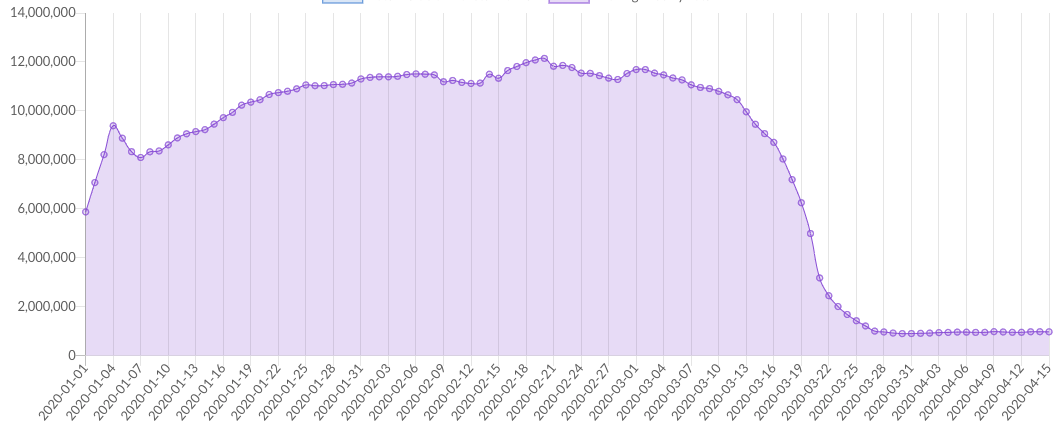
This chart shows how things were looking in the middle of April, a couple of months into the pandemic – this is the story of what we did about it:
Daily sales of London based restaurants, GBP
No one can say that 2020 was uneventful, that’s for sure. Way back in January, Tenzo was growing 10% month-on-month, and we were gearing up to expand. Coronavirus was on our radar – but felt like something overseas that wouldn’t impact us. Then the UK announced its first case – and as we all know, the rest is history.
As you can see above – restaurant sales were in rapid decline and we lost ~80% of our revenue in the matter of a few weeks. It required some serious soul searching to figure out what we should do. We found that we learned a lot and wanted to share and reflect on some key lessons from the pandemic.
Lesson 1 – People: If you don’t look after your people – you can’t recover
Our first reaction was to protect our most valuable asset – our people. We moved quickly to allow our teams to work from home to minimise their contact with others. Soon this meant we had a team that spanned the world as people wanted to be close to loved ones – from Thailand to Wales, North Carolina to Cambridge, Dorset to Ukraine. Critically, we’ve found 3 things to be important to our success in this new remote world:
-
Have the right tools and processes: Clearly, this new world requires new ways of working – we had to park our beliefs that teams are more effective in person, and find ways to make remote teams work. Obvious tools like Slack and Zoom have been coupled with operational process changes – a shorter dev sprint cycle, more regular daily check-ins and creating space for “brainstorming”.
-
Find new mechanisms for “social connectedness”: Every week now at Tenzo you’re assigned a cross-functional coffee group – the idea is to try and enable more “water cooler” conversation and build social groups. We’ve also played virtual escape rooms, adopted virtual lunch ‘n’ learns, and who doesn’t enjoy some team Among Us?
-
Reinforce your values: we’ve spun up a “values squad” who continue to evolve our values and make sure we’re living them daily. At its core – a group with a common value set will continue to stay together and function effectively – we believe this is core to our success.
We’ve worked hard to make sure that the team felt supported and remained productive during this time – 2020 has proven to be a tricky balance of health, family and work commitments – and we’ve had to reinforce that throughout.
Lesson 2 – Customer: The customer is always right (duh!)
Our main message: “If you’re closed – Tenzo is FREE”
Our second reaction was to do everything we could to support the industry. Given that we have first-hand experience of running restaurants, we knew that bills would be impossible to pay with no revenue coming in. We didn’t want to add to the increasing pressure, so we quickly communicated to our customers that we would pause their billing if they were closed. Our key learnings from a customer success point of view were:
-
Proactive is best: We were one of the few vendors to proactively tell our customers they didn’t need to pay. Even before the second UK lockdown was finalised, we had a communication plan in place, and customers couldn’t have been more grateful.
-
Empathy wins – and can go both ways: Our customer success team knew they had to put themselves in the shoes of the customer – but also with a realisation that we all have businesses to run. Helping understand each others’ pain helped us get more customers back to billing faster.
-
Have a regular communication strategy: We launched a weekly newsletter for our customers with our latest tips on how to get their products & services to their customers. A theme throughout this was “we’re here for you”. We wanted to stay front of mind for all our customers.
-
Build trust: We also wanted to help our clients adapt to this new situation as we felt that it was going to change habits for good. Offering the right advice might not always be the best for Tenzo – there are many examples where we’ve had discussions about how we can move customers to smaller paid plans until they’re ready to dive into other operational topics – our Artificial Intelligence (A.I.) forecasting module for instance.
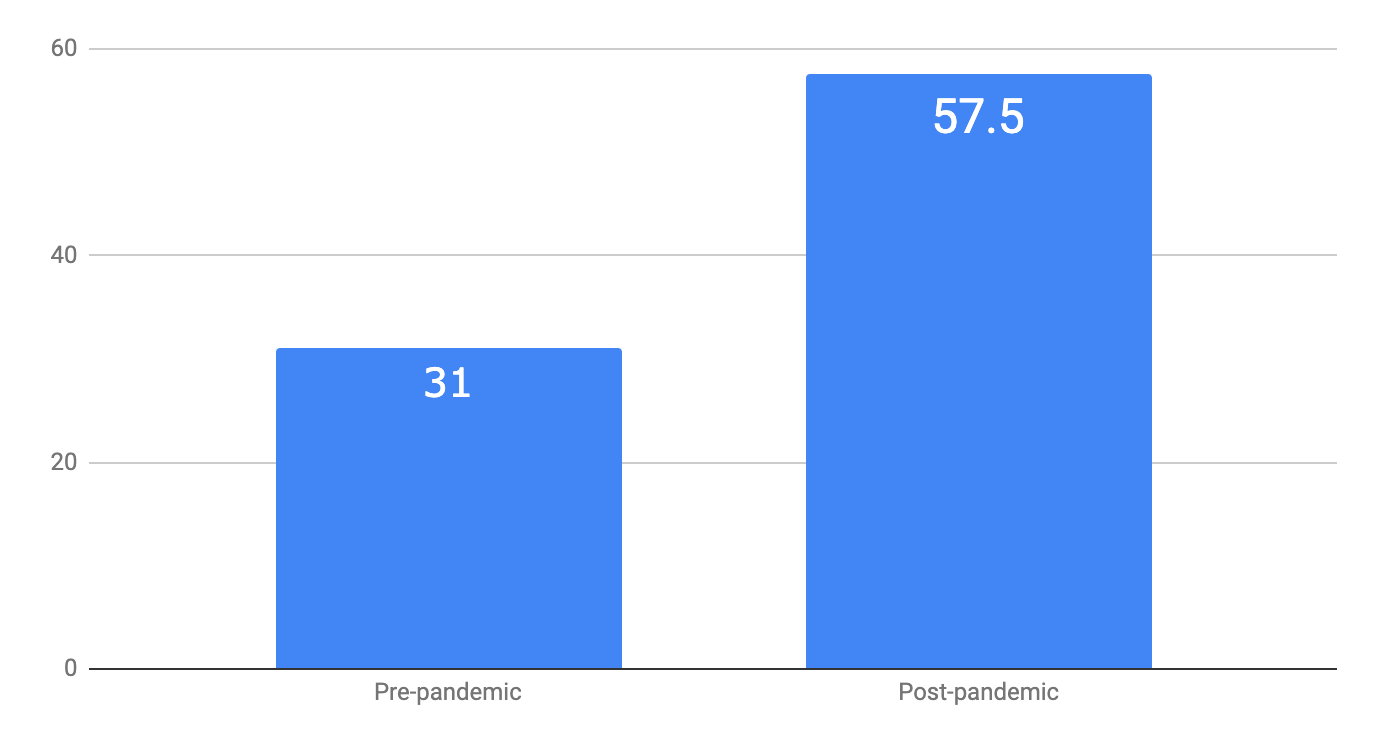
One of our core values is that we are customer obsessed – by making sure that we did the right thing for the customer our NPS (Net Promoter Score) went from 31 to 57.5!
It validated what was instilled in us at Techstars where the motto is “Give First”.
Tenzo Net Promoter Score
Lesson 3 – Sales: Never stop selling!
We didn’t believe that we would close any sales during the lockdown as all our potential customers would be focused on navigating the biggest crisis our industry has ever faced. That turned out not to be the case. Many potential customers felt they needed Tenzo more than ever to reopen even stronger! We even ran a marketing campaign on that theme.
We developed a new strategy in order to generate leads which relied on two key components:
-
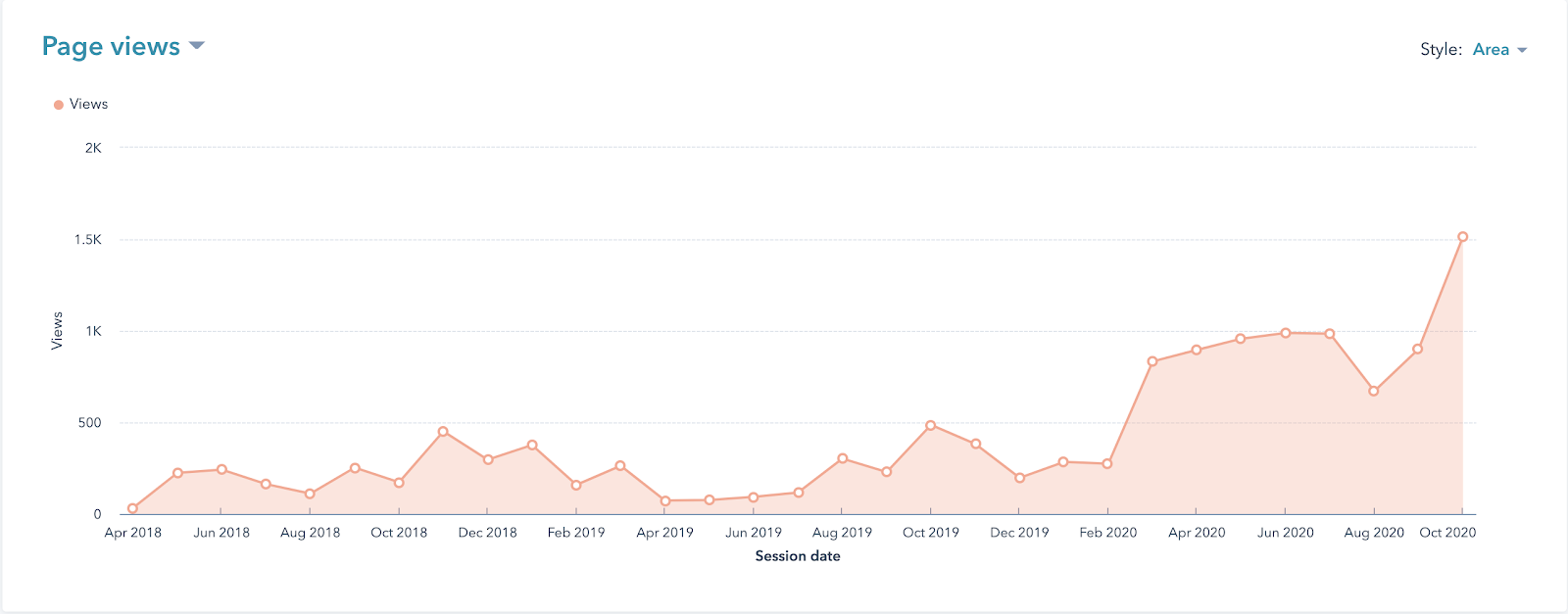
Adapt to changing customer behaviours: For the first time in their lives, restaurateurs weren’t on the floor of a restaurant – they were all at home on their phones and computers. This led to a huge focus on content – we invested time to write guides and share insights to help our customers adapt to this new reality. This came in the form of our blog as well as our podcast. Some of our most read pieces include how to optimise your restaurant’s online presence, tips on starting dark kitchens, and how your Tenzo toolkit can support you. Our readership grew 8x over this period generating an incredible amount of high-quality leads (see graph below).
Find new sources of pain that you can help address: Partners are at the heart of what Tenzo does: we pull data from a number of partners, whether that’s the Point-Of-Sale (POS), the labour scheduler or the inventory tool, to bring together these sets of data in one unified view for our customers. What’s more, our partners were all hurting too – from POS companies laying off over 50% of their workforces, to inventory systems furloughing most of their staff – our friends were also in trouble. What this also meant was that they couldn’t solve all problems themselves anymore – they needed to partner to help fill gaps in their customers’ data needs (in analytics, or A.I.). We’ve capitalised on this by:
-
Working with a number of our close partners in various formats – webinars, podcasts, blogs, small campaigns, case studies, etc.
-
Launching a partner Slack to help ease communication amongst our partners –– again all working remotely. Partnership referrals is now our top lead source and we will be doubling down on this in 2021.
-
Follow the market as it evolves: In terms of customers, we have been focusing on three main targets where we’re seeing real growth:
-
Asia – although the explanations for why vary, it is clear from our customers that they are not feeling the impact of COVID as badly as Western nations. We now have a number of prospects, paid pilots and customers in Australia, Malaysia, Singapore & Hong Kong.
-
Dark or cloud kitchens – we’ve had a number of conversations with large cloud kitchen operators across the world and have been helping lots grow in the UK.
-
Enterprises – data that is coming out of China suggests that many mom & pop restaurants have closed down permanently but recognisable brands are thriving.
-
With a lot of people now working remotely, having customers jump on video calls for demos was no longer a hurdle meaning that we have continued to sign big deals including TGI Fridays in Australia, Nando’s in Malaysia, Bavet in Belgium, Taglia in Texas and Bujo Burger in Ireland.
Lesson 4 – Product: Look at where the ball is going
Turning to product, our advice would be twofold:
Create leverage for your teams: Product was increasingly becoming a bottleneck for us, and we wanted to make sure we could uncap our growth. Our sales and customer success teams need to be able to delight customers without worrying about whether the product could deliver. Specifically, we focused in two key areas:
-
Enable a self-signup flow: We want to make it possible for a customer to sign up to Tenzo without ever needing to talk to a sales person, reducing the burden on our Customer Success team, and driving revenue activation.
-
Develop a set of self serve tools: Our Customer Success team spend too long helping customers get set up, or completing simple administrative tasks. We’ve set out on a journey to ensure that customers can be completely self-sufficient – they shouldn’t need to talk to our success or support teams at all! We built tools including an admin portal, budget loader, report discovery tool and many others.
-
Build for the customers you want, not the customers you have: Here we had to ask ourselves how would we respond in this new world. Connected to the above customer trends this meant:
-
A product that worked in Asia – thankfully enabled by already being localised, but also pushed us for a greater focus on Asia focused integrations – GiveX, Bepoz, Micros, Deputy, etc.
-
Dark or cloud kitchen support – here we’ve worked with partners like Deliverect who are helping customers launch in a delivery world.
-
Get ready for Enterprise – specifically, we’ve been focused on:
-
-
-
OAuth / Single Sign-on (the ability for customers to use recognised sign-in services such as Google or Microsoft to avoid their users having multiple logins that they need to remember).
-
Sharding (the ability to break up one’s data into two or more smaller chunks, called logical shards, allowing us to scale infinitely).
-
Micro-services (to enable a more scalable approach).
-
Understanding that our biggest problem was getting data into Tenzo in a scalable way allowed us to focus on building our “data manager”, a tool that will enable us to load data into Tenzo more quickly, easily and accurately. Over the past 6 months we have spent a lot of time building out the ETL (Extract, Transform, Load) infrastructure that supports “data manager”.
Lesson 5 – Engineering: Scalability is key
Here we’ve focused on ensuring we are set to scale – but broadly this has revolved around 3 key areas:
Move everything to microservices: The old monolithic architecture has to die and we used the opportunity of fewer customers online to move to a completely new architecture. Our main services – which we will cover in future tech blogs are now:
-
Authentication service: responsible for managing authentication across all our microservices and providing single-sign-on, etc.
-
ETL (Extract, Transform, Load) service: enabling us to load data faster and more seamlessly than before.
-
Cards / Insight service: the heart of our analytics engine – showing whatever data you want!
-
Forecasting service: using A.I. to predict sales.
-
-
Embracing serverless: In an attempt to both make our cost structure more variable (needed in a volatile world!) and also enable us to super scale, we’ve migrated a decent portion of our workloads to serverless technologies – specifically AWS Lambda, and AWS Fargate.
-
Remove legacy code: As with any company, we have acquired technical debt over time that has hampered our ability to be nimble. Having some breathing room during lockdown enabled us to focus on some housekeeping.
The net of all of this is our engineering team now has created significantly more capacity – rather than spending days debugging legacy code, or solving requirements issues across services in a monolith – they’re now freed up to build the next great feature at Tenzo.
Lesson 6: Funding – Cash is King
We’re a venture-backed, loss making startup – as such, our bank balance is a critical dimension to our success. It’s the second most common reason startups fail.
In our relentless pursuit of more cash, we learned a few key lessons:
-
Good ideas still attract funding: We were successful in our application to Innovate UK to help restaurants minimise on food waste. We’re very excited at the prospect of partnering with Innovate UK to help the hospitality industry save over £100m in food waste by 2025, and a grant is clearly an attractive form of funding for Tenzo.
-
Look for cheap sources of capital: Whether it’s grants or loans, we found a lot of attractive opportunities for fundraising. Clearly governments in both the US and the UK had schemes available, and both helped – but we continue to look beyond just equity funding as a way to enable our growth.
-
Negotiate, negotiate, negotiate: It was also an opportunity to talk to our own vendors – through many supportive partners (that we won’t forget!) we were probably able to take 10-20% of our total cost base out without needing to impact our people.
-
Keep communicating: We’ve found that communicating regularly with existing investors has been hugely helpful – both in terms of assessing the landscape, but also knowing they had our backs if we needed help. Shout out in particular to Kent and S28 for their help.
Where did we end up?
So far — so good: we’ve come back in a big way:
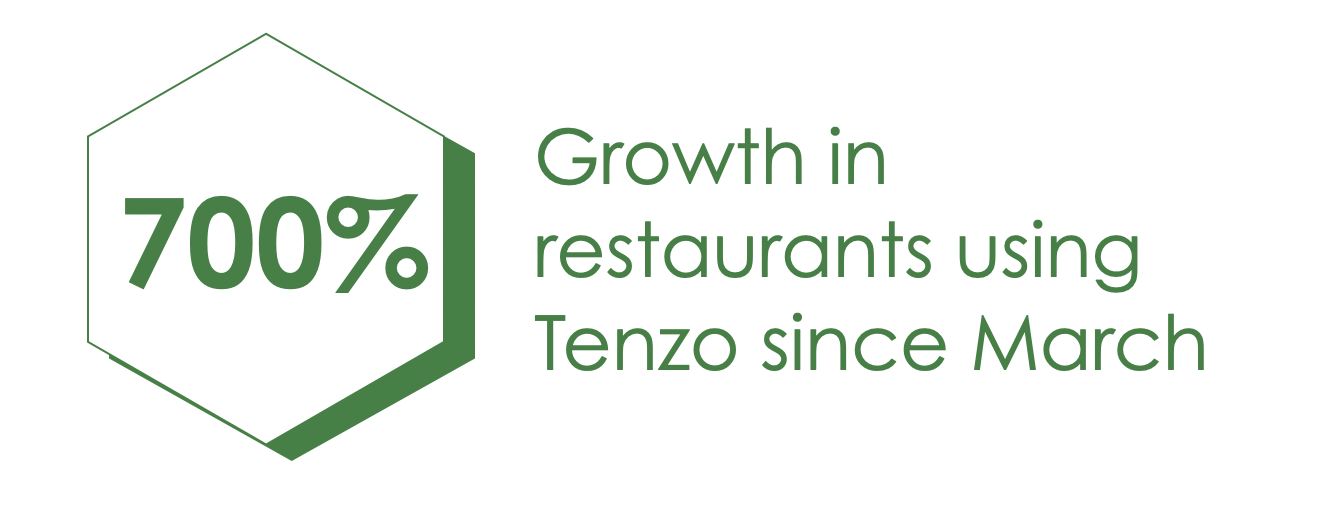
Beyond that, we’ve had a number of other big wins in 2020 which you can read about here.
What’s next?
Looking forward to 2021, we are more excited than ever about Tenzo’s prospects! We will finish the year with higher revenue than we started the year, we have secured funding from Innovate UK for our product, we’ve had great feedback from our customers, we have a number of ongoing conversations with global food brands as well as small & medium chains of restaurants and, most importantly, a wonderful team that works tirelessly to achieve these incredible results.

Cover Photo by Ethan Sykes on Unsplash
The post Navigating a pandemic: how we lost 80% of revenue before gaining more appeared first on Tenzo.
]]>2021 for Tenzo has been an interesting year, to say the least. From new variants to extended lockdowns, it feels like Covid threw everything it could at us. But it takes more than a global pandemic to bring down the restaurant industry. It has forced some changes though, and some pretty positive ones at that. The […]
The post 3 times the number of locations – 2021, an epic year for Tenzo appeared first on Tenzo.
]]>2021 for Tenzo has been an interesting year, to say the least. From new variants to extended lockdowns, it feels like Covid threw everything it could at us. But it takes more than a global pandemic to bring down the restaurant industry. It has forced some changes though, and some pretty positive ones at that.
The pandemic has fundamentally changed the way restaurants operate. It has forced a digital revolution as delivery, multi-channel, at-table ordering and kerbside pickup have become must-haves for customers. This has meant more collected data than ever before. Unfortunately, labour shortages have meant a short-fall of staff to analyse that data but a greater need to get that data in the form of insights into the hands of the team to make efficient, data-backed operational decisions.
Thankfully, Tenzo does just that. As such, we’ve seen a huge increase in demand for our product and that has kept us very busy this year. Below is a round up of everything Tenzo has been up to in 2021 to keep delivering the very best to our customers.
The year at a glance
Q1: Lockdown part 3
It seems quite surreal but in the UK we started the year with our longest lockdown yet. January saw all eat-in dining come to a halt. A forced closure that wouldn’t come to an end until outdoor reopening in April.
Interestingly, unlike the first lockdown (which saw 80% of our customers close up shop), 65% of our UK customers took in revenue during this time, whether that was through delivery, click and collect, meal kits, or retail sales. It just proved how many businesses who never thought they would need to diversify their offering managed to do just that.
The Tenzo team used this relatively less busy time to make our technology as tight as possible. This is when Sharding and our use of Airflow got our undivided attention and really came into their own ensuring our scalability.
We also rewrote large chunks of our codebase to take on board a number of learnings from previous years.
Q2: A ray of hope
In April restaurants in the UK were finally able to reopen outdoors and thanks to vaccination efforts worldwide, cases were finally dropping to a level where people felt comfortable enough to go out and enjoy themselves.
As we kept watch on sales figures, trends were certainly growing positively. The first weekend back of outdoor dining actually saw sales rise above 2019 levels for the first time since summer 2020.
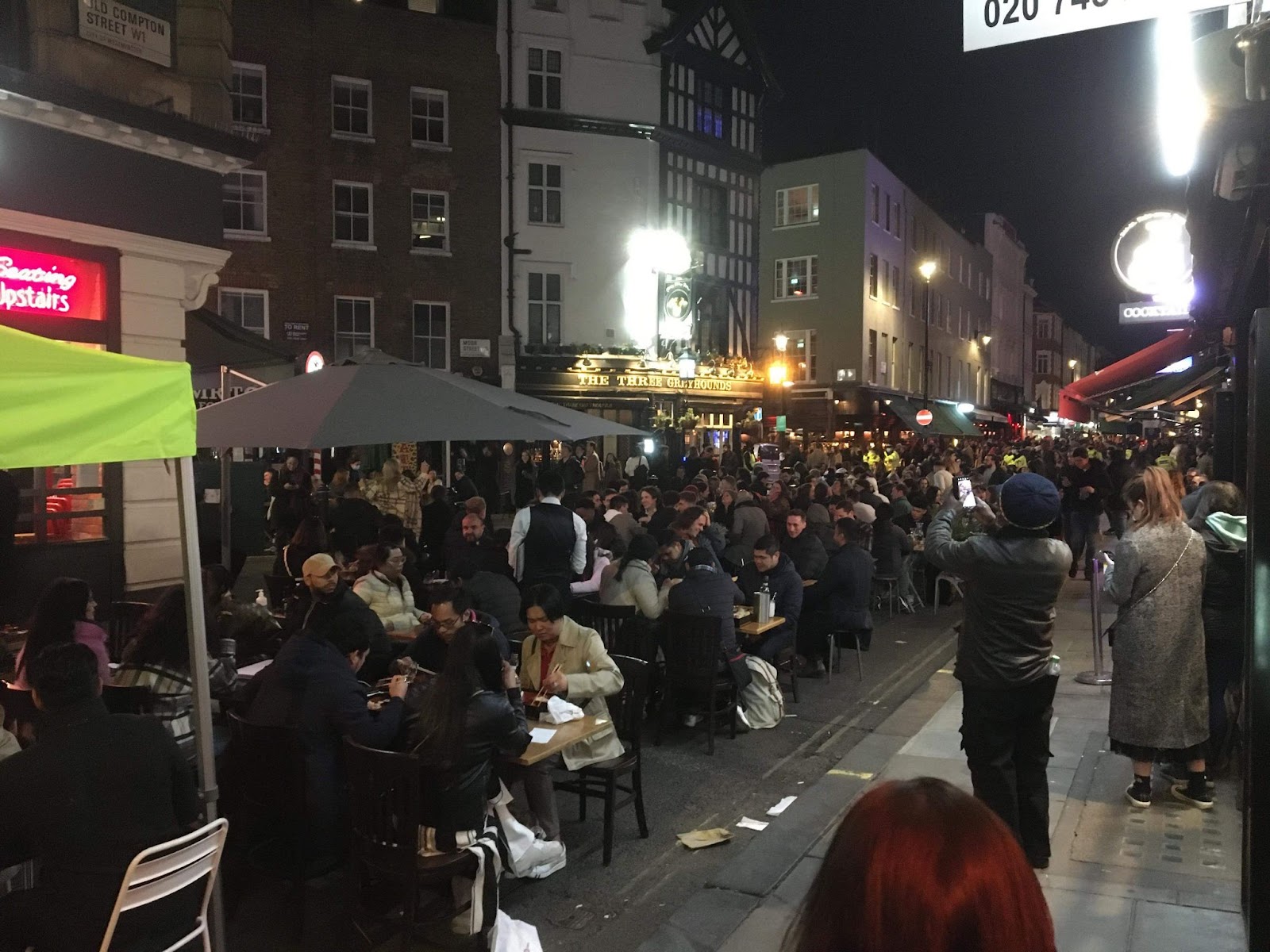 What pandemic? The first Saturday of outdoor dining in Soho
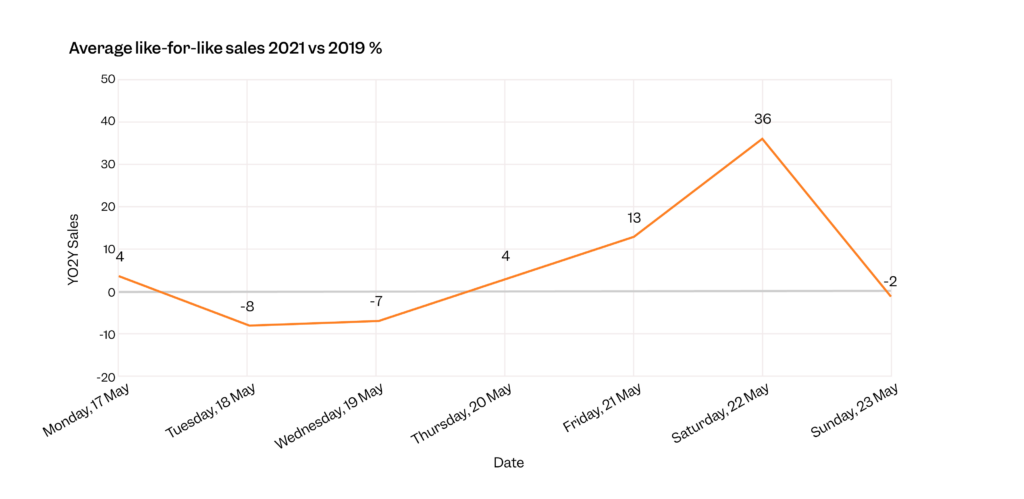
And once we were finally allowed back indoors come May, we saw a real boom of sales, rising 36% above 2019 sales levels. This reporting also earned Tenzo’s first appearance in the Financial Times as the influx of sales pointed to an economic boost.
Q3: A return to normal?
The summer was spent supporting customers in their reopening plans and getting back on the road to normal.
From a team point of view, the London team had our first meet up in over a year – a picnic in Regent’s Park catered by long term Tenzo customer Iberica. This was the first time many Tenzonians actually met in person and reintroduced the long standing tradition of Tenzo day/nights out.
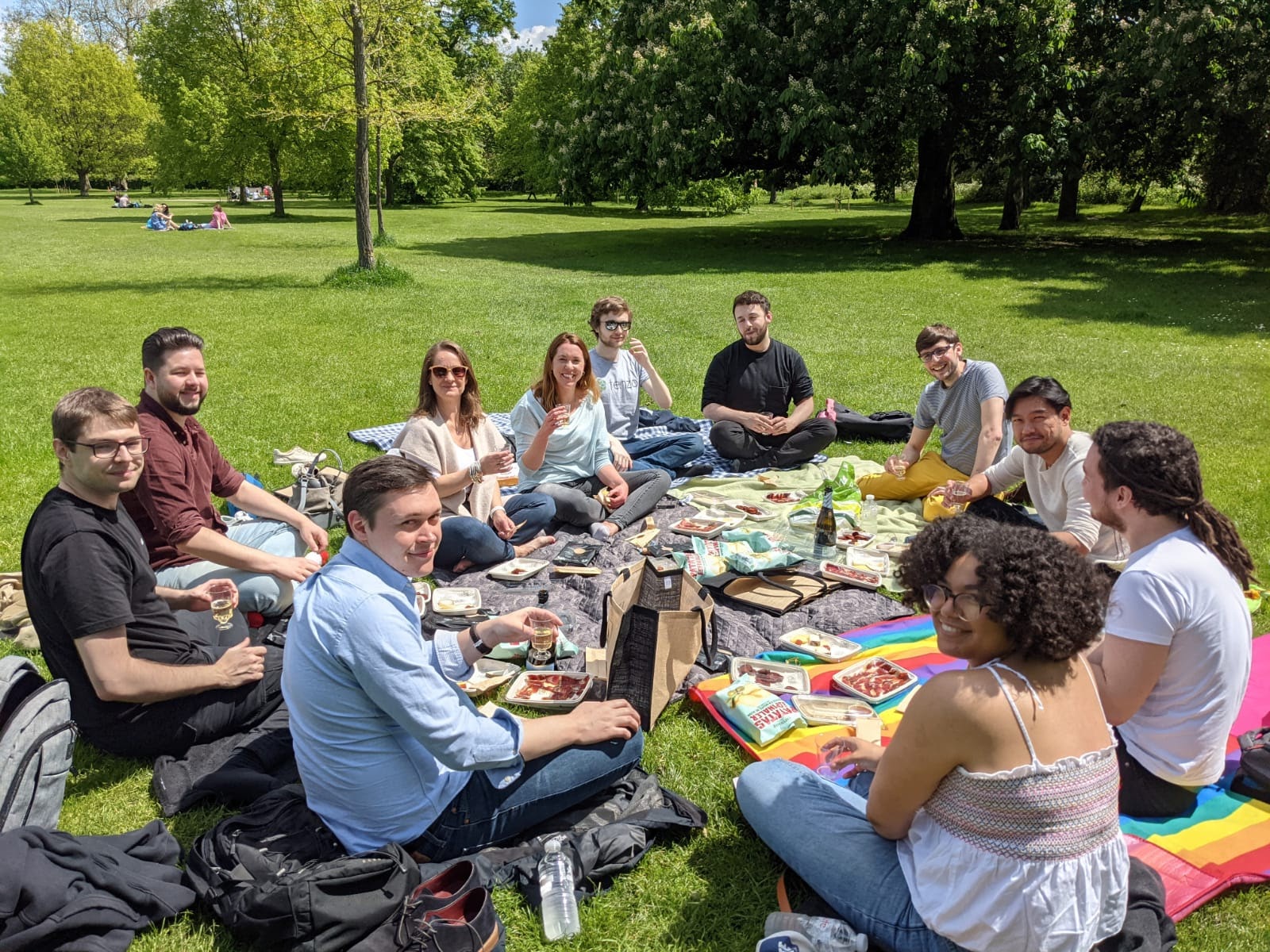 Picnicking in Regent’s Park
Our continued tracking of the industry also landed us our second FT mention! Summer 2021 wasn’t quite as exciting as summer 2020 when Eat Out to Help Out had UK businesses packed every Monday to Wednesday in August, and sales fell below 2019 levels again.
But we finished the quarter strong by getting back to events! Our first trade show in 18 months was the mighty Casual Dining Show. It felt like a real turning point getting to see partners, catching up with customers and meeting new prospects in real life for the first time since early 2020.
Q4: A proper end to the year
As we moved into Q4, we made the decision that after 20 months, it was time to get back to the office. When the pandemic initially hit, Tenzo, like pretty much every other company, had to transition to a full working from home model after being a fully in office for the first 3 and a half years of its existence. Now we had the task of figuring out what a return to the office would look like.
The team had gotten used to the flexibility afforded to them by working from home, but were missing the companionship, mentorship and learning opportunities that we used to have in the office. We therefore decided to trial 2 days a week from a co-working space and 3 days from home. It was immediately obvious that having a predetermined time and space to meet was fantastic for general morale.
Q4 also brought our first opportunity to represent ourselves abroad as the kind folks at Strobbo and Apicbase invited two of the Tenzo team to take part in their booth for a day at Horeca Expo in Ghent, Belgium. Benelux has been a real growth market for Tenzo this year and the opportunity to meet some of our key partners in the region in person was excellent. The chocolate was also an added bonus…
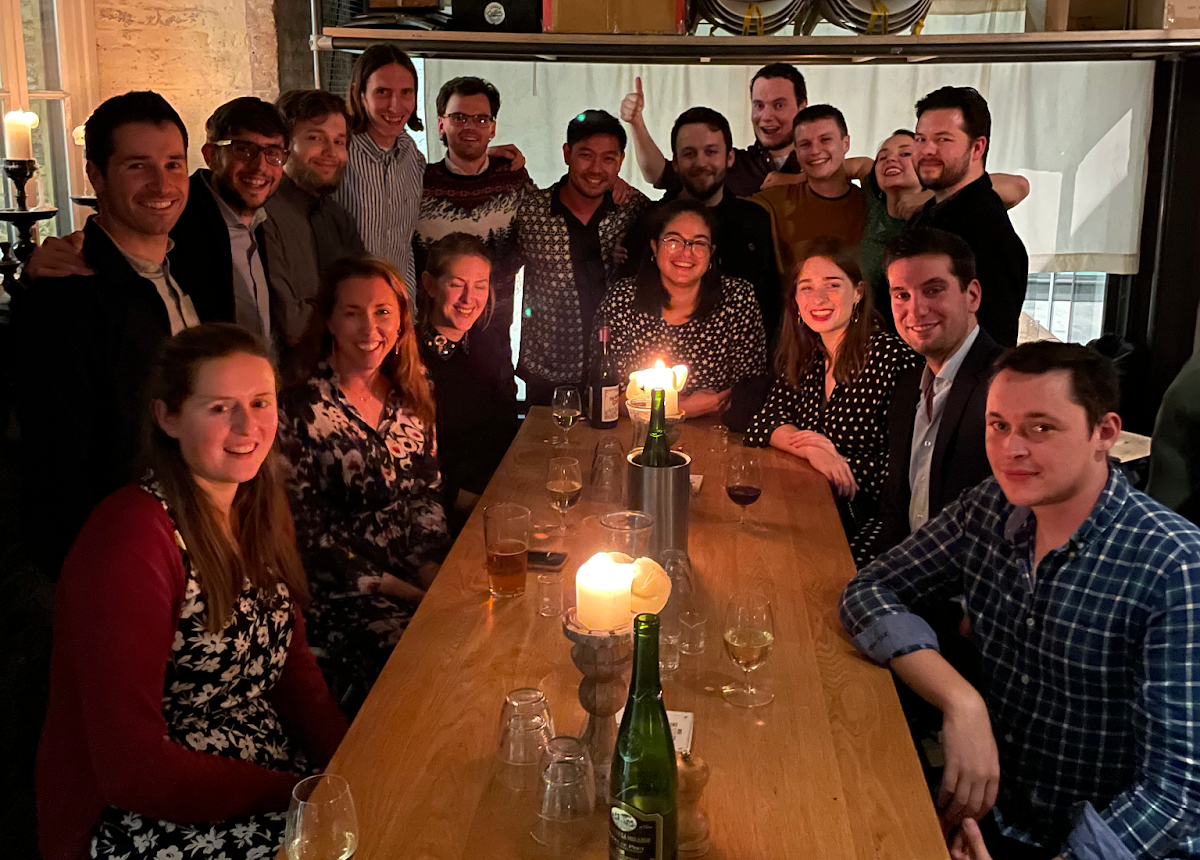
Finally, we were able to resurrect the annual Christmas Party after last year’s virtual only version. The London team ate and were extremely merry at Caravan, another longtime Tenzo customer, to celebrate the epic year we’ve had.
Growth at Tenzo
This all brings us to the hard numbers, the facts. It really has been a truly amazing year for Tenzo and the team. We have now tripled the number of signed locations since 2020. In doing so, we’ve added 8 new countries, seeing Tenzo customers in 18 countries over 5 continents.
We’ve onboarded some truly exceptional brands like Primo Hoagies, Fresh Brother, Poke House, Nando’s Malaysia, Cubitt House, Incipio, The Avocado Show, Vapiano, Chilango, and many many more.
And finally even our blog is on the up! Views increased dramatically, hitting 5x the readership of 2020!
Living and breathing Tenzo’s values
We thought it would be good to reflect on how the Tenzo team has been living our values this year.
Passionate about our people
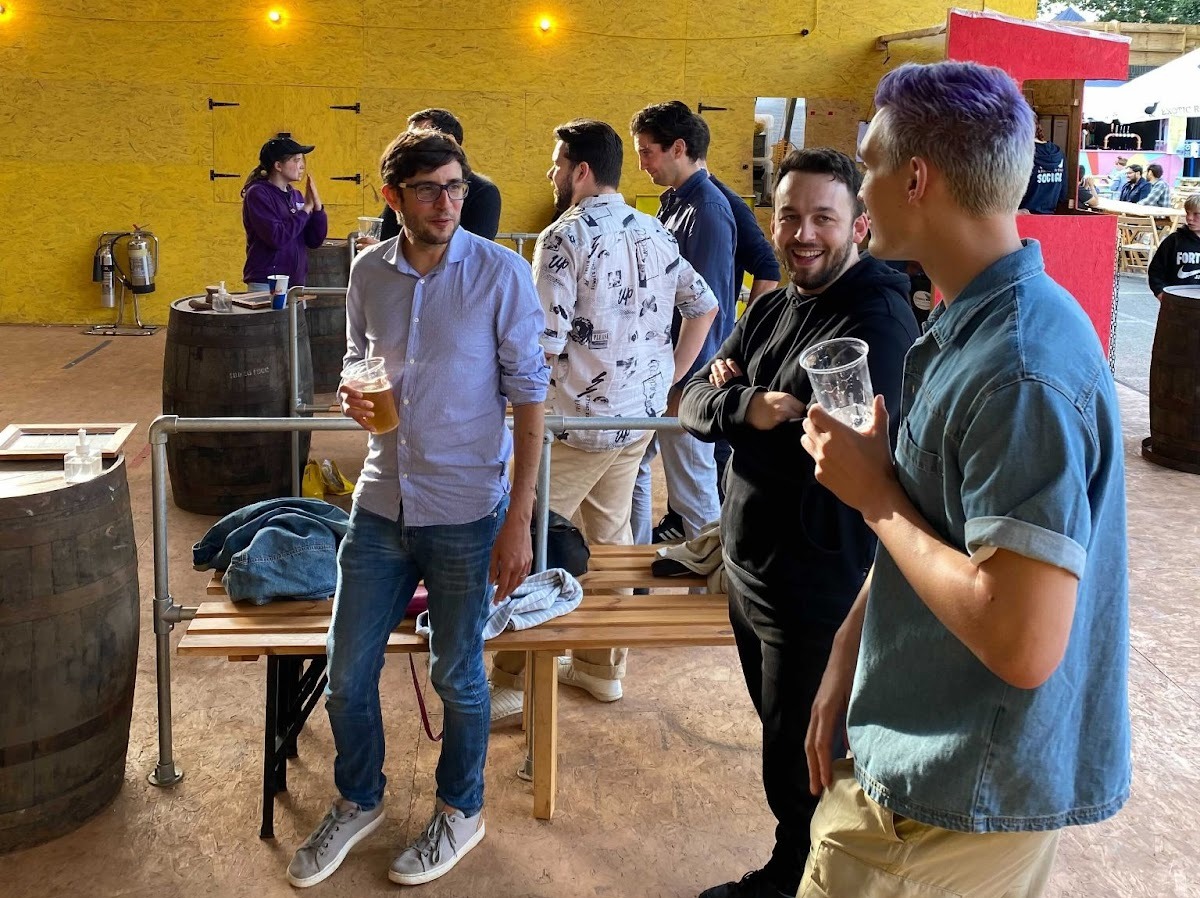 Tejo for the London team in August
It goes without saying that all this growth wouldn’t have been possible without our amazing team. We’ve had a few big wins on the team front:
- We added a whole new function, QA! We want to make sure Tenzo is the best it can possibly be and Kieran, our QA analyst, keeps us working to the highest of standards.
- To better service our customers worldwide, we added two new members to the Customer Success team, Ophilia in Singapore and Maria in Italy. Their combined language skills have also been invaluable in communicating with our international customer base.
- Our meetups have continued to thrive both virtually and in real life. With an international team, we find it super important to be able to keep up with everyone on a personal level no matter where they are in the world.
- We went back to the office! We got the London team back together and working from one space for the first time in 20 months.
- We implemented Value Squads to make sure we were really living the Tenzo values to the best of our ability. So far, we’ve had increased accountability when it comes to our experimenting and learning, been more socially responsible in our decision making, and increased our passion for our people.
Customer obsessed
Our customers make it possible for us to continue to improve and be the best we can possibly be.
We’ve really enjoyed speaking to our wonderful customers this year. We’ve released several case studies (find our latest one here) and even had the chance to hear from a customer, Josh Owen-Baigler, founder of Angelina and Golden Gai, during one of our all hands meetings. The insights he gave us into the life of the operator were super valuable for a team who doesn’t usually get to see that side of the industry.
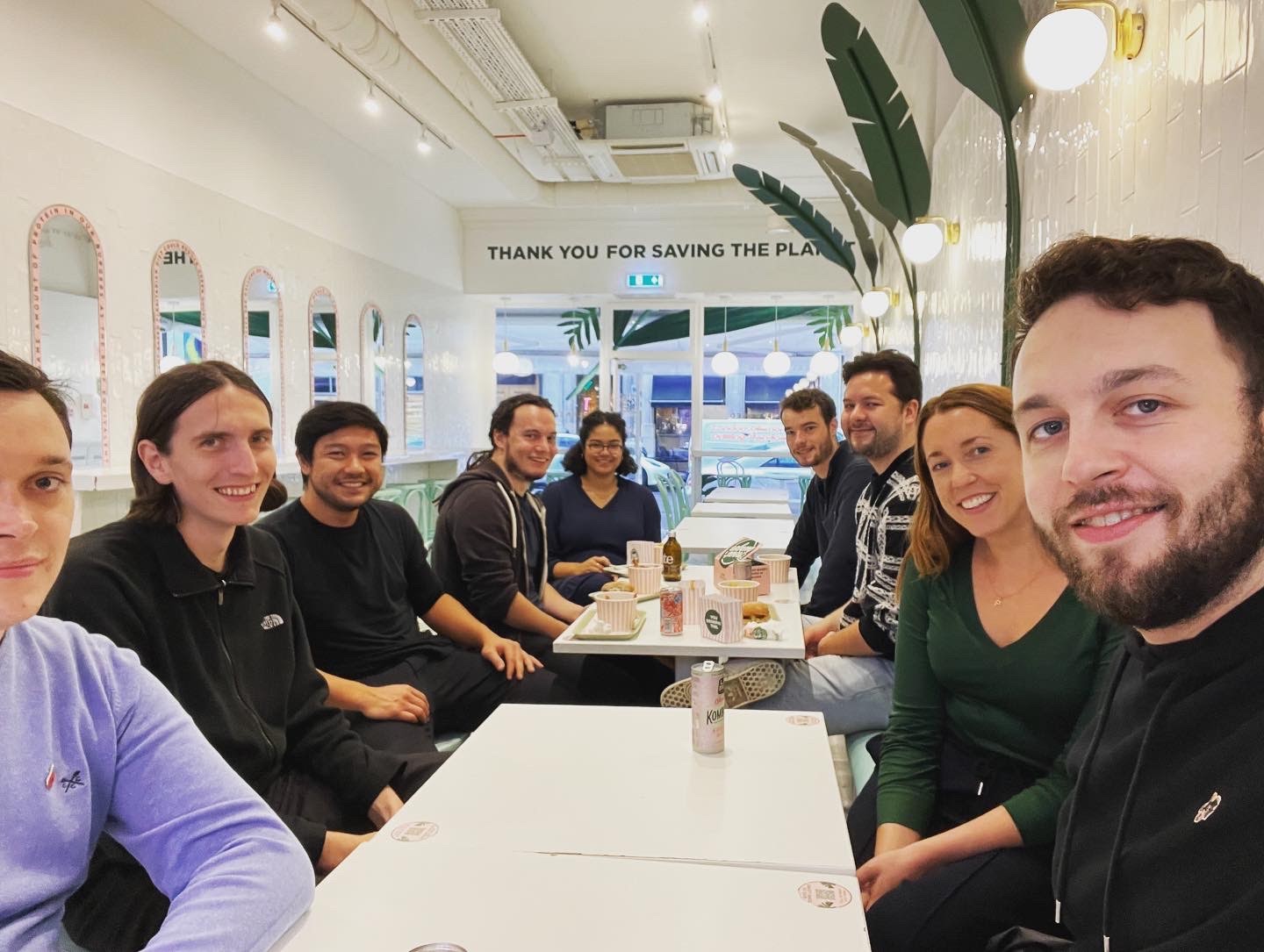
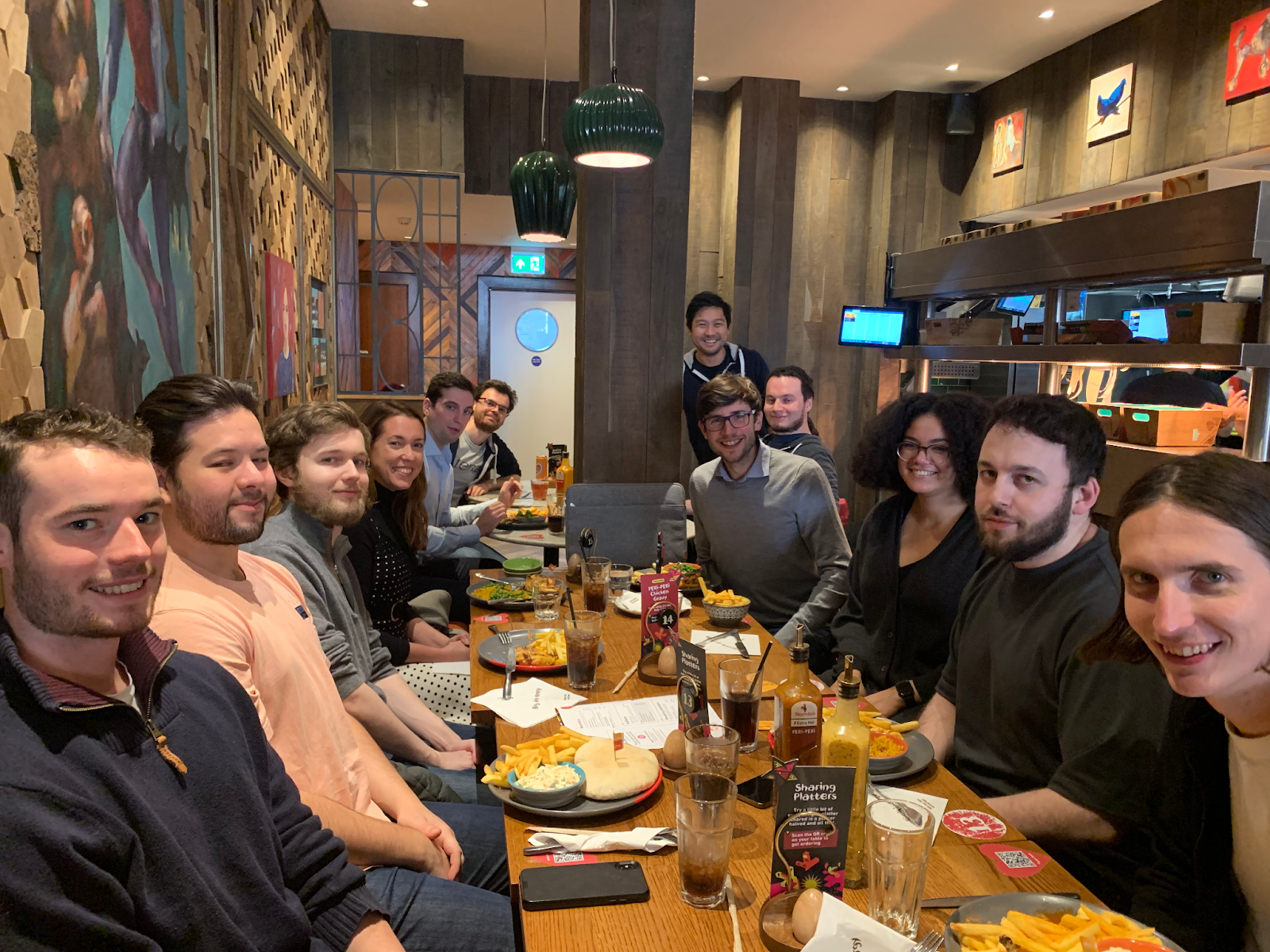
We’ve also made it a bit of a tradition since heading back to the office to support Tenzo customers as a team. From lunch at Neat Burger and Nando’s to drinks at Incipio and Christmas at Caravan, this industry is truly the one to be in!
Trusted partner
This year has also been a year of expanded partnerships. It’s no secret that the restaurant tech scene has been incredibly hot this year with Toast’s IPO and $33 billion valuation. We also saw the likes of SpotOn raise $300 million and acquire Appetize, Olo IPO and raise $450 million and Xero acquire Planday for €183.5 million.
This has been driven by the digitisation of restaurants and a new cloud-based, API-driven way of doing things. That’s been good news for us at Tenzo as we’ve expanded our integration partners to include 56 different integrations. This year we’ve added:
|
|
And don’t worry, we’ve got plenty more in the pipeline! You can check out all our supported integrations here.
Partners are at the very heart of Tenzo as what we do wouldn’t be possible without them, so we want to take a moment to thank every single one of them for being such great collaborators this year.
Socially responsible
A big part of our identity at Tenzo is our quest to reduce the amount of food wasted by the hospitality industry which currently adds millions of tons of CO2 emissions to the atmosphere every year. The way we want to combat is through accurate demand forecasting, so that restaurants know what to order and what to prep and when. In 2020 we received a grant from Innovate UK to accelerate our development of these forecasting methods.
That project has been an underlying constant of everything we’ve done this year and we are getting closer and closer to achieving our goal of extremely accurate item and hourly level forecasting. In fact, customers are already testing our latest version of item level forecasting.
We also want to put our money where our mouth is (quite literally), so we have recently changed over all of the Tenzo team’s pensions to an ESG fund which is allegedly 21x more effective at cutting carbon emissions than stopping flying, becoming a vegetarian and switching to renewable energy providers combined.
This along with keeping each other accountable with socially responsible themed months like Zero-Waste Month, Plastic Free Month and Zero Food Waste Month has given us all a greater focus on our impact on the planet.
Always experimenting and learning
Our focus on always experimenting and learning drives everyone at Tenzo to constantly aim for better and more efficient solutions and to constantly improve our product. This year has been no different.
We’ve been working extremely hard on something we call ‘Card Explorer and Dashboard Creator’ which will eventually allow Tenzo customers to build custom reports themselves and make personalised dashboards without needing our CS team’s help. This will give power users of Tenzo the option to visualise their data any way they want.
The first product of all this hard work has been our new Employees Module which is currently in Beta mode for certain customers and which begins the journey to personalised dashboards.
But that’s not the only thing we’ve been working on. We’ve recently released an iPad version of our app so that Tenzo works natively on iPad. We’re also revamping our outbound service. That means that automated emails and mobile alerts will be new and improved in the very near future.
Finally, this year saw the birth of ‘write’ integrations. Basically, these allow Tenzo data, specifically daily and hourly forecasts and sales, to be pushed into other systems allowing users to see all the information they need in one platform.
Currently, we are able to push Tenzo sales and forecasts into a variety of labour tools including Planday, Workforce, Tanda, RotaReady, and Deputy. Managers can now see their hourly forecasted sales when creating rotas, putting more team members on in busy periods and fewer in quieter ones. Teams are therefore much happier as they know that they’ll not be run off their feet because of understaffing or sent home early because of overstaffing.
Reflections on the year
It’s been a big year both for the Tenzo team and the restaurant industry as a whole and we continue to be super optimistic about the future outlook for both.
The pandemic seems to have made the hospitality industry more sustainable both in terms of environmental impacts with more and more businesses pledging to go net-zero and for the people who work within the space as better pay, benefits and career prospects become more and more prevalent as the industry fights to find and retain staff.
For Tenzo’s part, we want to continue to support restaurants in these changing times and give them the tools to be as sustainable and successful as possible.
2021 is just the beginning, we’re fully expecting 2022 to be our best year yet!
Want to join the rocketship? We have several positions open if Tenzo sounds like the place for you. Find a list of open positions on this page.
The post 3 times the number of locations – 2021, an epic year for Tenzo appeared first on Tenzo.
]]>